.svg)
Time is the most expensive commodity in field service. Every minute a technician spends fighting with software or chasing down paperwork is a minute they aren't turning a wrench.
That is exactly why HVAC workflow automation has become a daily necessity for the service providers.
True automation is about building an environment in which your dispatchers, your technicians, and your back-end systems all work in complete harmony with each other. On the surface, this means reducing the manual effort in your operations, your dispatching, your inventory management, your billing, etc.
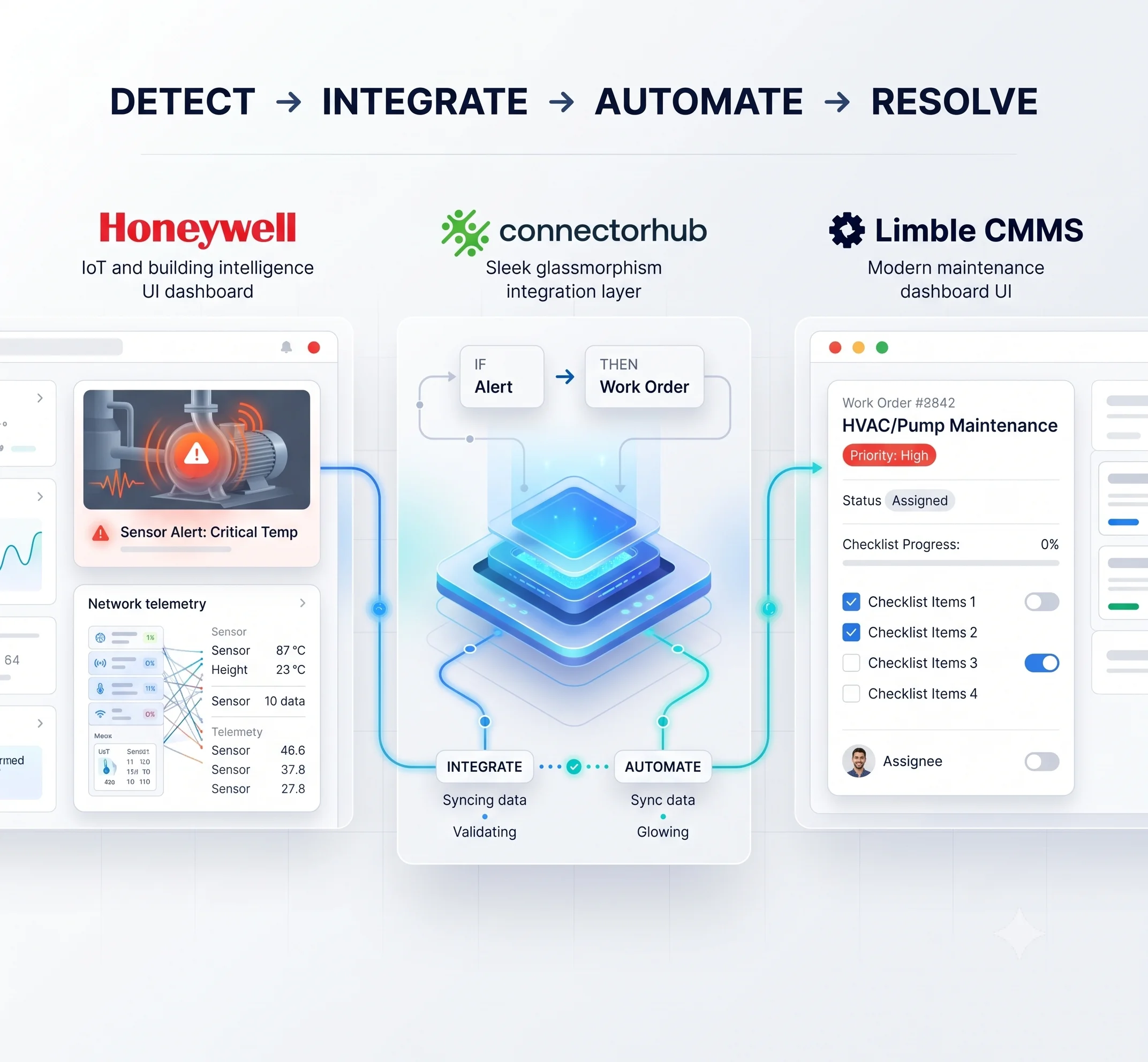
But the real game-changer happens when these everyday functions actually talk to each other without human intervention. This is where service provider integrations step in.
By integrating your CRM, ERP, accounting software, and field apps through a cloud-based integration platform, you can break free from the tedious process of dealing with data silos, as well as the never-ending process of double data entry.
The whole workflow becomes connected. Technicians spend far less time on admin, often gaining back an hour or two each day and more time doing actual service work. And at the end of the day, what we are talking about with HVAC automation is getting out of your own way, so your team can focus on what matters most: delivering world-class service processes.
Hidden Bottlenecks in Everyday HVAC Operations
Even with all these digital tools around, lots of HVAC service businesses are still limping along with a mess of disconnected systems. Sure, these inefficiencies look small day to day, but they quietly sap technician productivity, raise costs, annoy customers, and put a stop to growth.
Here’s where things really start breaking down:
- Chaotic Dispatching
Manual scheduling and the disorganized dispatch board create a predicament where there are often instances of double bookings, scheduling too close together and nonsensical routes for technicians to follow in their travels. When this occurs, there is a significant amount of time spent in transit, missed appointments and customers are waiting longer than anticipated to be serviced.
- App-Switching Nightmare
There are many apps that technicians must switch between to do their job (i.e., customer data, work orders, inventory, accounting, etc.) and, thus dispatchers and technicians spend large amounts of time switching from app to app and as such lose their attention and focus and get out of the groove of what they were doing.
- No Real-Time Inventory Visibility
Technicians go to jobs only to discover that they do not have the necessary parts because their inventory is not updated in real-time. As a consequence, techs have to make another trip back to the warehouse or supplier, wasting fuel and time, while leaving the customer hanging. The poor visibility of the parts means that you have a lot of parts that nobody wants and not enough of the parts that everybody wants.
- Manual Paperwork Overload
Every minute that the technician is doing paperwork is one less minute that they are performing repairs/installation. Therefore, there is decreased billable labor hours. If the paperwork is slow or has inaccurate information, the invoicing is slow, resulting in chaos throughout the business.
In the short term, the inefficiencies of these types of manual processes, may be small; however, they can snowball to create decreased productivity and customer satisfaction in your business.
All these headaches have one thing in common: nothing connects your systems. Your business is missing a data integration platform.
Over time, these bottlenecks don't just waste hours, they cost you serious money. Productivity sinks, technicians can lose up to a quarter of their day on non-revenue tasks, expenses climb, jobs go sideways, and your team can't handle more work no matter how many calls roll in. If you are battling your own internal mess all day, growing the business feels out of reach.
How Automation Steps in to Boost Technician Productivity
Automation transforms the way that a technician interacts with his or her environment. It does this by eliminating the need for repetitive and time-consuming administrative tasks through intelligent automation processes, giving them instant access to the information that they actually need. This allows your team to stop focusing on repetitive tasks and concentrate on delivering service.
One of the most significant changes to your operation will be from service ticket automation. Instead of a dispatcher manually inputting all of the service tickets, the system does this instantly.
These tickets are then automatically routed to the appropriate technician based on the geographical location, skill set, and availability of the technicians. This is done in an efficient manner without having to constantly involve the dispatcher. It also powers automated work order management, which automatically generates the complete details of the job the instant a ticket is created.
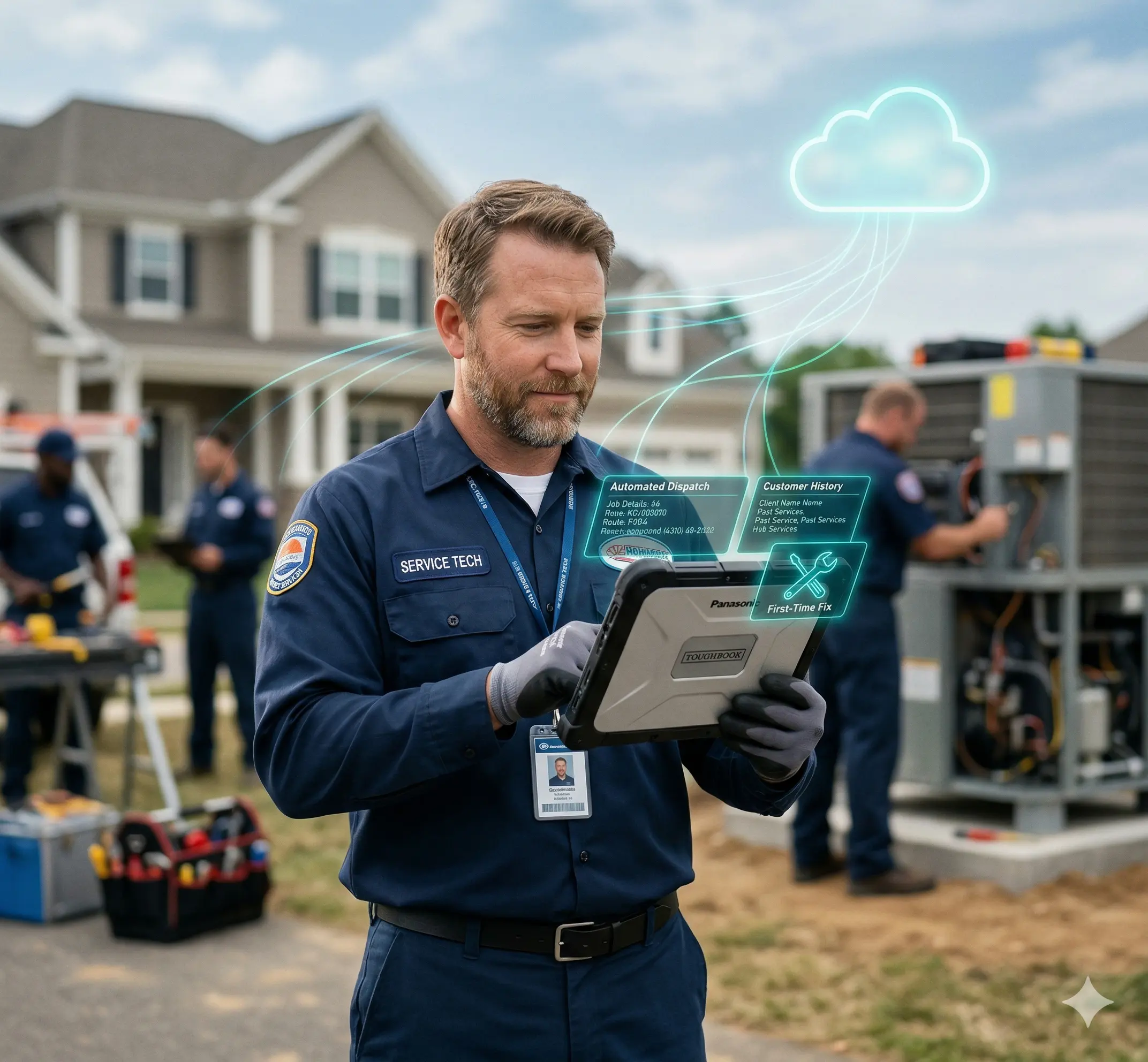
Technicians receive the complete history of the customer, specifications of the equipment, and service requirements straight to their mobile devices even before they arrive at the job site. The more information available to them, the fewer surprises there are and the higher your chances of fixing the job the first time.
Once the task is completed, real-time service reporting enables service techs to not need to contact the office to manually update their progress.
Changes in statuses, information on the completion of jobs, and service notes are recorded and communicated instantly and automatically to the appropriate people in the office. This allows management to be instantly informed of what's going on in the field and can make decisions very quickly without interfering with the tech.
The engine that is powering all of this behind the scenes is the robust API integration that allows all of your various software platforms to communicate with each other in a seamless way.
As a result, you ultimately transform your tired task executors into highly productive professionals. They finally have the right tools and information at exactly the right time.
Why Integrations are the Engine of True Efficiency for HVAC Workflows
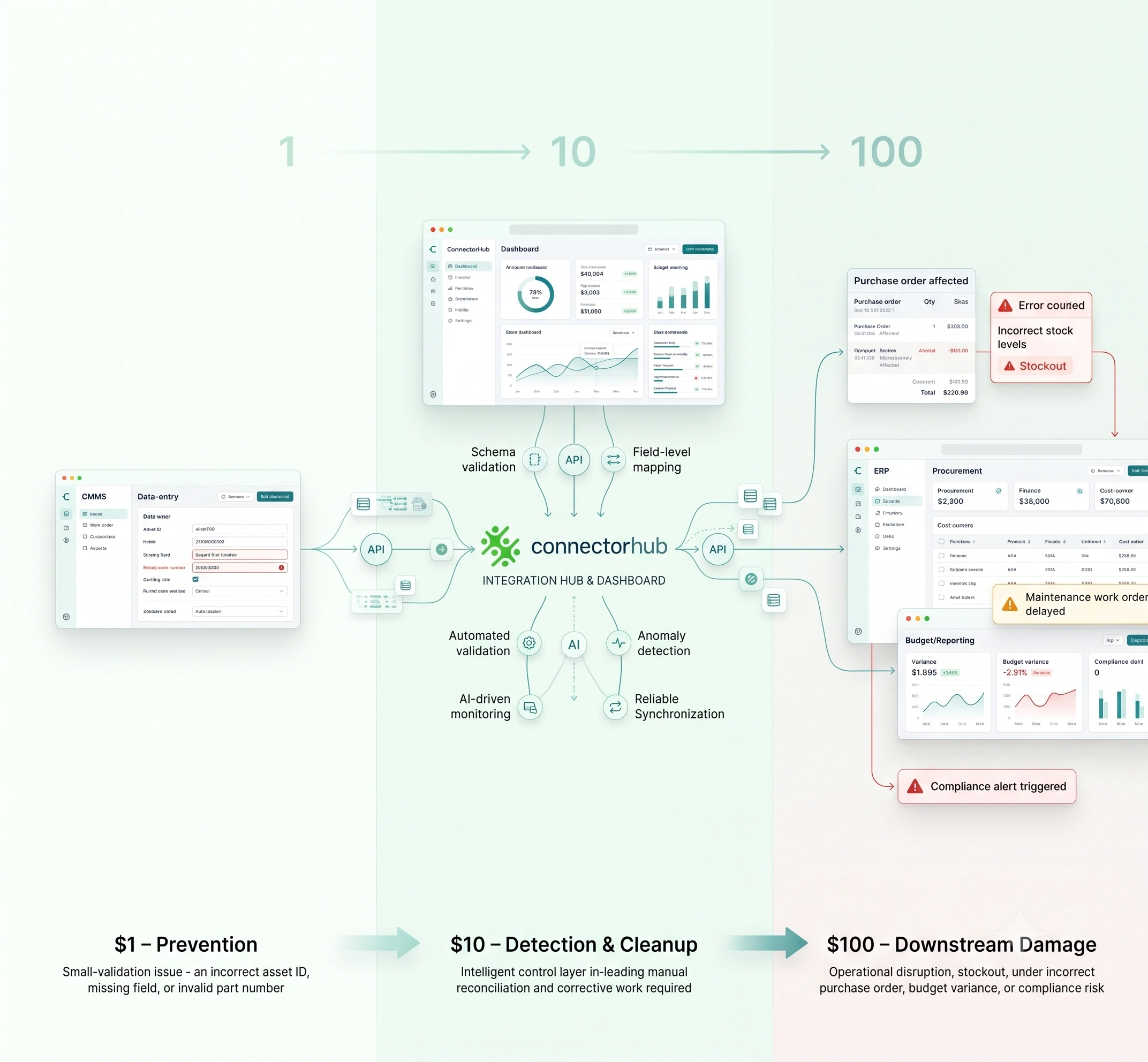
While automation can speed up individual processes, integration enables you to turn your entire business into a streamlined machine. Without integrations, you can have the best automation, and still, you will be stuck in a siloed world where you are wasting time moving data around, making mistakes, and slowing down your response times.
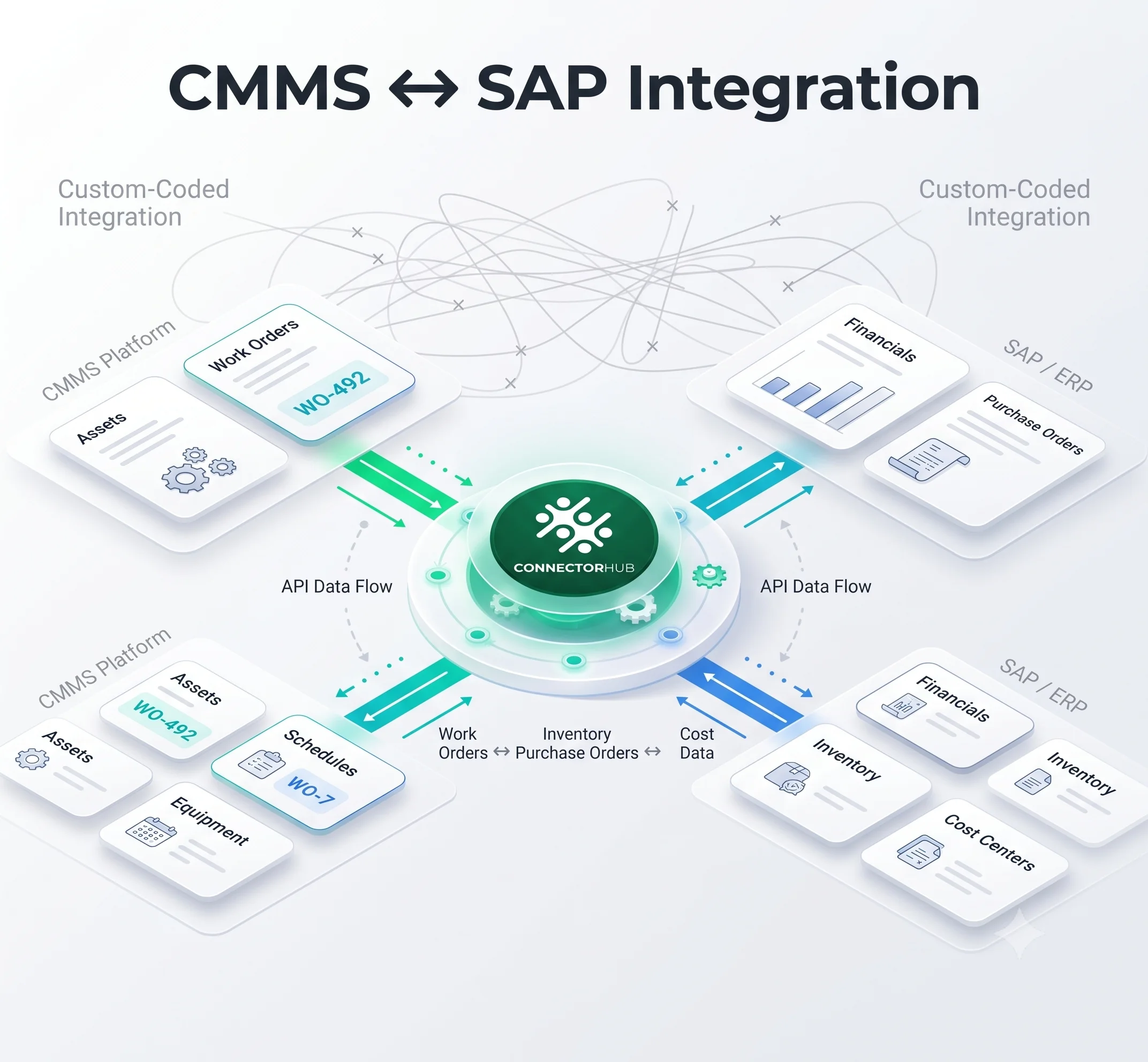
This is where a CMMS ERP integration for service providers can be phenomenal, particularly if you are in an HVAC business with complex field operations, preventive maintenance, and customer service contracts.
At the center of this efficiency is the application-to-application integration. This allows different software programs (CMMS, ERP, CRM, accounting programs, and even IoT-based BAS programs) to talk to each other in real-time.
Today’s field service integration platforms take this a step further by serving as a central connection point for all your integration needs. Rather than expensive custom coding for each new solution you add to your technology stack, you can take advantage of pre-built integrations for solutions such as QuickBooks, Microsoft Dynamics 365, ServiceTitan, or other major BAS solutions (such as Tridium, Siemens, etc.).
This can save weeks of implementation time versus traditional methods. Furthermore, your technology stack can scale effortlessly with your business.
Overall, well-integrated systems can yield 250-346% ROI within the first year for field service operations, with many businesses seeing payback in just 3-6 months.
Also Read: Automating Janitorial Management With Intelligent HVAC Workflow Integrations: Best Practices
3 Signs Your HVAC Business is Ready to Automate
Recognizing the exact right time to upgrade your operations is crucial for maximizing your ROI. If any of these three daily bottlenecks sound familiar, your HVAC business is actively outgrowing its current processes.
Bottleneck 1: Complexity of Operations
As businesses continue to grow, so does the complexity of the separate systems used by them and their operations. If your company has difficulty operating its business and properly managing its operations, automation may help improve the efficiency of your operations.
Bottleneck 2: No Real-Time Field Visibility
If you rely on manual updates or continual communication to determine what job is progressing, you have a lack of real-time visibility into field operations. However, by implementing the use of ERP integration for service teams, you will receive immediate, real-time information.
Bottleneck 3: Inefficient Vendor and Inventory Management
Frequent stock outages, costly rush orders due to lack of inventory, overstock of slow-moving inventory and time lost to technicians waiting for inventory, among other things, are all symptoms of poor inventory tracking through either manual or silos as well as being unable to easily track inventory. Using vendor management automation will provide better visibility into how to properly manage your inventory to ensure that you have the proper resources available when you need them.
When these bottlenecks begin eroding customer satisfaction, increasing callback rates, inflating operating costs, and capping revenue growth, implementing integrated solutions become the need of the hour to run a tighter, more profitable service operation.
Also Read: Top 5 Integration Challenges Draining Your Operations Team (And How to Fix Them)
ConnectorHub in Action for HVAC Teams
ConnectorHub is specifically designed to tackle the daily chaos of modern HVAC operations head-on. By providing a robust, highly scalable integration solution, it transforms your fragmented tools into a single, unified ecosystem.
As a leading integration as a service provider, ConnectorHub flawlessly connects your CRM, ERP, accounting software, and field service apps. The platform eliminates the need for expensive, time-consuming custom development by utilizing pre-built connectors and reusable workflows.
This allows your business to implement powerful automation quickly and start seeing an immediate return on investment.
With ConnectorHub, service providers can instantly:
- Automate your scheduling and dispatching to ensure your techs are moving smoothly.
- Enable uninterrupted data flow to kill the cycle of double data entry forever.
- Improve billing accuracy by automatically turning work orders into precise invoices.
- Gain real-time visibility into daily operations from the office or the field.
- Drastically reduce dependency on slow, error-prone manual processes.
With these powerful software integration services, you can totally eliminate silos and create a fully connected system. ConnectorHub is also designed with scalability in mind, which means that as your tickets grow, your infrastructure will grow right along with them without requiring massive changes.
This makes it the ultimate solution for HVAC companies looking to future-proof their operations and dominate a rapidly evolving industry.
Conclusion
The HVAC industry is changing at lightning speed with new technologies and huge changes in customer expectations. Companies that cling to traditional ways of doing business with manual processes and paperwork orders will be left in the dust by their competitors.
But becoming a true HVAC workflow automation champion is not just about making small changes to your daily workflow. It’s about completely changing the way your entire team functions. It’s about integrating your core systems and utilizing real-time data to finally empower your technicians to do their absolute best.
The end result is a highly productive workforce, perfectly streamlined operations, and a dominant competitive advantage in your market.
The question is no longer whether you should use platforms like ConnectorHub to survive in this industry. The only question left is how quickly you can implement it to stay ahead of the pack.