Headed to Corrigo Connect? Turn Your Corrigo Data Into Revenue — Book a Meeting
Connect maintenance, finance, customer, property and building applications through one integration foundation. Use an available connector or ask us to assess a new one.











Disconnected applications create two problems: work moves manually, and decision-makers get fragmented data. ConnectorHub helps address both.
pre-built connectors
weeks to first live workflow
platform uptime
records moved daily
Work orders raised in your CMMS flow straight through to dispatch, then to the ERP as an invoice — with status, cost codes and attachments intact.
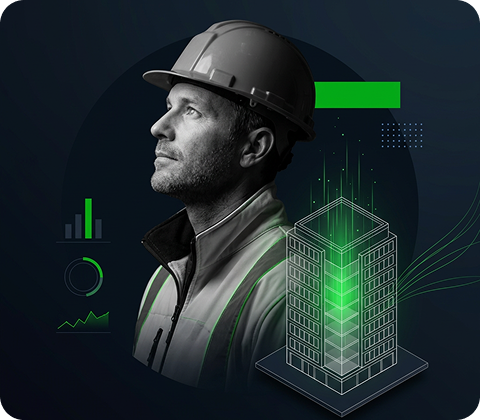
Property, leasing and building systems data land in one place in real time. Tenant apps, energy meters and accounting all read the same source of truth.

Move asset, maintenance and compliance data between clinical and operational systems without ever exposing PHI. Field-level redaction and audit logging are on by default.
High-frequency sensor data is normalized, threshold-based and connected to maintenance history — so a pressure anomaly opens a work order before it becomes an outage.



Run dozens of client tenants from one console. Every tenant has its own isolated data and workflows, while you work from one central view.

Templatise a workflow once, then deploy it across your entire book of business with per-client mapping overrides. Your margin stops living inside billable integration hours.

Schemas load live. An ML model matches fields based on your naming conventions, surfacing anomalies before anything hits production.

Manage multiple customers and environments from one console with hard data isolation.

Monitor SLA performance, run history, and throughput analytics from a single dashboard.

Plugin-style SDK for anything that isn’t already in the library. Ship your own connectors on your schedule.

Publish versioned workflows, roll back changes when needed, and let in-flight runs finish on the version they started.

SOC 2, HIPAA, and GDPR aligned, and supports compliance requirements with access controls and audit-ready logs on every record.
Schemas load live. An ML model matches fields based on your naming conventions, surfacing anomalies before anything hits production.
Manage multiple customers and environments from one console with hard data isolation.
Monitor SLA performance, run history, and throughput analytics from a single dashboard.
Plugin-style SDK for anything that isn’t already in the library. Ship your own connectors on your schedule.
Publish versioned workflows, roll back changes when needed, and let in-flight runs finish on the version they started.
SOC 2, HIPAA, and GDPR aligned, and supports compliance requirements with access controls and audit-ready logs on every record.
Bring a business requirements document or describe the process that is slowing your team down. ConnectorHub helps turn it into a working integration.


We review the workflow, investigate the systems and APIs, configure the integration, test it with your team and agree the right production support model.
Watch a source record move through field mapping, business rules and an execution result. Then explore examples relevant to your industry.
Explore the workflows behind facility coordination, service delivery, healthcare records, industrial maintenance, SaaS connectivity and property operations.
MDS Builders
Estimate how much time and money you could save by automating manual work order processing.
Embed ConnectorHub into your platform and give customers the integrations they expect, without building and maintaining every connector in-house.
Pre-built connectors collapse time-to-market.
Stop absorbing one-off integration projects that never scale.
Sell integration-as-a-service under your own brand and pricing.
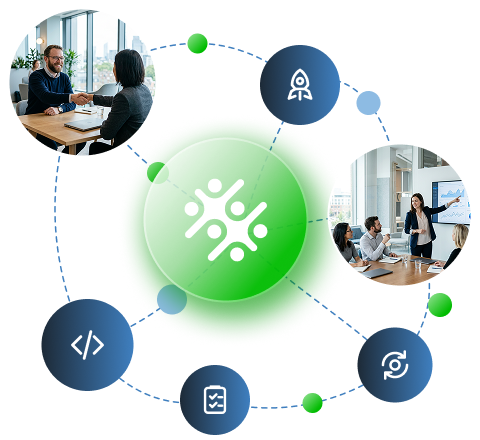

Most CMMS, ERP, and CRM integrations go live in 2–4 weeks, depending on system access and data complexity. Certified connectors (Corrigo, NetSuite, etc.) can be faster because the schema work is already done.
Yes. ConnectorHub connects custom applications through APIs and file-based data exchange. You can also build custom connectors for applications not in the library.
Yes. ConnectorHub connects supported IoT and building systems with maintenance, ERP, and analytics platforms to automate operational workflows.
ConnectorHub uses encryption, role-based access controls, secure credential storage, tenant isolation, and audit logging to help protect data.
ConnectorHub supports compliance through access controls, audit logs, and data protection practices. Its published framework describes SOC 2-aligned practices, a HIPAA-ready architecture, and GDPR-related safeguards.