.svg)
Janitorial and building service pros are at a real turning point right now, looking to see real results, lower costs, and greener operations they actually brings in a difference. To keep up, providers can’t keep relying on manual schedules and separate teams. They need to start using smarter, connected systems.
The numbers make it clear: the janitorial management software market is growing at 10.4% a year and is expected to reach $3.46 billion by 2033, driven mainly by automation and integrated platforms. At the same time, the global HVAC market is set to climb from $299 billion in 2025 to $408 billion by 2030.
This presents a big opportunity for janitorial companies and integrated service providers. When connecting janitorial software to intelligent HVAC workflows, information from the HVAC system such as the occupancy data, air-quality readings, or maintenance alerts can help to dynamically manage resource levels and prioritize accordingly.
And how does it impact you? Lower labor and operating costs, stronger contract performance, the ability to catch maintenance issues before they blow up, and client relationships built on clear data and real transparency.
Here, we are discussing the best practices for HVAC workflow automation, showing exactly how janitorial teams can use intelligent HVAC data to make daily operations more responsive, efficient, and scalable.
The Convergence of Janitorial and HVAC Systems
Well, the days when janitorial services and HVAC services were two separate services are gone. In smart buildings of the modern age, the two activities have merged and have become one.
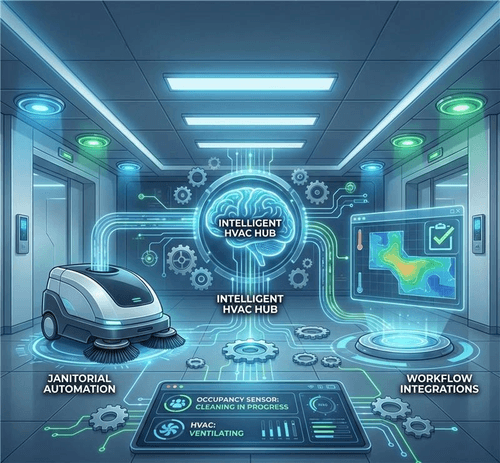
IoT sensors and occupancy data pull everything together. The way people actually use a space ends up guiding both climate control and when cleaning happens.
Real-time info from occupancy sensors and indoor air quality calls for the shots for both sides. When the HVAC automatically ramps up or dials back ventilation, airflow, and temperature in busy areas, that same data instantly flags cleaning crews on exactly where work is needed.
No more fixed, clock-based cleaning schedules. Everything moves to usage-based service. Busy, high-traffic areas get cleaning alerts when they’re active. Quiet or barely used spots just get skipped until they actually need attention.
For service providers, this means no more wasting time and labor cleaning places nobody’s been. It also cuts unnecessary energy use and cleaning supplies. Facilities that have switched to occupancy-driven scheduling have seen cleaning costs drop by as much as 30%, simply by matching the work to how the building is really being used.
Comprehending Automated Workflows for HVAC Systems
HVAC workflow automation turns ordinary heating, ventilation, and air conditioning systems into smart, responsive ones by bringing together IoT sensors, and AI analytics through cloud-based integration platform so the process can adapt to what’s going on inside the building.
Instead of functioning the same way 24/7, the system tunes itself. With the aid of predictive maintenance, various issues can be identified at early stages before they become major problems.
As a result, downtime and longevity of equipment are reduced. For service pros handling multiple sites, the real win is having everything centralized. Remote monitoring lets you step in smarter and faster, no matter where the building is.
Furthermore, mobile apps make the day-to-day part smooth and offer space to automate work orders for janitorial teams. They get task alerts right on their phones with location, priority, and details. It cuts admin work, makes verification easy, and gives clients a clear, reliable record.
What It Means for Service Provider Automation
Automation processes lets janitorial and HVAC companies handle more work without dropping quality. By linking workforce tools to live building and system data, you get much better coordination of people, equipment, and schedules than any manual system can manage.
Jobs kick off on their own as soon as real-time triggers come in. The routing logic checks “who’s closest, who’s best skilled for the task, who’s available, and who’s been waiting longest.”
This combined with AI capabilities ensures you meet even tighter SLAs by adapting quickly. Data from HVAC systems and occupancy sensors comes with clarity and becomes useful reports for clients.
When janitorial and HVAC companies fully embrace this kind of automation, they stand out, delivering smarter, data-driven building services in an increasingly difficult market.
Integrating CMMS and ERP Systems for Service Providers to Power HVAC Workflows
For service providers, linking your CMMS with an ERP system pulls maintenance work and business operations into one smooth flow. Finished work orders move straight to invoicing with almost no manual typing, which cuts down on mistakes.
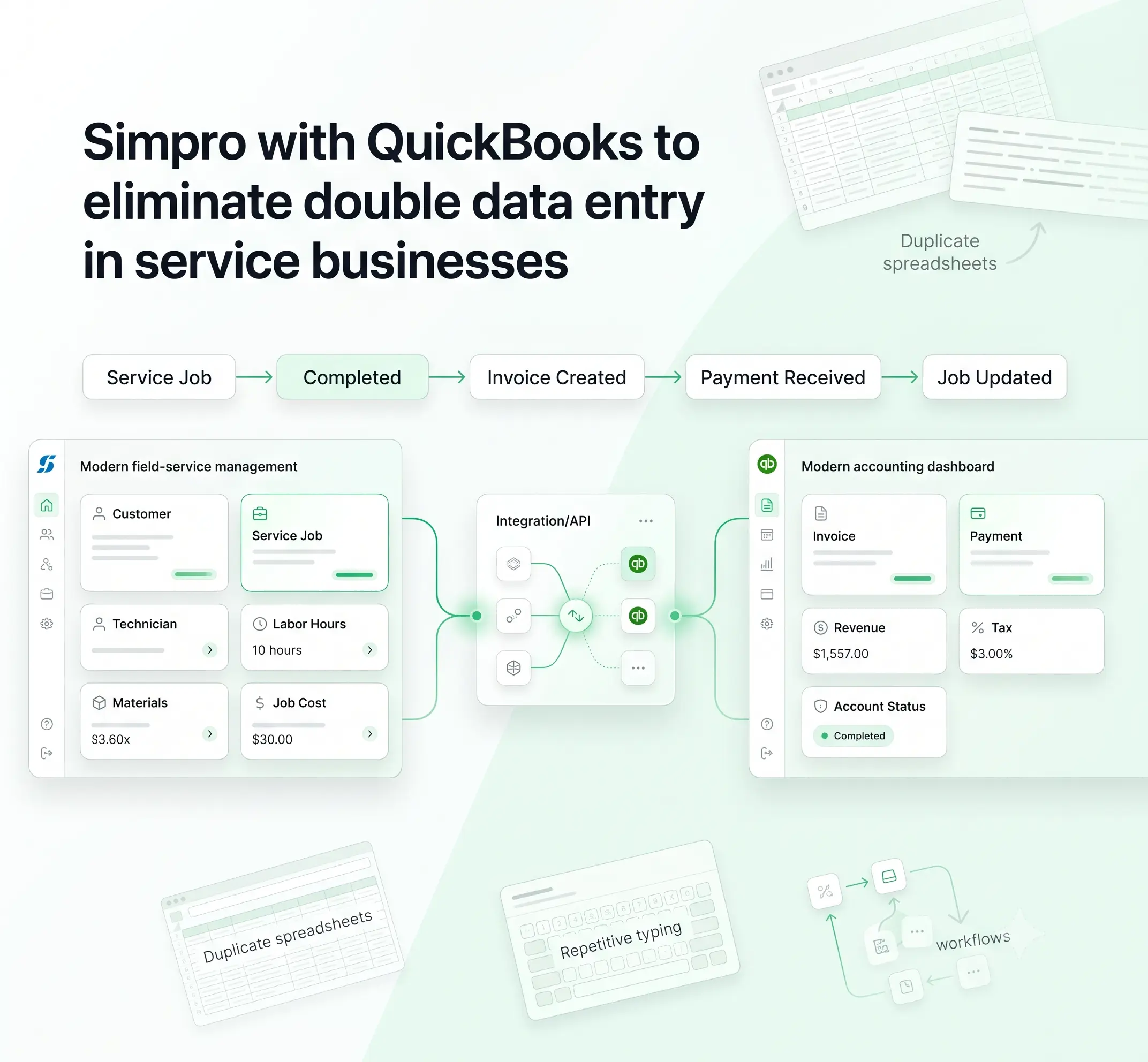
Tools like Corrigo paired with QuickBooks handle the whole work-order-to-invoice process cleanly. On the bigger side, platforms like Nuvolo integrated with SAP give you solid asset maintenance integration and compliance for large client portfolios.
Everything lives in one place, so you can spot patterns, plan ahead, and put people and resources where they’ll do the most good, including advanced vendor management automation to coordinate suppliers and subcontractors more efficiently. Those connected systems also feed you predictive insights that help avoid surprises and keep service steady across clients.
Getting started means choosing flexible, open systems. Platforms with open APIs, compatible IoT devices, and cloud-based design make it easier to connect HVAC data with janitorial tools, work order systems, and client reports. This approach supports growth across portfolios and helps service providers deliver connected, higher-value services.
Best Practices To Automate Janitorial Management Operations Through Smarter HVAC Workflows
1. Start with a solid workflow assessment.
Look thoroughly into how everything actually runs today. Talk to the technicians, supervisors, and anyone else who’s in the thick of it every day and do some audits to find the real pain points, and the gaps. That way the automation solves actual problems instead of slapping new tech on top of broken processes.
2. Go with phased pilot programs to keep things low-risk.
Then roll it out small. Check out if the implemented application to application integrations are working or not, whether the data is correct, and make modifications accordingly. Get real feedback and results before you expand. That way, when you do go bigger, you’ve got a plan that’s already proven.
3. Training has to be thorough if you want people to use it.
Training matters, a lot. While the system might be fine, if the team does not get it or trust it, it will never be used. Hand-on sessions, guide availability, and having it close by after launch will help them understand this. Once people become aware of these tools' ability to ease their workday, it will be used as well.
4. Keep an eye on the right KPIs.
Instead, concentrate on the figures that make a difference like response times, percentage completion of tasks within the scheduled period, as well as the reliability of the entire system. With a real-time display, it is possible to view what works well, anticipate problems before they occur, as well as prevent small problems from becoming major ones.
5. Finally, build on secure, open APIs.
Lastly, choose platforms built on secure, open APIs. Go with encrypted, standard connections so your HVAC, janitorial, CMMS, and ERP systems can share data securely. That obliterates the data silos, keeps everything safe, and lets you bring in new tools or grow without making it tedious.
A data-centric strategy with phased delivery can result in sustainable results and long-term value by making strategic decisions around secure, scalable platforms.
How ConnectorHub Assists in Implementing HVAC Workflow Integrations
Implementing HVAC workflow integrations across different clients shouldn’t grind your business to a halt, but for a lot of service providers, it does. This is where ConnectorHub plays a critical role.
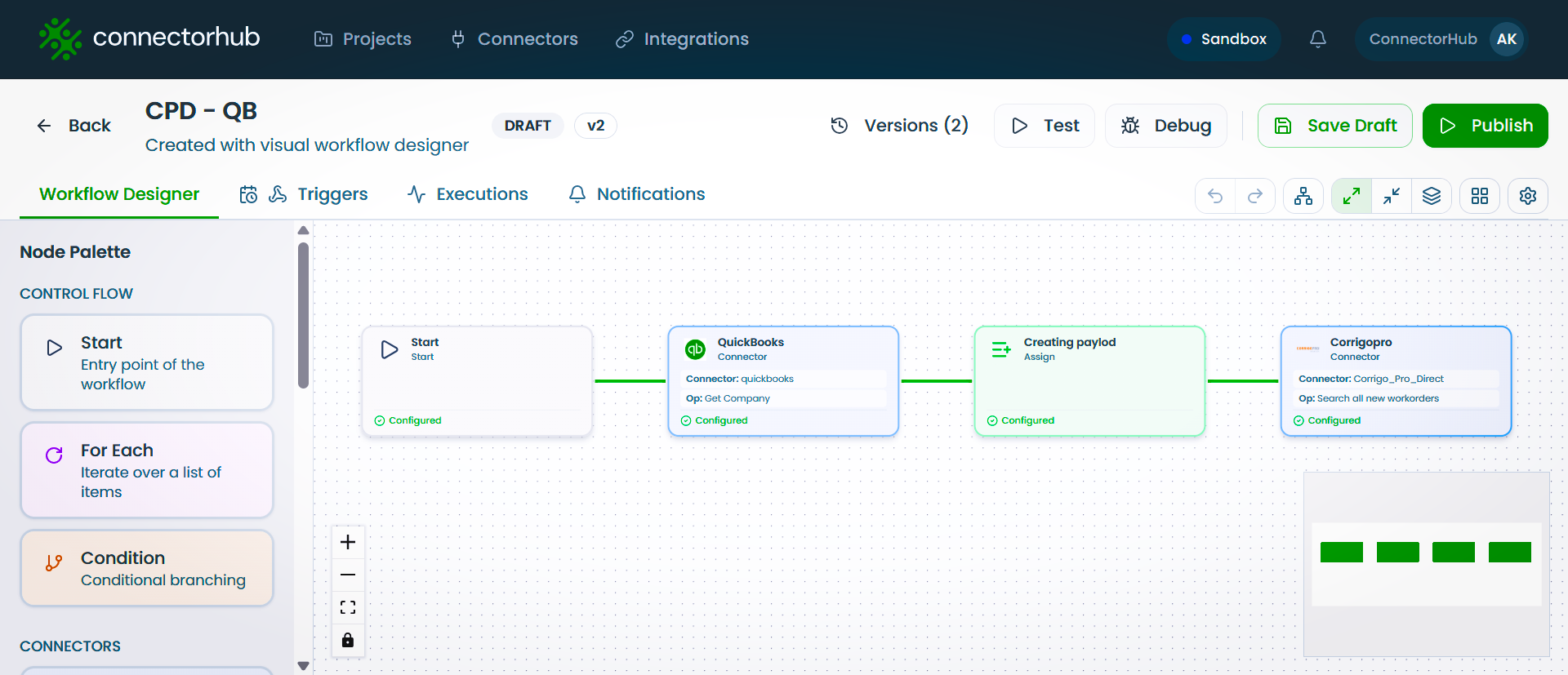
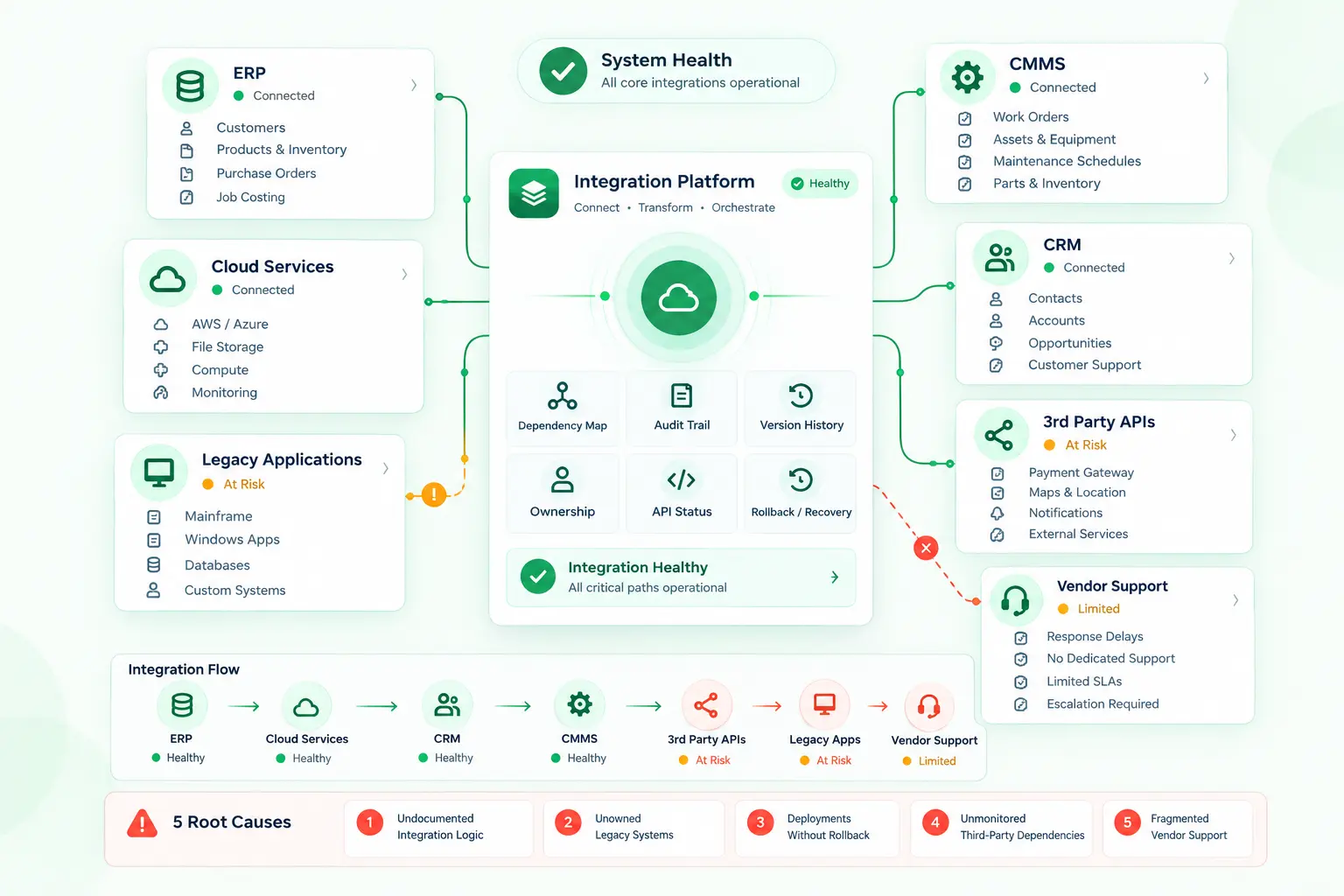
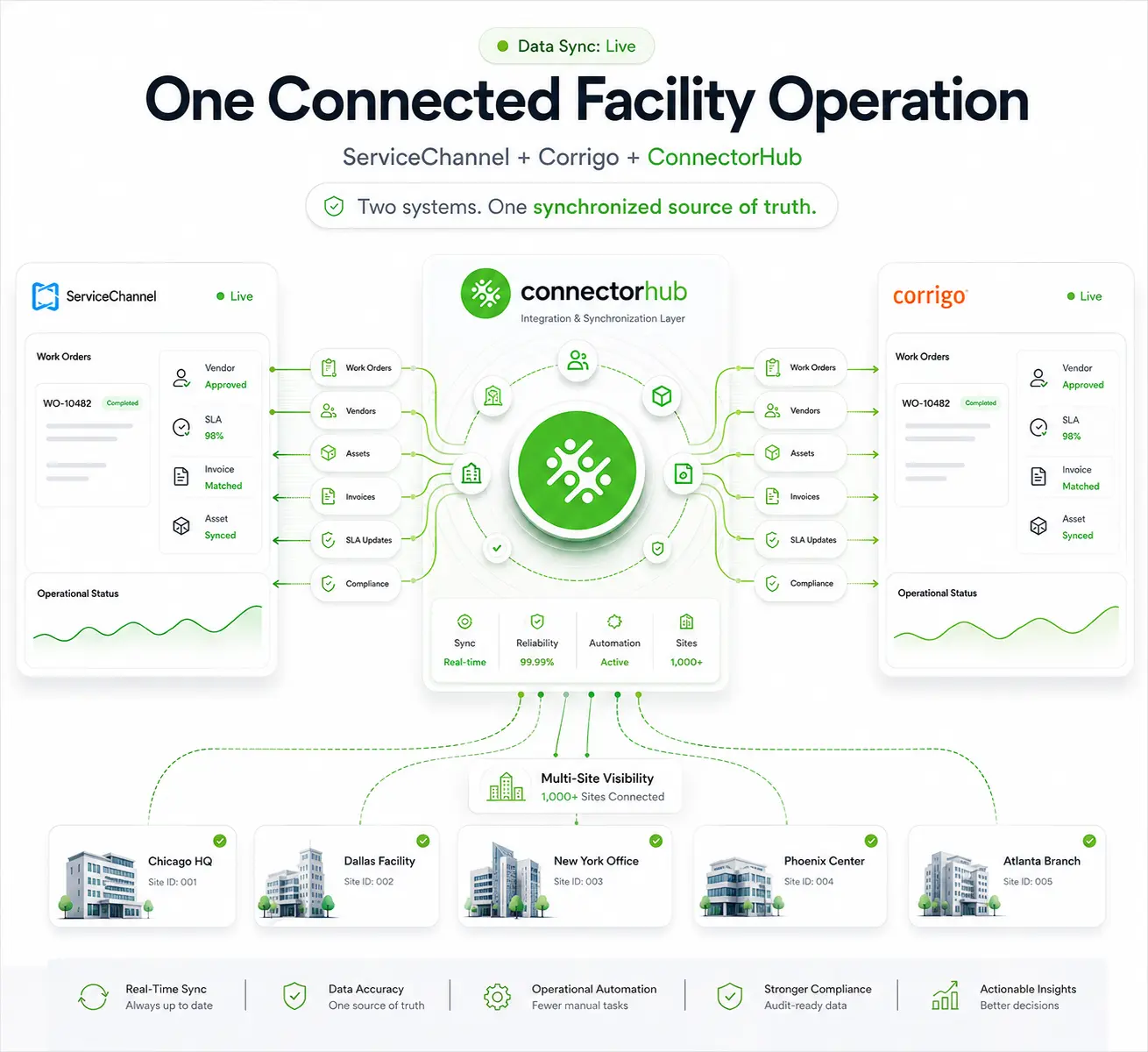
Offering integration platform as a service, ConnectorHub ties together HVAC, janitorial, CMMS, ERP, CRM, and accounting systems into one automated workflow and finally streamlining the entire process through invoice and billing integration, converting completed tasks into precise, timely invoices.
Instead of using endless spreadsheets, double-entry data, and no code workflow integration, service providers use this platform to automate the synchronization of work orders, dispatch updates, invoices, and billings, and asset maintenance in real-time.
For your service teams, that translates to better SLA results, qlouicker dispatching, reliable job tracking, and steady performance no matter which client they are working for.
ConnectorHub is built to grow with you. It comes with ready-made connectors and templates, and whether you are linking Corrigo, Nuvolo, FMX, or ServiceChannel to your ERP or accounting software, everything stays standardized.
Conclusion
Forward-thinking service leaders are leaving behind the old way of working in silos and just fixing things after they break.
By carefully connecting automated HVAC workflows with janitorial operations, companies get a lot more than just lower costs. They can spot needs before they become problems, show clients clear proof of their impact, and build real trust with numbers that matter.
Ultimately, making this connected approach as practical and scalable as needed is where the likes of a platform such as ConnectorHub really becomes a potential advantage.
It takes something which could be messy and complex to integrate and makes it nice and clean. Rather than wrestling with the different tools as they are, and the effort required to stitch all of these different factors such as HVAC info, janitorial tasks, CMMS, ERP, and client reports, everything is handled within one clean layer.
Those who start small, integrate deliberately, and let real-world data guide the way will find themselves not just keeping pace, but setting the standard for what modern facility care and let ConnectorHub help you in that journey.