.svg)
Facilities platforms, CMMS tools, ERP systems, scheduling software, billing systems.
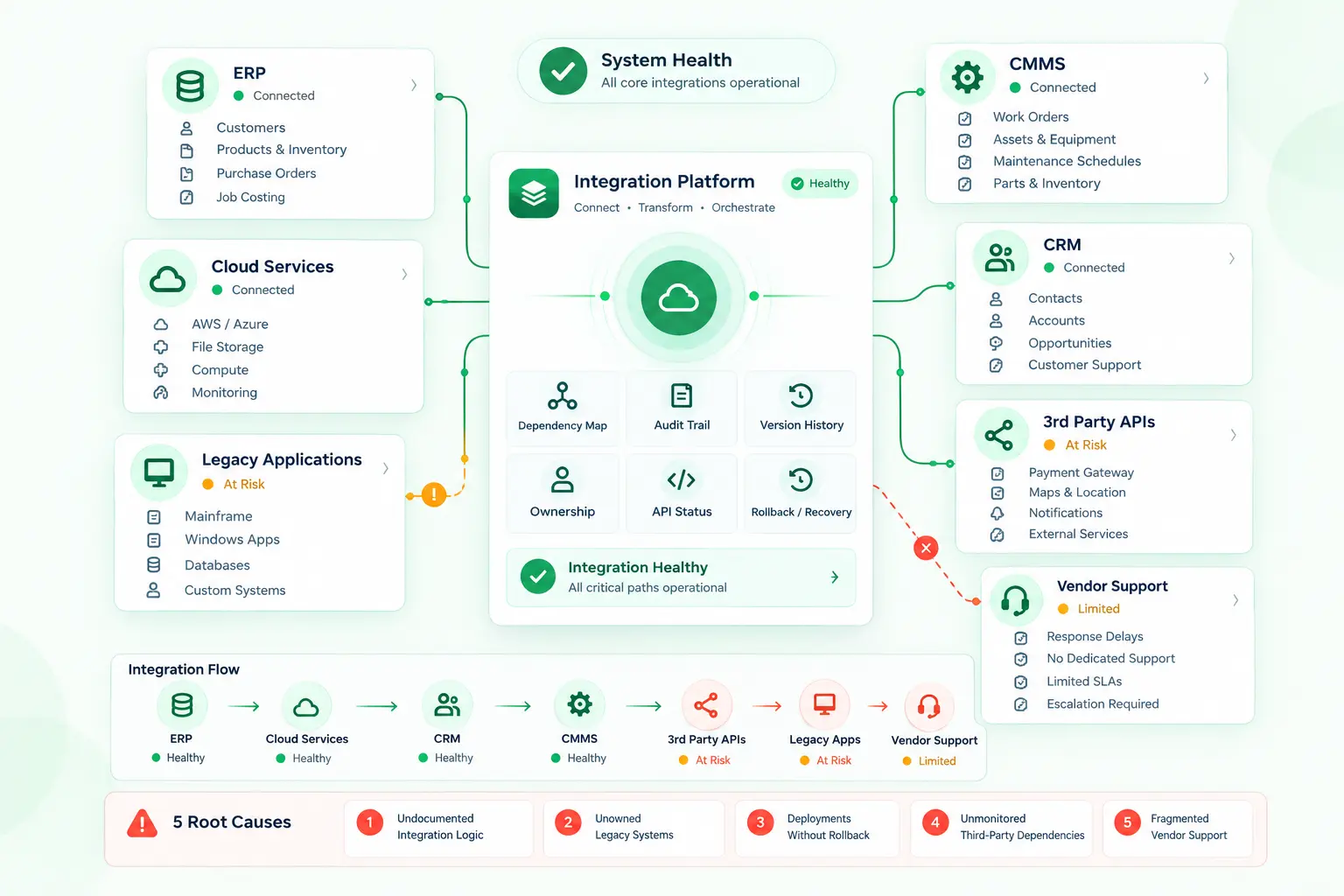
Ops teams have quietly become the biggest consumers of software inside most organizations, and often the biggest victims of software that refuses to talk to each other. This disconnect, while seemingly minor, is exactly where entire days of valuable operational time will silently fade away.
For years, connecting these systems meant filing a ticket and waiting on IT. That model is breaking down. Ops leaders now need an embedded integration platform that lives where the work actually happens, a SaaS integration hub that ties operational systems together without a developer standing between every change request, and genuine business process automation that holds up once real transaction volume hits.
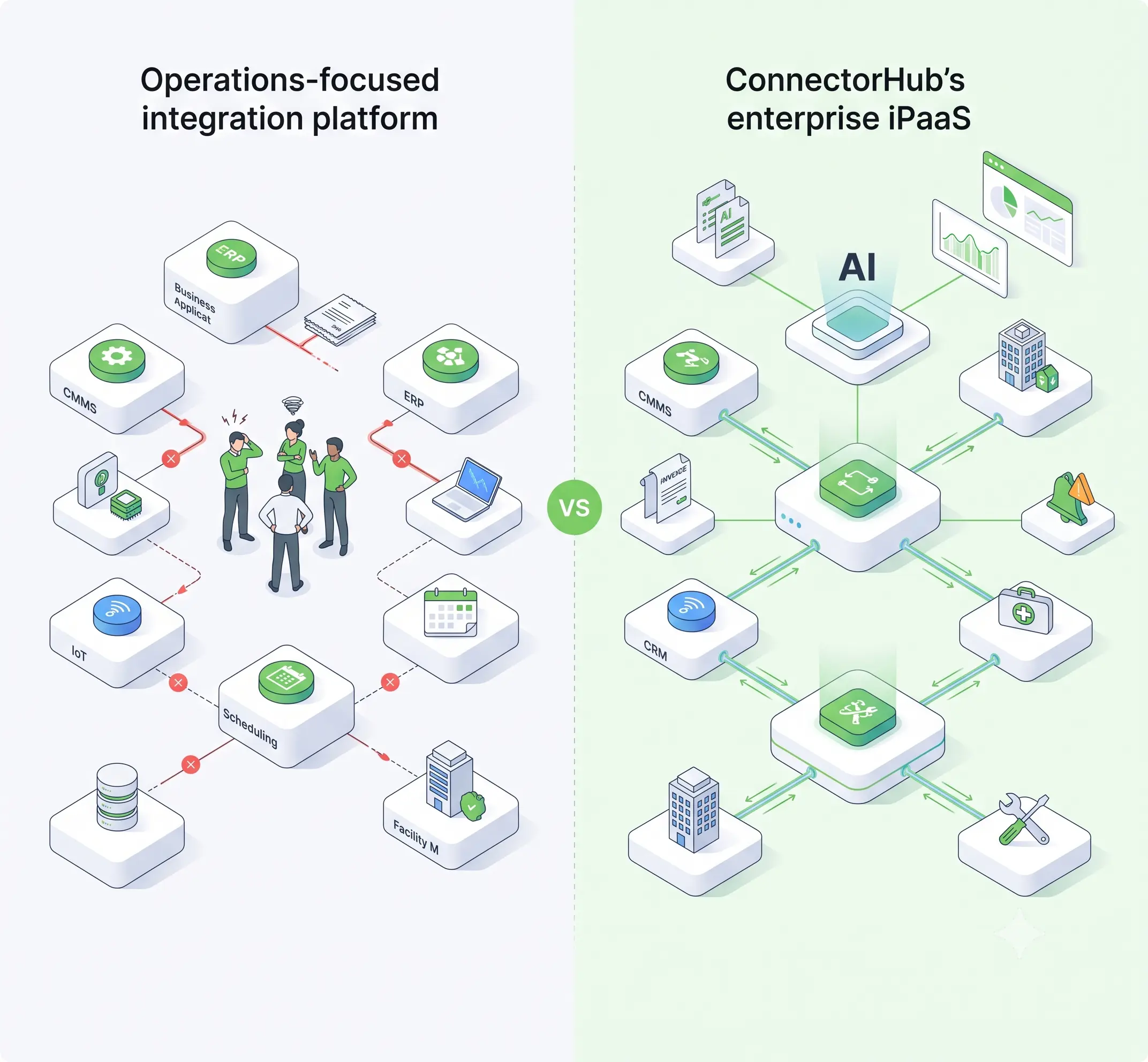
Two platforms come up constantly in these conversations: Celigo, the established enterprise iPaaS with deep NetSuite roots and more than a thousand connectors, and ConnectorHub, a no-code platform built specifically around operational systems like CMMS, ERP, and PropTech. Celigo was designed for IT-led, finance-centered enterprise stacks. ConnectorHub was designed for the team that actually owns the workflow. For ops-heavy organizations, that difference in design philosophy shows up everywhere, and it's what this comparison breaks down.
How Integration Became an Ops Superpower?
Ten years ago, integration was an IT initiative by default. A developer wrote a script, a middleware layer handled the transformation, and any change went through a request process that could take weeks to clear.
That model made sense when integration touched a handful of core systems. It stopped making sense once operations teams started running on ten, twenty, sometimes forty specialized tools, each generating data that needs to reach somewhere else in near real time.
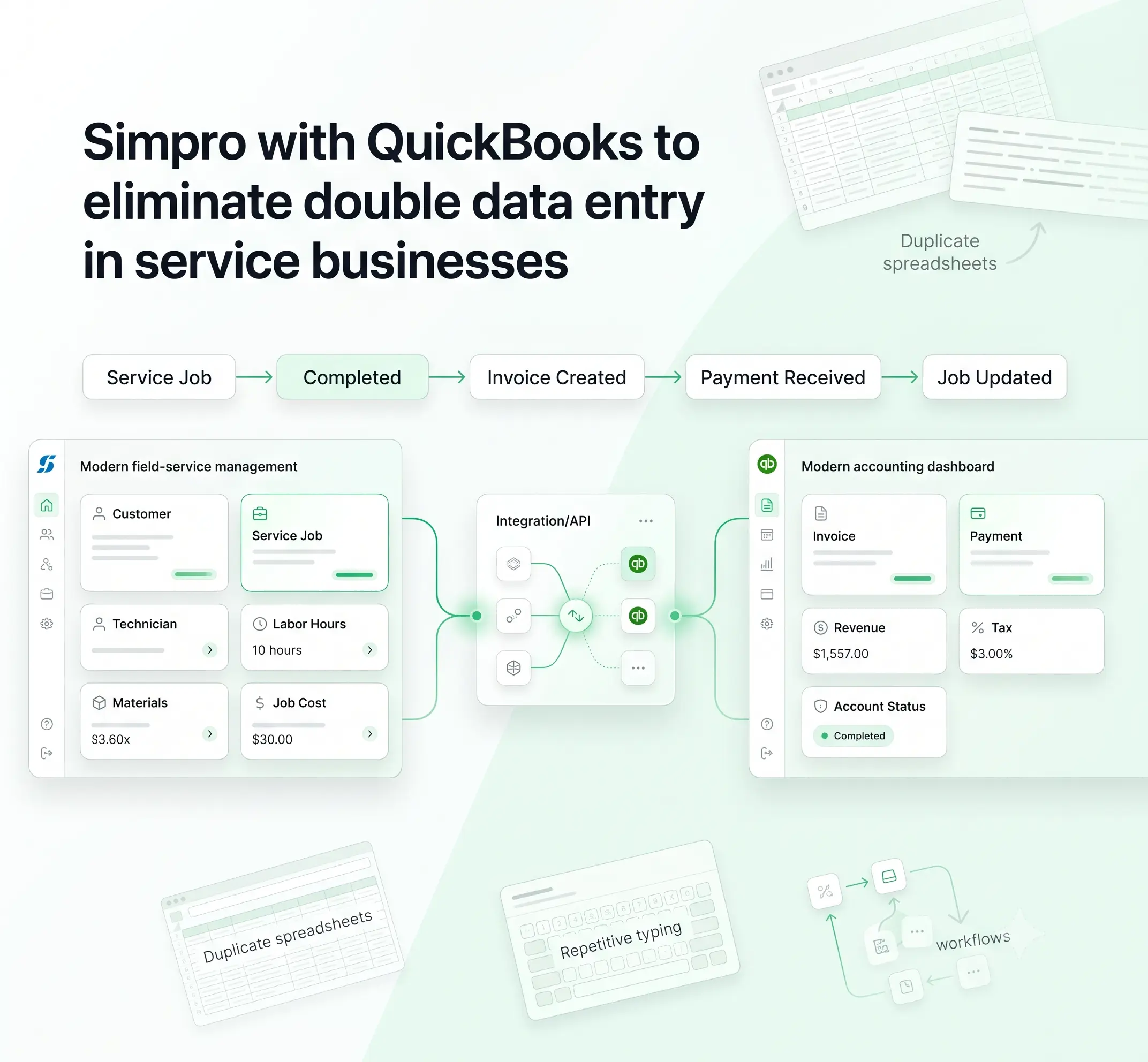
Facilities teams need work orders moving between dispatch software and accounting. Real estate operators need leasing platforms talking to IoT sensors. Healthcare facilities need equipment maintenance data synced with compliance systems. None of this is exotic anymore. It's a baseline expectation.
This shift is why cloud integration stopped being purely a technical decision and became an operational one. The platforms winning today aren't necessarily the ones with the deepest engineering capability. They are the ones that hand a genuine visual integration platform to the people who understand the workflow, so a facilities manager or a dispatcher can adjust a data flow without waiting weeks for a developer to free up.
The broader iPaaS market has followed the same arc, moving away from fragile point-to-point connections toward centralized, governed automation that IT can oversee without having to own every single change.
The Real Headaches Ops Teams Still Face with Old-School iPaaS
Most iPaas solutions on the market were built for a different buyer. They assume a dedicated integration team, a mature backlog process, and enough transaction volume to justify enterprise pricing tiers. Ops-heavy teams rarely fit that mold.
The friction shows up in familiar ways:
- Every workflow change routes through IT, even a minor field mapping update.
- Integrations built for NetSuite or Salesforce feel oversized for a straightforward CMMS-to-ERP sync.
- Pricing tied to transaction volume creates unpredictable bills as operations scale.
- Failures surface late, often after a work order or invoice has already gone missing.
- Non-technical staff can't touch the mapping layer, so small adjustments turn into tickets.
One facilities operations lead described the pattern well: work orders would quietly stall between systems, and nobody noticed until a client called asking why a job hadn't been dispatched. That's the cost of an integration monitoring dashboard built for engineers instead of operators. It tracks uptime and API logs, not whether today's work orders actually landed where they needed to.
What ops teams need is different from what most legacy platforms were designed around: speed to make changes, ownership over their own workflows, and reliability that doesn't require a developer on standby.
Understanding How ConnectorHub and Celigo Work Differently
The two platforms solve overlapping problems in different ways, and the differences matter more once you look past the vendor pitch.
Ease for non-developers. ConnectorHub relies on a no-code visual builder with AI-assisted mapping, built so someone who has never touched an API can still configure a workflow. Celigo's interface has become friendlier over time, and its AI assistant helps with query generation, but field mapping for anything beyond a basic flow still tends to pull in a developer.
Focus area. Celigo earned their reputation with NetSuite and Salesforce integration, EDI, and enterprise data ingestion, which is what their core lane was about. On the other hand, ConnectorHub took a completely different path by building connectors for CMMS, ERP, PropTech, and IoT, which is what facilities and real estate operate on.
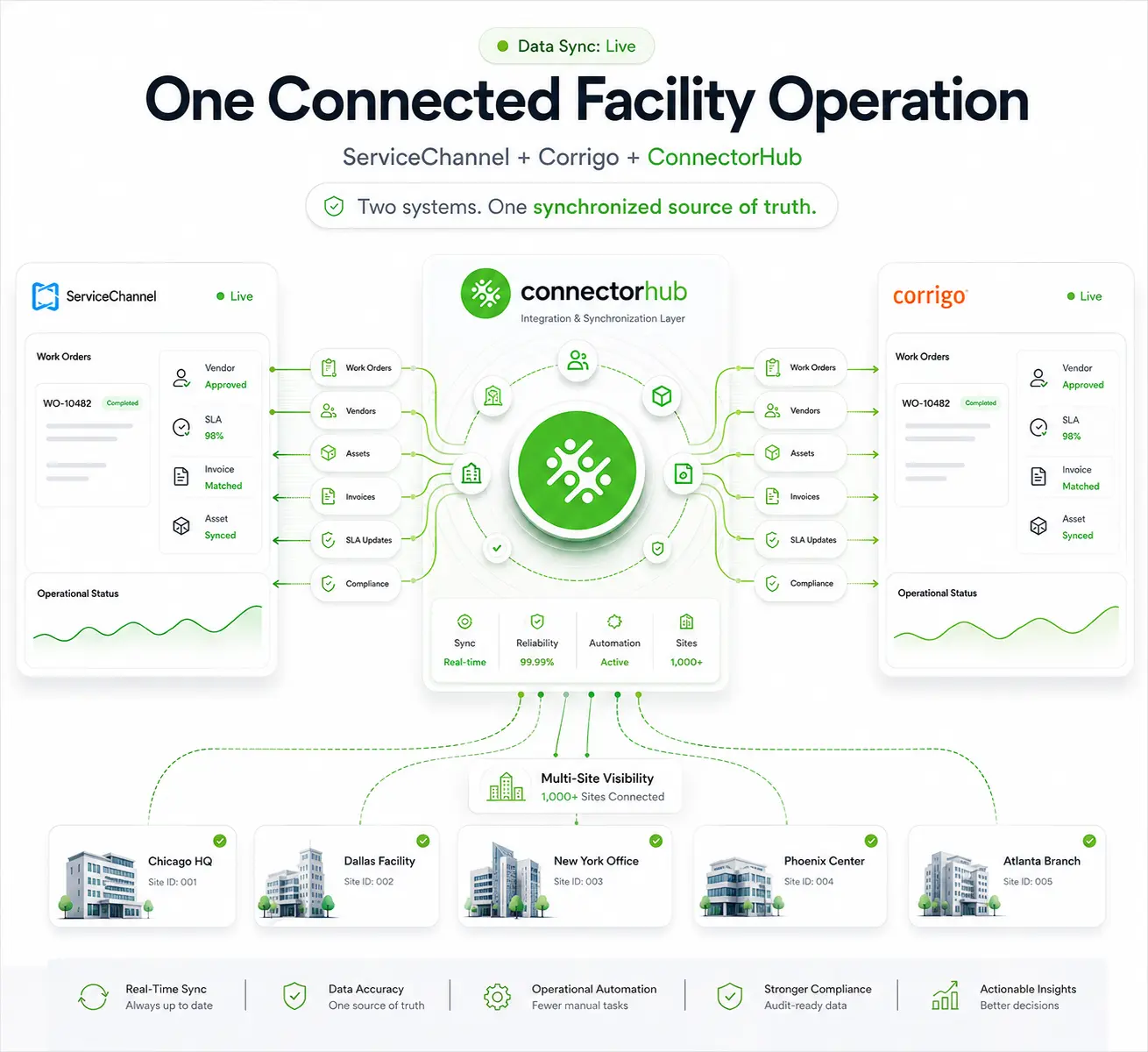
Autonomy and visibility. ConnectorHub ships with a live dashboard showing SLA alerts and workflow performance in language an operations manager can read without translation. Celigo's monitoring is thorough but geared toward IT, and its AI exception handling resolves a high share of errors automatically once a workflow is already live.
Here's how the two compare on the factors that matter most for ops-heavy teams:
Two other differences round out the picture. In terms of the use of API workflows, ConnectorHub includes the use of ETL nodes in its process, whereas Celigo restricts API builder to advanced pricing plans. Concerning compliance, ConnectorHub incorporates HIPAA, GDPR, and SOC 2 enterprise-grade data security as default in its tenants. Celigo meets the same standards, but layers controls on top, requiring extra setup for healthcare and regulated teams.
Celigo does offer a business-friendly layer on top of its core architecture, an improvement over older, code-heavy platforms. But IT still owns the underlying setup, and anything past a simple tweak routes back through a developer. ConnectorHub removes that ceiling. Ops staff build, adjust, and own the workflow end to end, the real reason facilities and service teams report faster iteration and less time stuck in a ticket queue.
Your Decision Checklist for Picking the Right Fit
Before comparing feature lists, it helps to answer a few practical questions:
- How much ownership do non-technical ops users need? If frontline staff should adjust workflows without a developer, weight no-code building higher.
- What's the actual complexity of your integrations? Domain-specific flows between CMMS and ERP look different from broad, multi-system enterprise pipelines.
- Do you need real-time visibility or heavy batch processing? Teams chasing live SLA tracking need something different from teams running scheduled EDI transfers.
- How predictable does your budget need to be? Transaction-based pricing might fit just fine if your volume is consistent and become very costly when you’re experiencing growing pains
- Does your industry carry specific compliance requirements? Healthcare, PropTech, and building maintenance require intrinsic security rather than security that is added on.
- How much time can you realistically spend on migration? A platform that takes months to configure delays the value you're trying to capture.
If your organization's connectivity needs mostly involve linking financial systems together, with very little daily operational complexity, Celigo’s highly focused expertise will serve you well. However, for almost everyone else, particularly teams managing CMMS, ERP, PropTech, IoT, or healthcare workflows, ConnectorHub’s agility, operational focus, and native compliance make it the superior overall choice for a comprehensive enterprise integration strategy.
Rollout Tips for a Smooth Migration & What to Watch Out For
A successful migration starts before any workflow gets built. Start by evaluating your active integrations: discover which run smoothly, which lean on fragile manual processes, and which recurring pain points drive the most support tickets.
From there, a phased approach tends to outperform a full cutover:
- Start with one high-friction workflow, such as a work order sync or invoice handoff, and run it parallel to the existing process.
- Train the operations team that will be managing the workflow on a daily basis and not just the IT people monitoring it.
- Establish governance upfront, even for no code flows, so that all changes are vetted before they get deployed.
- Expect data mapping surprises. Legacy systems rarely store information exactly the way the documentation suggests
Good application integration solutions get most operational workflows live within two to four weeks when built on prebuilt templates. Projects extending significantly beyond this timeframe generally indicate expanding requirements or delayed system access, rather than a limitation of the platform itself.
The most common mistake teams make is underestimating change management. The technology rarely fails first. Adoption does, when staff aren't given time to trust a new workflow before the old one gets switched off.
Why Ops Teams Are Leaning Toward ConnectorHub?
Celigo still has a place for narrow, finance-system-only integrations. But that's an increasingly small slice of what ops-heavy organizations actually need today.
For teams where operations, not IT, drives the roadmap, ConnectorHub is built for exactly that reality. It's no code builder enables a facility manager to make changes in a workflow on the very same day when there is any change in a client’s requirements, rather than submitting a ticket and waiting for a developer.
The live monitoring dashboards give operations leaders visibility they can actually act on, SLA alerts before a deadline is missed rather than an error log after the fact. For software companies building integrations into their own products, the embedded, white-label model turns what used to be a cost center into a feature customers pay for.
Also Read: From Chaos to Clarity: How System Integration Transforms Service Operations
Conclusion
For ops-heavy teams, the pattern here is consistent. Celigo can still make sense for a narrow band of finance-only, NetSuite-anchored use cases. But for any organization whose operations run through CMMS, ERP, PropTech, IoT, or healthcare systems, and whose team wants to own workflows without waiting on IT, ConnectorHub is built for that reality in a way Celigo simply isn't.
Do not take our word for it. Conduct a pilot test on your data and witness the difference yourself .
AI-capable integration is fast becoming the minimum requirement rather than a unique value proposition, and those platforms that make operations teams independent will continue to lead the pack of those that do not. Sign up for a demonstration of ConnectorHub and find out just how quickly your team can go live.