Sooner or later, every software or platform company bumps into this question. And when it comes up, it’s usually product, engineering, and sales all asking it at once: do we build our own integration engine ourselves, buy a general-purpose iPaaS, or embed a purpose-built integration layer right into the product?
Truthfully, cost isn’t really what this decision comes down to. It’s about picking the architecture that lets you ship connectors quickly, keep them stable across hundreds of tenants, and eventually turn integration from a support headache into a source of revenue.
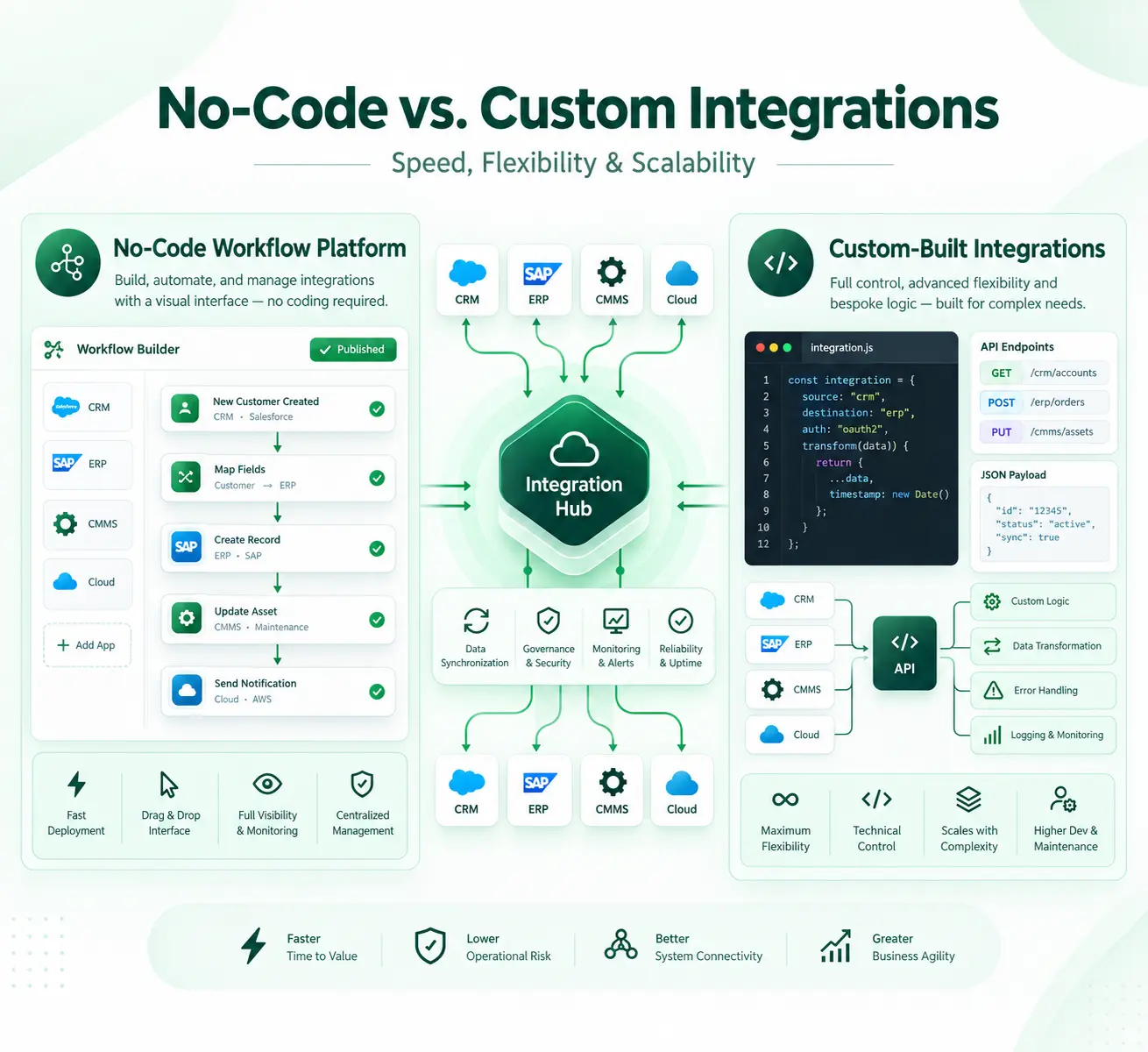
Most platform teams start by comparing the basics: a no-code integration platform their own staff can configure in days, and a embedded integration platform customers can operate without filing a support ticket.
Include a SaaS integration hub which transforms the one-time data mapping task into a five-minute fix and include a list of pre-built system connectors that already cover the ERPs, CRMs, and CMMS systems used by their buyers. Get that combination right, and integration becomes a sales asset.
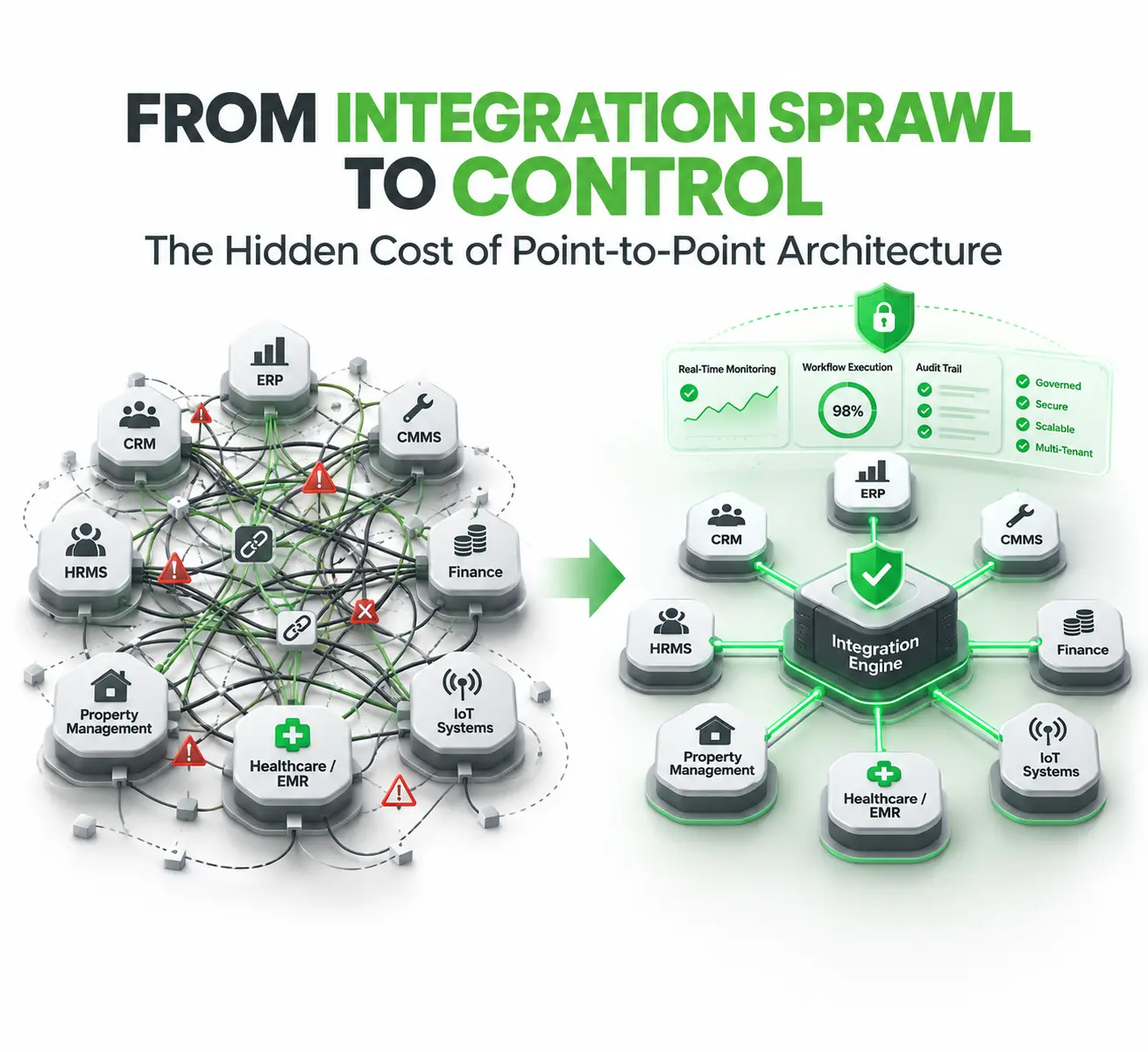
The Integration Tax on SaaS Platforms
Every platform provider already pays an "integration tax." It just doesn't always show up as its own line item.
Start with engineering time. IT teams now spend roughly 40% of their time building and testing custom integrations. That's time pulled straight from core product work and spent instead on API's integration plumbing most customers never see.
Weak connectivity doesn't just slow engineering down — it shrinks the pool of buyers willing to sign at all. In an HFS Research survey of 600 Global 2000 decision-makers, 90% said they prefer vendors that require only minimal to moderate integration effort.
Put those two numbers together, and the pattern is clear: the integration tax costs engineering capacity on one side, and lost deals on the other. Getting the architecture right pays off twice.
Why Native Builds Break at Scale
A native, in-house integration layer usually starts small — just a handful of connectors, built and maintained by the product engineering team itself.
That works fine while you’re small. But as the tenant count climbs, it starts to strain, because every new customer comes with their own auth flow, custom fields, and expectations.
Three things usually break first:
- Rate limits stop being a per-app problem and become a per-tenant problem. A shared integration serving many customers on the same upstream system has to track and back off against each tenant's ceiling separately, not just the app's overall limit.
- Failure of one tenant is a failure of all tenants. If there is no separation between workspace or namespace per tenant, then bad data, token expiry, or retry loops of one tenant will affect the entire layer.
- Maintenance eats the roadmap. Past roughly 20 custom connectors, 40–55% of an integration team's time typically goes to keeping existing connections alive, and annual maintenance alone tends to run 20–30% of the original build cost per connector, per year.
None of this means native builds are always the wrong call. It means the native-build decision has to be made with multi-tenant failure modes priced in from day one, not discovered at customer 150.
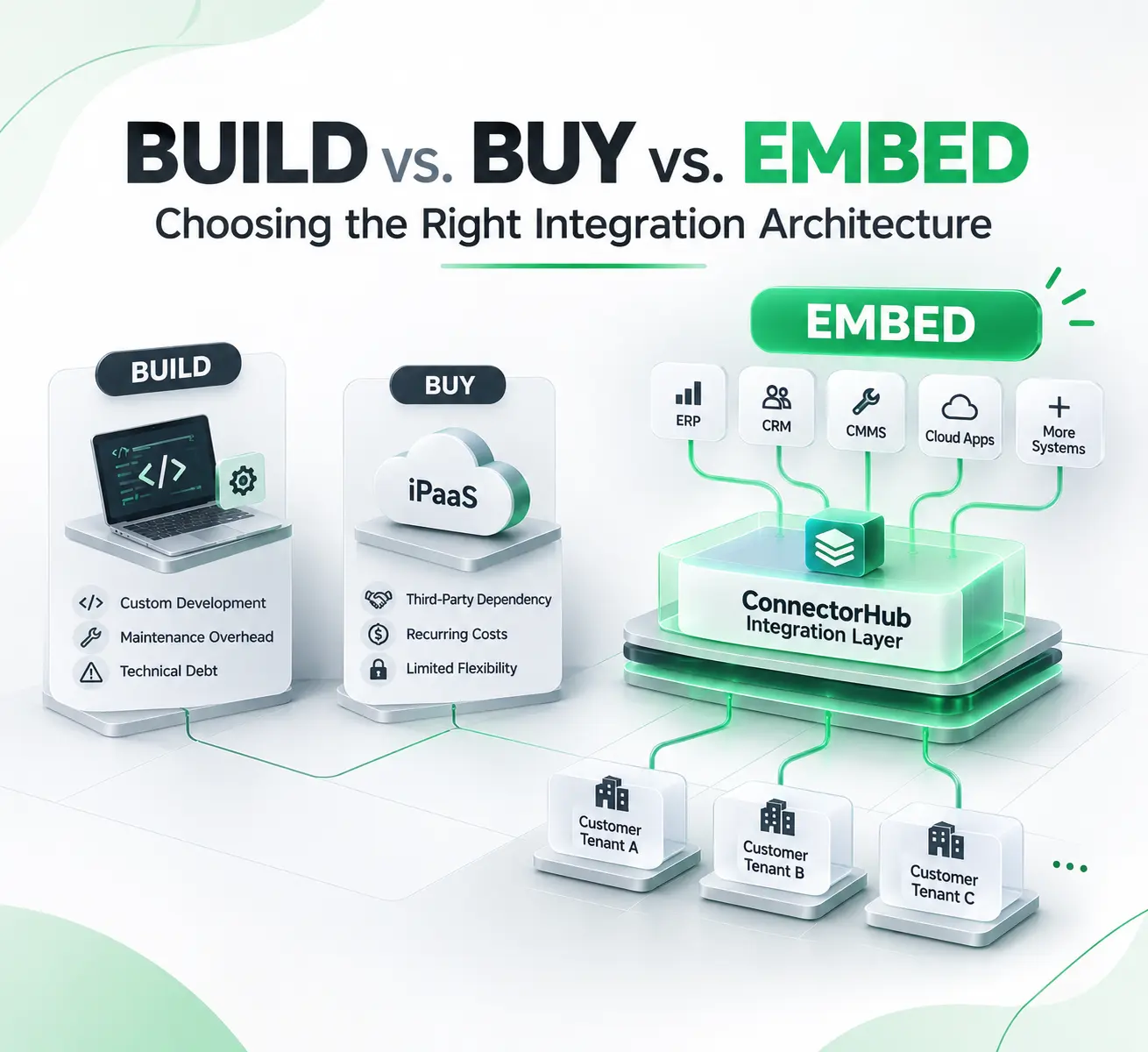
Build vs. Buy vs. Embed: The Architecture Trade-Offs That Matter
These three options aren't really competing on cost. They are competing on who owns the integration experience and how quickly it can grow with the product.
- Build means your engineering team owns every connector, every auth flow, and every schema change, using internal tooling rather than a data mapping automation built for the job.
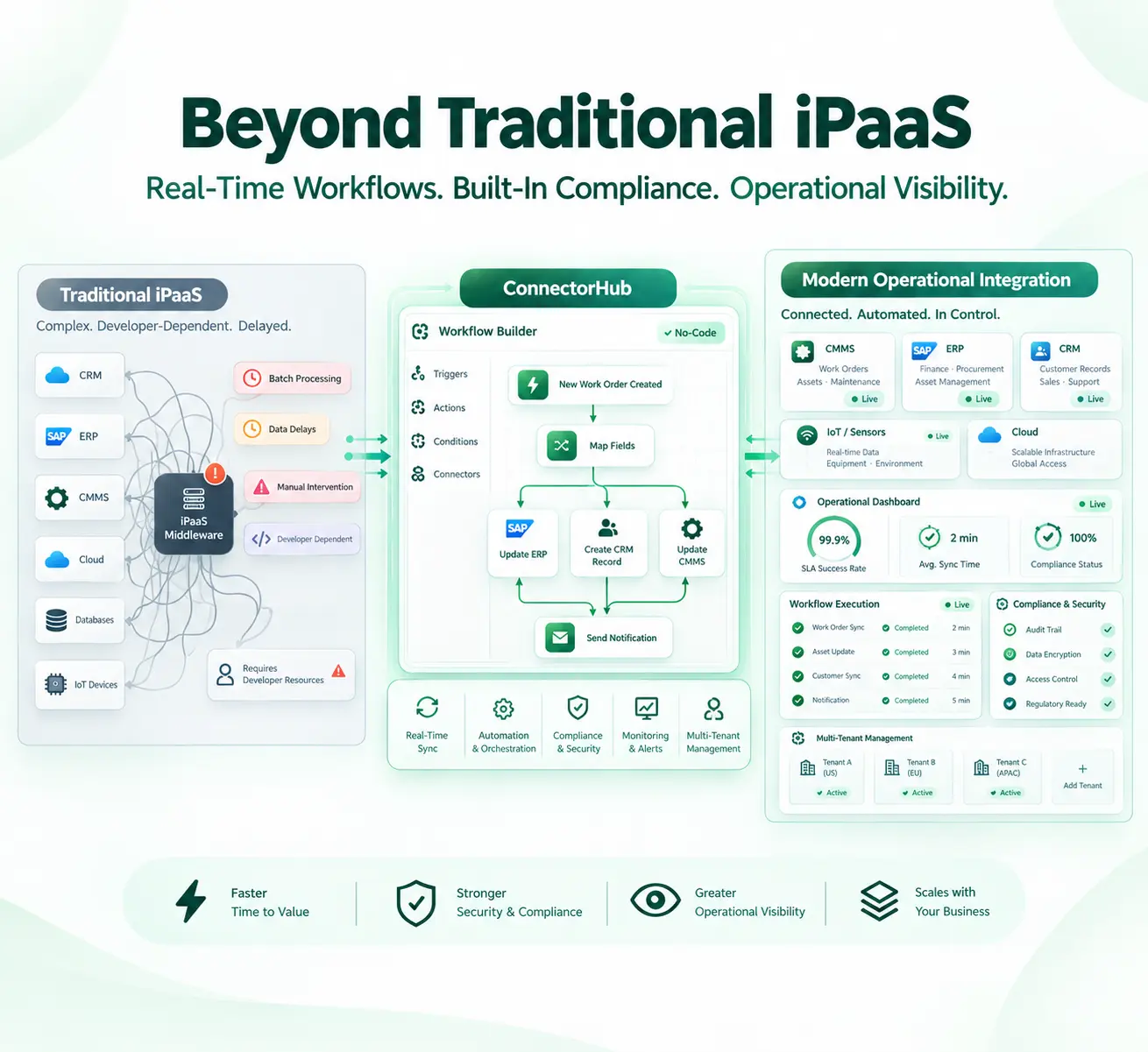
- Buy typically refers to directing your customers to a generic iPaaS solution that is separate from your product and from your brand.
- Embed refers to integrating into your product an integration layer that you license and present to your customers as your own.
Most iPaas solutions marketed to IT departments were built for internal automation, not for a software vendor's own multi-tenant product. That's exactly the gap embedded integration platforms were built to close.
Connector Breadth, Time-to-Value, and Multi-Tenant Performance
These three factors decide whether an embedded integration layer actually moves the product forward.
In practice, they're connected to each other — not separate line items on a scorecard.
Connector breadth decides if integration is going to be self-serve or a sales engineering project.
A platform provider targeting facilities, PropTech, or health care organizations must have multi-system integration for the particular ERPs, CMMS, and CRMs that their customers are using.
Time-to-value is where most build-it-yourself projects quietly fail.
Deployment timelines for ERP- and CRM-class integrations through a mature API integration platform typically run two to four weeks from kickoff to live sync. A custom build is hard to match at that pace such that a single connector alone can take two to twelve weeks of focused senior engineering time, before testing and edge cases are even accounted for.
Multi-tenant performance is the criterion generic iPaaS marketing tends to skip entirely.
Namespace per tenant architecture will ensure the efficient working of the common infrastructure, but at the same time, it will provide each customer with their own set of credentials, rate limit budgets, and retry state. Once you throw the high-volume data sync into the mix, rather than just poll-based data synchronization, that's the combination that will allow for the continued growth of a platform provider's tenant base.
Technical Debt and Maintenance Realities Across Architecture Models
Every architecture accrues some maintenance burden.
The difference is who absorbs it, and whether it's visible before it becomes a crisis.
- Build: Maintenance is invisible until it isn't. Past roughly 20 in-house connectors, maintenance alone can consume 40–55% of an integration team's time.
- Buy: An external iPaaS shifts maintenance off your engineering team — but also shifts visibility off your roadmap, since issues inside a customer's environment aren't yours to diagnose or fix directly.
- Embed: Maintenance moves to the vendor's connector team but stays visible to you. A multi-tenant platform performance with SLA alerts, and role-based access control for integrations, turn a silent failure into a visible one.
The real test isn't which model has zero maintenance. None does.
It's which model lets your team see a failure the moment it happens, assign it to the right owner, and fix it without pulling a senior engineer off the roadmap.
Turning Integrations into a Product Advantage
Treating integration purely as a cost to minimize misses where the revenue actually sits.
In a 2026 SaaS buyer survey, integrations and ecosystem fit were the second most common deciding factor between two competing products, cited by 24% of respondents, trailing only usability.
Separately, roughly three in four IT decision-makers say stronger third-party integration is essential before they'll commit new spend to enterprise automation or other software investments.
That shifts how a platform provider should price and package an embedded layer:
- Gate premium connectors behind a higher tier. ERP and finance-system connectivity is usually worth more to a buyer than basic webhook support, and willingness to pay reflects that.
- Offer integration as a service to customers who build upon your platform. Your application integration capabilities that allow you to create your product can be offered as a licensed capability by your customers.
- Time to value should be used not only as an engineering measure but also as a sales tool. Two to four weeks to integrate is more convincing than features.
Done well, the integration layer stops being something prospects probe in a security review.
How ConnectorHub Supports Embedded Integration Layers for Software & Platform Providers
ConnectorHub is built specifically for the "embed" path described above: platform providers can license ConnectorHub as their own integration layer rather than building and maintaining one internally.
ConnectorHub runs on a multi-tenant architecture that manages multiple customers and environments from a single console, instead of a per-customer deployment model that multiplies operational overhead. Connector coverage comes from a broad, customizable library, plus a toolkit for extending coverage to a platform's own proprietary or less common systems.
AI-powered field mapping with anomaly detection powered by AI reduces the amount of time that is usually spent on manual field mapping during the initial weeks of integration as a service deployment, and a live performance monitor with SLA alerts provides platform teams with insight into sync health without having to develop any monitoring tools from scratch.
There’s even governance, as SOC 2, HIPAA, and GDPR-compliant controls, encryption, access control, and auditing is available for all workflows. This is important if you are selling to healthcare, facilities, or any other regulated markets.
It’s all wrapped in an OEM licensing model with one goal: faster deployments, lower build costs, and a new recurring revenue stream from reselling connectivity to your own customers.
Conclusion
The build-vs-buy-vs-embed decision isn't really about which option is cheapest in isolation. It's about which one scales with your tenant count without scaling your engineering headcount at the same rate.
Native builds work until the multi-tenant failure modes show up. External enterprise integration platform tools solve your customer's problem, not your product's. Embedding a purpose-built, licensable layer is usually the only path that improves connector breadth, time-to-value, and multi-tenant performance at once, while turning what used to be a cost center into a revenue line.
For most software and platform providers, the practical next step isn't picking an architecture in the abstract.
It's auditing how much engineering time current integrations already consume, how many deals stall on connectivity gaps, and whether the roadmap can survive another year of building cloud integration software from scratch. If the honest answer to any of those is uncomfortable, embedding an integration layer like ConnectorHub's is worth evaluating before the next renewal cycle.