Nobody designs their integration architecture on purpose. It just grows, one urgent connector at a time.
Eventually the stack becomes a patchwork, no single engineer could fully explain. For years, that counted as a normal cost of running more than one system.
It isn't normal anymore. It's quietly become one of the most expensive, least visible costs on the technology budget.
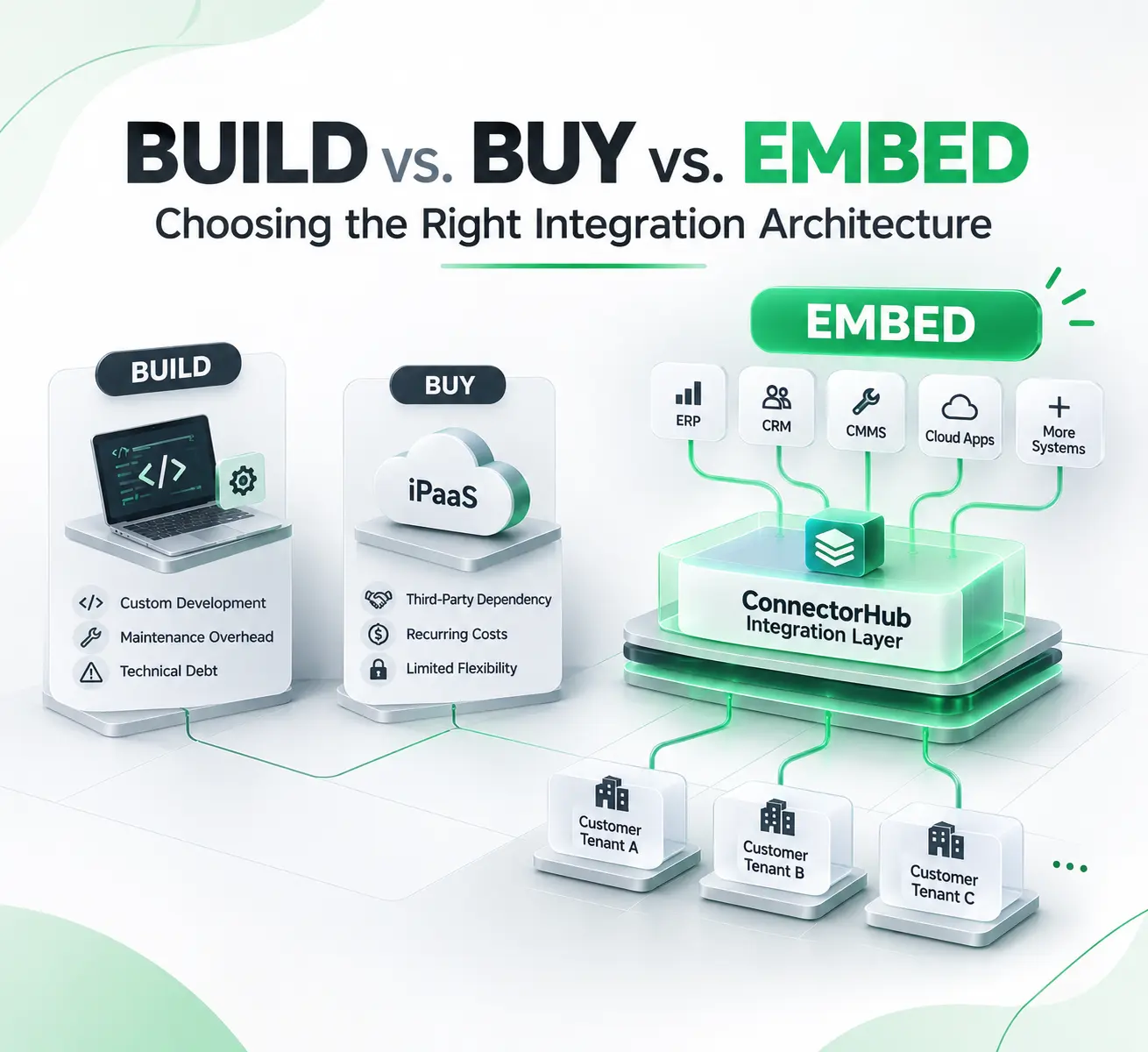
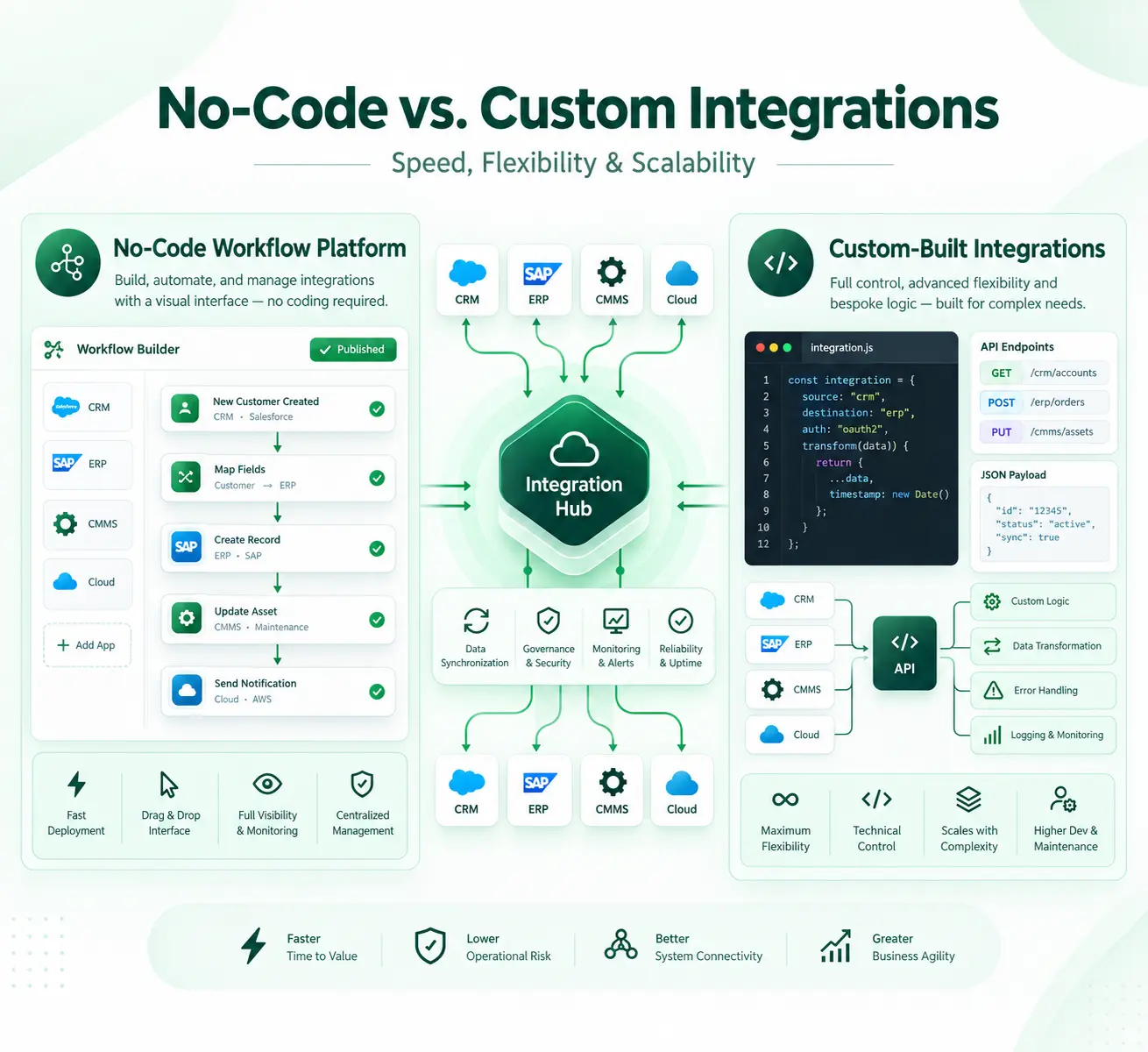
This shift toward something more structured isn't a vendor pitch. It's how executives stop paying, year after year, for decisions made under deadline pressure. A no-code integration platform and a workflow automation platform let operations and IT configure connections without writing code, on a scalable integration framework that works as a real iPaaS alternative with solid pre-built connectors already built in.
Why Point-to-Point Integrations Become Structural Liabilities at Scale
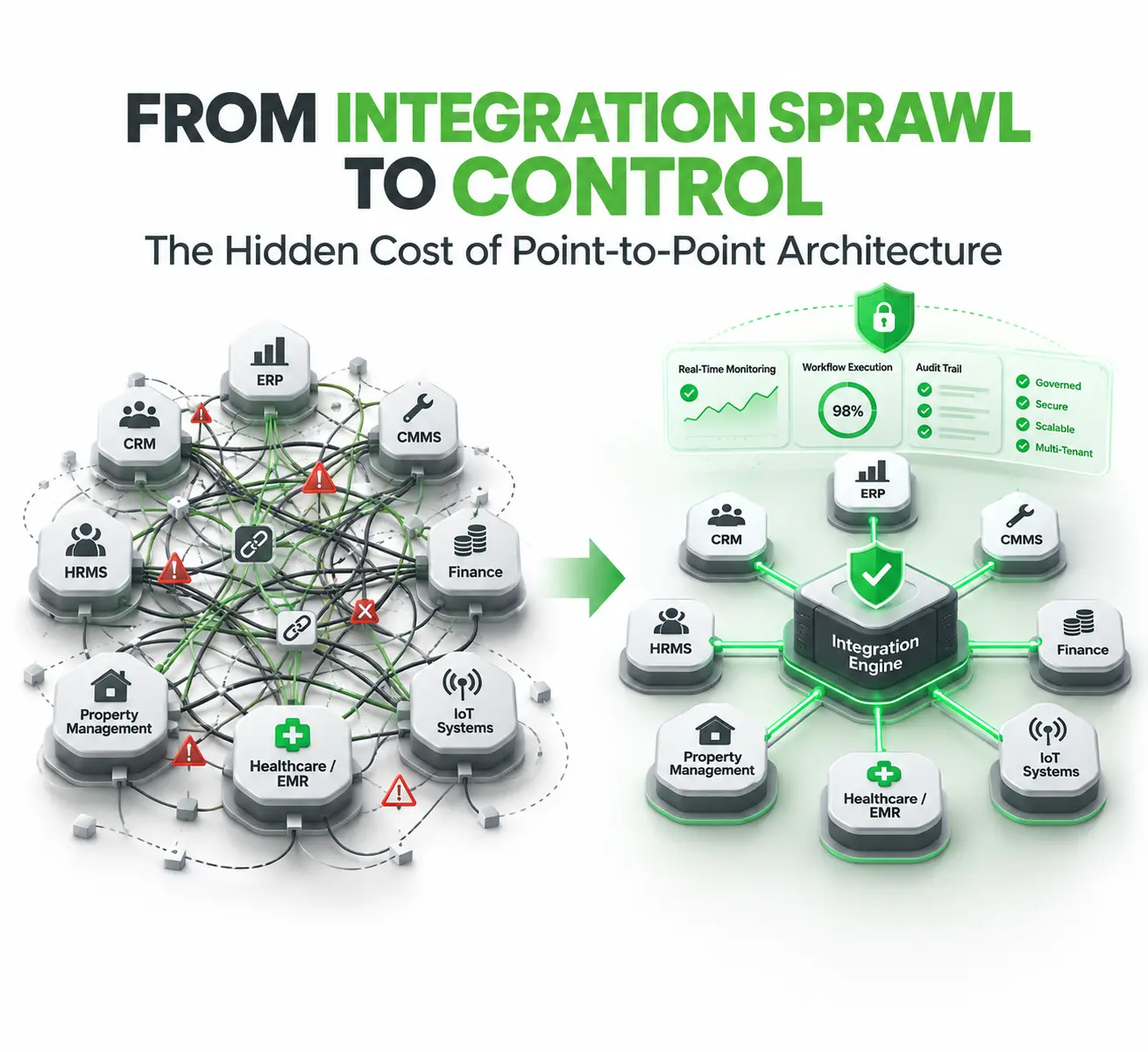
Add one system to a point-to-point setup, and you're not adding one connection. You're multiplying them.
The math is n(n-1)/2, where n is the number of connected systems, and it escalates fast. Four systems means six connections. Eight means twenty-eight, a number plenty of mid-market companies cross without noticing.
Each connection usually gets built by a different engineer, at a different time, using whatever authentication method and data format made sense that week. No shared standard, no single owner, no shared log. What’s left is a dependency nobody on staff can fully explain.
This is where multi-system integration stops being a technical footnote and becomes a real operational risk.
One schema change in a single source system can quietly break several downstream connections at once, and nothing in a point-to-point setup tracks those dependencies across the estate. That fragile, one-to-one relationship is exactly what a data integration platform is built to replace.
The Hidden Costs Executives Rarely See on a Balance Sheet
Budgets track the cost of building an integration, then mostly stop looking.
The research is consistent on this point: licensing of the software usually contributes to just 20 to 30 percent of the cost involved in the integration process. The remaining 70 to 80 percent lies within services, testing, and maintenance.
That gap — between what gets budgeted and what actually gets spent — is where the real integration tax hides.
And that ongoing cost isn’t small. Maintenance on point-to-point connections commonly runs 15 to 30 percent of the original build cost every single year, driven by vendor API integration changes, authentication updates, and the regression testing that inevitably follows.
Independent surveys put a number on the pain: integration challenges slow progress at most organizations, with lost productivity and delayed projects averaging $6.8 million a year.
The second hidden cost, compliance exposure, is often worse, because nobody's tracking it until an audit forces the question.
API integration points built without governance rarely make it into a formal data inventory. Sensitive information can end up flowing through endpoints nobody assessed for access control or lawful basis.
Security teams usually find these gaps only after audit evidence has gone missing, or after a data exposure has already happened. By then, fixing it costs far more than governance ever would have.
Here's where that hidden cost actually piles up:
- Maintenance: 15 to 30 percent of the original build cost, every year
- Rework: one vendor API change forces testing across every dependent connector
- Audit exposure: undocumented data flows are usually why compliance evidence comes up short
- Knowledge loss: the engineer who built a connector usually takes the know-how with them
What a Governed Workflow Platform Actually Changes
A governed platform does more than put a visual interface on old integration work. It changes the underlying architecture.
Instead of one-to-one wiring, every system connects once to a central hub. That single change collapses the n(n-1)/2 math back down to a flat n.
Eight systems no longer means twenty-eight brittle connections to maintain. It just means eight, each managed the same consistent way.
The second change is reusable logic, which is important because point-to-point connectors are coded just once and reused virtually never, as each connector is made just for one specific system pair.
A no-code workflow builder turns that formula on its head. One team codes once, reuses many times in several workflows and deploys versions that it can roll back in an instant in case of any trouble. That alone removes a good chunk of the rework problem.
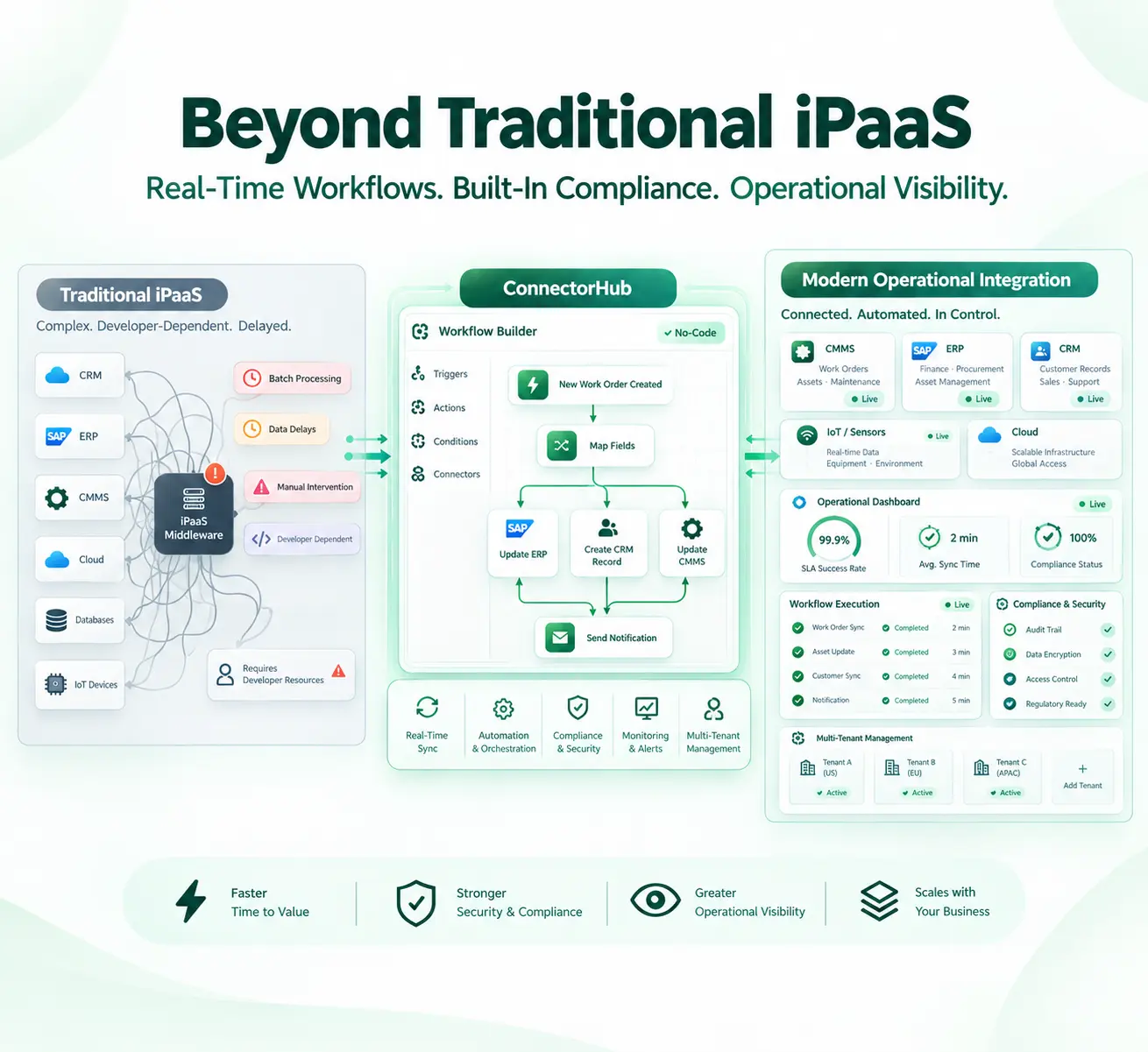
This is also where it’s worth stacking the approach up against legacy iPaaS solutions — and the comparison doesn’t flatter the old guard. The older generation of solutions managed to deal quite efficiently with the hub-and-spoke problem, although, at the same time, they reintroduced complexity via intense licensing issues, lengthy implementation processes, and reliance on specialized developers.
The modern enterprise integration platform maintains the advantage of centralization inherent to the architecture, while getting rid of all the implementation problems.
Core Capabilities That Separate Governed Platforms from Ad-Hoc Connections
Not every platform marketed as a governance layer actually governs anything.
What truly sets a genuine application integration solutions apart come down to a few core capabilities:
- Observability and alerts – A true integration monitoring dashboard with an actual live view of each workflow process execution so that you can detect issues while they happen, not after the harm has been done.
- Field mapping and validation – Data conversions are performed based on certain rules that prevent malformed records from being sent to another system.
- Workflow exception management – When a workflow fails, it doesn’t just vanish into the void. It lands in a queue where someone can review it, fix the issue, and retry, so that you do not miss anything.
- Role-based access and audit trails – It means every change gets logged to a named user, so compliance evidence exists with clarity.
Put those four together, and integration stops being a pile of invisible scripts. It becomes a managed, observable layer of the business.
Practical Patterns for Moving Away from Point-to-Point Without Big-Bang Risk
Trying to replace a whole integration platform in a single move rarely plays out well — it tends to create more risk than it solves.
A more reliable approach starts smaller: pinpoint the handful of connections that consume the most maintenance time or carry the heaviest compliance exposure.
Those are usually the systems of record — an ERP, a CRM, a CMMS — where a failure does the most damage. Migrate those first, and the return is clearest.
The second pattern is running the new workflow alongside the old connection before cutting over for good. Both paths run at the same time, with outputs compared side by side, so discrepancies surface before the legacy connection retires.
Most teams pursuing enterprise automation at scale decide it's worth the trade-off, usually right after they've lived through one point-to-point outage.
Industry-Level Implications Across Operations-Heavy Environments
Sprawl costs become evident in businesses in which the proliferation of systems exceeds the capabilities of the IT group to manage it.
Exchange of work order information is very important between CMMS, ERP, and CRM so that all the processes related to dispatching, billing, and customer communications remain aligned.
Overlay that with a cloud integration on top of this, what used to be a manual process is now an automated business process that runs itself without any human intervention on a daily basis.
Property technology and healthcare run into a related but distinct version of the same problem.
A PropTech company which requires that their leasing system, their IoT system and their property management system communicate with one another simultaneously. Or a healthcare organization that needs to connect their EMR, CMMS and ERP systems without allowing any protected health information to fall into unauthorized hands.
Different industries, but the same underlying need: visibility across every connected system — not just the two that happen to be talking to each other at any given moment.
How ConnectorHub Addresses the Shift to Governed Workflows
ConnectorHub regards this paradigm as a transformation of the integration platform rather than an add-on feature to the existing platform.
The workflow is created visually by using a connector library which covers over 100 different systems such as ERP, CRM, and CMMS. Hence, an integration begins with a template and not a script. And when a connector doesn’t exist yet, a custom connector toolkit lets you build one rather than waiting on the roadmap.
AI-assisted mapping takes care of field-level matching and catches anomalies before they have a chance to propagate downstream.
That’s where the multi-tenant architecture earns its keep — a single console manages integrations across business units or client environments, with role-based access and full audit logging on every change.
Conclusion
Nobody set out to make point-to-point integration a long-term strategy. It was just the fastest way to solve whatever problem was in front of you and when that happens often enough, across enough systems, the quick fix quietly becomes the architecture everyone’s stuck with.
That default doesn’t stay contained in an IT budget line anymore, either. It shows up as administrative overhead, as findings in an audit report, as the hours a team spends every week just keeping yesterday’s shortcuts from falling over.
A governed workflow platform doesn’t make integration work go away. What it changes is the nature of that work — less time spent resolving brittle connections, more time spent on deliberate configuration within a system actually built to handle change.
Which is really the question executives should be asking: not whether point-to-point integration still technically works, but how much longer the organization can afford to keep paying to prop it up.