.svg)

As AI agents become embedded across the enterprise stack, the real challenge is no longer building intelligence, it’s getting systems to work together reliably at scale. Gartner predicts that 40% of enterprise applications will include task-specific AI agents by 2026, making manual, brittle integrations a fast path to operational complexity and long-term failure.
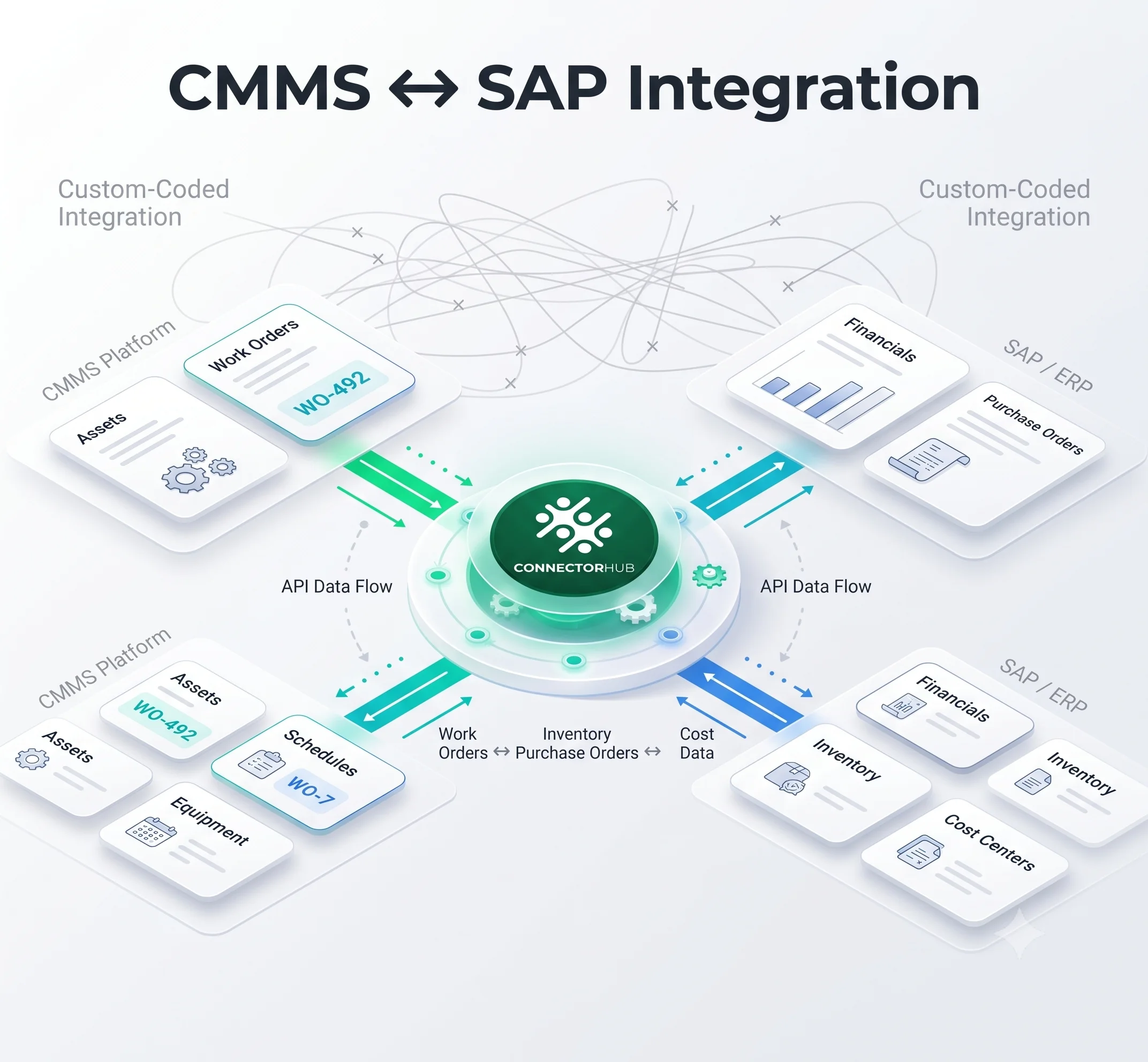
It's exactly what pushes technology leaders to take a hard look at how their stack is connected often prompting them to upgrade their core integration platform. The ability to easily integrate ERP and CMMS systems allows organizations to bridge the gap between financial oversight and physical operational maintenance.
AI workflow automation is a key factor that is changing how organizations are structured in ways that aren't always obvious from the outside. A big part of this shift is letting AI-driven data mapping and syncing data across older systems and modern cloud tools which used to be the kind of work that used to eat up hours and still produce errors. It is all evolving in 2026. Let’s see how.
The Evolution of Enterprise Integrations: From Rigid to Agentic
Traditional automation is reliable right up until something falls outside the script, then it stops cold. Intelligent automation fills that gap by working through unstructured data, picking out what matters, and making real-time calls without waiting for a human to step in. That's what allows modern platforms to handle genuine complexity without needing constant supervision to keep things on track.
To understand this transition, executives must look at how agentic systems differ from basic robotic process execution:
- Autonomous Goal Execution: Agents take a complex objective and figure out the steps themselves, no rigid scripts, no hand-holding through every stage.
- Cross-Platform Navigation: They move between your apps and internal files to grab the exact info it needs, right when it needs it.
- Dynamic Adaptability: When conditions change mid-process, workflows don't stall, they adjust and keep moving based on what's happening in real time.
These workflow automation platforms are completely changing how businesses run their daily operations. By syncing order tracking, stock checks, and customer emails, they cut out a ton of busywork and manual back-and-forth for the team. The real competitive advantage comes from orchestrating these goal-driven systems across the entire enterprise to create a highly responsive environment.
Why Traditional Integrations Fall Short in 2026?
- Point-to-point integrations don’t scale
Most enterprises didn’t intentionally design their integration architecture. Systems were integrated one by one, usually to address immediate business needs. Over time, those links proliferated into a tightly woven web of dependencies that is hard to manage, diagnose, or transform. Each added integration adds to the operational overhead.
- Growth of SaaS has outpaced models for integration
The whole single, centralized software suite days are numbered. Large-scale enterprises are using hundreds of specialized SaaS applications for finance, HR, CRM, operations, analytics, and AI today. Enterprises with more than 10K employees tend to have over 660 applications and spend upwards of $284 million annually for large enterprises. Traditional integration techniques were never designed to handle this new degree of fragmentation and scale.
- Conventional architectures are not viable for agentic AI enterprise
AI is maturing beyond copilots and chat interfaces to agentic systems that can reason, plan, and take actions on its own. Such systems need to have uninterrupted, real-time access to enterprise data and workflows in a cross-platform manner. Conventional integration patterns don’t translate well to this shift. Rigid ETL pipelines, API customer service levels (SLAs), and static workflows create delays and administrative bottlenecks that block AI agents from working with maximum effectiveness.
- Lock-In vendors are closing in on enterprise data
Enterprise software providers are increasingly limiting the ways that customer data can be used and accessed by third-party AI systems. For example, SAP’s revised API Policy v4/2026 specifically prohibits the use of SAP APIs with autonomous or generative AI systems that plan or carry out API calls by themselves. This is indicative of the wider industry move where vendors are exerting greater control over integrations, access to data, and platform ecosystems.
- Cache-first integration models are security risks
Cache-first models for integrating cloud and SaaS services are very widely used today by many of the main cloud and SaaS vendors. Cache-first architectures are what most unified API providers follow. They take customer data from third-party systems and other sources, they pull it continuously, they normalize it, and then they store it in their own infrastructure. This presents a big security and compliance risk.
- Rigid schemas break in real enterprise environments
Enterprise software rarely runs on standard platforms. Custom objects and fields in Salesforce deployments. HR systems that has structure specific to organization’s employees. ERP implementations differ dramatically from company to company. Traditional unified APIs that abstract this complexity often push this complexity to simplified schemas that are the equivalent of lowest common denominators. Sure, that works for very simple use cases, but it breaks down in enterprise use cases, where customizing is the norm.
- Integration projects still don’t scale
To say enterprise integration projects are costly and risky is to understate the truth. A joint study by McKinsey and Oxford University found that large software projects run 66% over budget on average and 33% over schedule. Integrations are expensive even when they’re homegrown. Developing and maintaining a single API connector can cost anywhere from $50,000 to $150,000 per year, especially once you factor in routine maintenance, dealing with vendor API changes, and providing operational support.
- The APIs weren’t built for AI consumption
Most enterprise APIs were created with human developers in mind, not AI that draws its own conclusions and passes its own judgment. Many are missing standard documentation, discoverable metadata, or machine-readable formats. Authentication methodologies are very diverse. Limits on rates, pagination, asynchronous processing, inconsistent schema make it hard to orchestrate them across systems.
Navigating the Realities of Enterprise Operational Challenges
Stepping up to more advanced ways of working is a huge win, but let’s be real—it makes things a lot more complicated to manage. The real return is growth and alignment without a proportional increase in headcount. When automation is working the way it should, the pace picks up and the people doing the work finally have room to focus on things that require their thinking.
However, business leaders must intelligently design their frameworks to mitigate the inherent risks of sophisticated digital orchestration:
- Challenge 1 - Data Privacy Risks: Sharing sensitive financial or employee records across interconnected systems requires strict end-to-end encryption and robust role-based access controls.
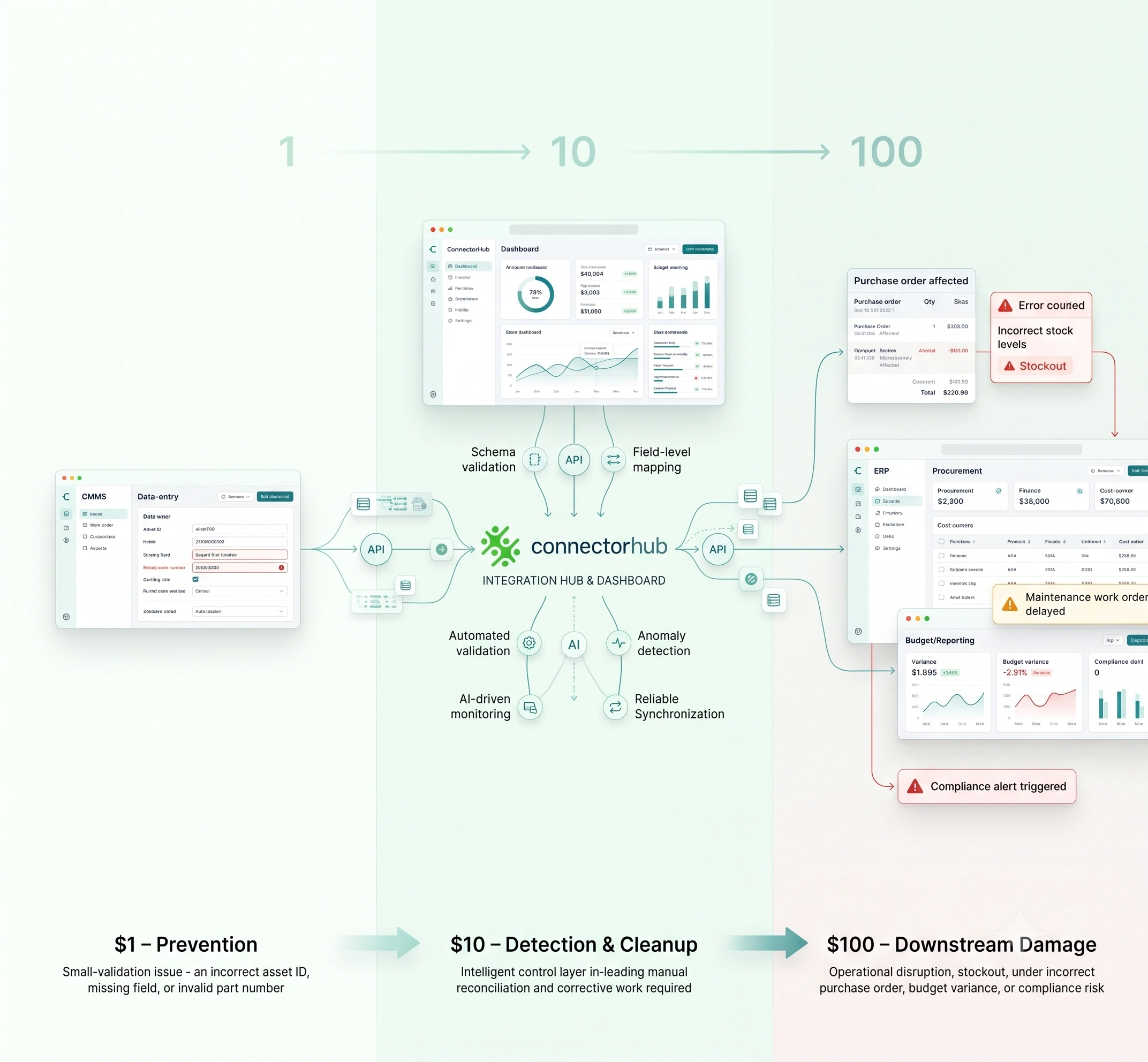
- Challenge 2 - Over-Automation Failures: Taking humans out of the loop before the system has earned that trust can turn small mistakes into serious ones. High-stakes decisions still need conditional routing and a human in the chain. Anomaly detection in workflows acts as the safety net, catching unusual patterns before they have a chance to spiral into something much harder to fix.
- Challenge 3 - Integration Complexity: Fragmented application architectures must be unified using platforms that wrap around existing infrastructure rather than attempting risky wholesale replacements.
- Challenge 4 - Algorithmic Bias: Automated decisions need to be audited regularly and backed by transparent rules because fairness and explainability aren't things you can assume, they must be verified.
Running a massive setup means you need a foundation that can actually handle the heat. By keeping projects in their own lanes and having plenty of backups ready to go, we make sure the system doesn’t choke when things get busy. The priority is keeping things running because one unexpected failure shouldn't be enough to derail momentum or turn into a costly problem.
Real-World Wins Via CMMS, ERP, and CRM Automation Examples
The real test isn't what technology promises, it's what actually changes in day-to-day operations once it's in place. Companies leveraging advanced software integration services are seeing remarkable transformations in how their core department functions and collaborates. Connecting distinct platforms enables cross-functional visibility that fundamentally changes the trajectory of operational efficiency and customer satisfaction.
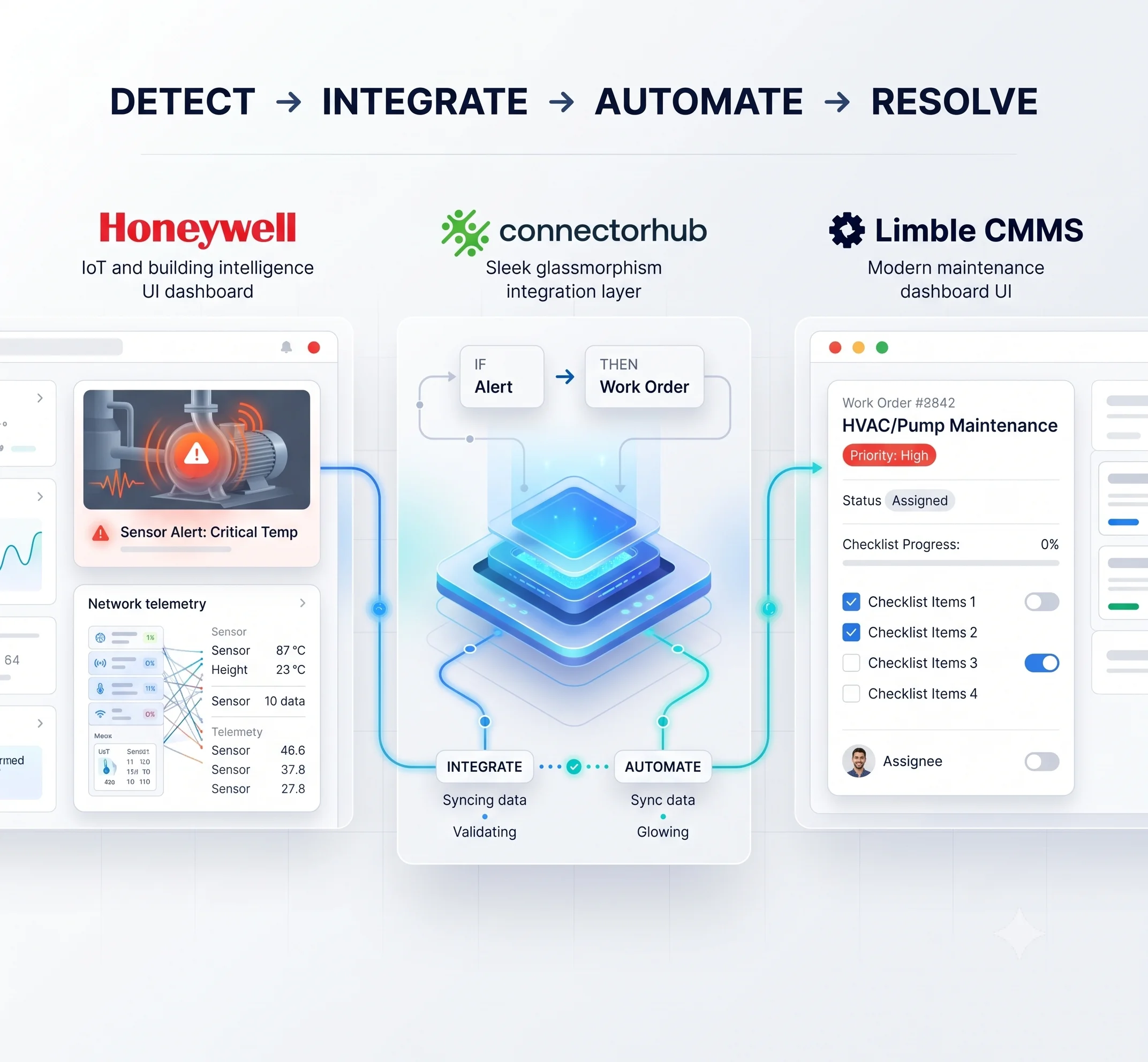
In manufacturing, connecting floor devices to central planning systems generates AI-powered operational insights that weren't visible before. That continuous data flow is what makes predictive maintenance automation practical, catching potential failures early, well before they bring production to a halt. The result is less costly downtime and equipment that holds up considerably longer.
Customer support teams are rebuilding how they work from the ground up. Routine questions get resolved immediately, and anything that needs a human touch gets there without the customer ever feeling the transition. The result is faster response times and a noticeably better experience without the cost of scaling up a larger team to make it happen.
The real case for intelligent workflows isn't philosophical, it's in the numbers. Looking at what individual departments are gaining makes it clear why this has shifted from "nice to have" to a genuine strategic priority.
Here's a breakdown of what organizations are seeing across their core business functions.
Implementation Roadmap: Getting Started with AI-Powered Integrations
STEP 1: Setting up your governance framework
Establish your governance framework before building any operational workflows. Strike a balance between giving business teams creative freedom and maintaining strict IT visibility over new systems. Implement solid testing environments and conduct thorough security reviews prior to any official launch. This proactive approach ensures every connection adds genuine value without exposing the business to unseen operational risks.
STEP 2: Selecting the right technology partner
Choosing the ideal technology partner is the most consequential decision in this operational transition. You need a vendor capable of handling unstructured data and escalating exceptions without constant human supervision. The right data integration platform grows with the business without creating new constraints. It keeps up with shifting regulations and never becomes the thing slowing everything else down.
STEP 3: Implementing continuous security measures
Security requires continuous attention when sensitive information flows freely across automated enterprise systems. Tight access controls and clean documentation make compliance with something that happens naturally, not something you chase. Catching vulnerabilities early is what keeps trust in the system intact. Your connected architecture must withstand serious enterprise-level scrutiny without compromising processing speed.
STEP 4: Deploying your operational engine
ConnectorHub provides the exact infrastructure required to power these highly advanced AI integration solutions for industry-wide executives. Our platform empowers both technical and business teams to deploy intelligent systems with complete operational confidence. By utilizing our tailored architecture, enterprises can safely automate the process of unifying disjointed software suites. This creates a seamlessly connected, high-performing engine ready for future growth.
How ConnectorHub Powers AI-Ready Enterprise Integrations?
Moving toward an intelligent operational model isn't something you figure out as you go, it takes a partner who genuinely understands what modern enterprise architecture looks like under the hood. ConnectorHub was built for exactly that. We give executives a solid foundation through no-code workflow builder to bridge the gap between the legacy systems they have inherited and the AI capabilities they're trying to build toward, all without tearing apart what's already working.
Our platform handles the complex orchestration of connecting different software ecosystems quietly in the background. ConnectorHub brings AI directly into the workflow-building experience, helping teams create integrations faster without needing to start from scratch. Users can simply describe what they want in plain English, such as syncing CRM records, processing orders, or moving files between systems and ConnectorHub automatically generates a draft workflow with the right nodes, connections, and configurations.
Beyond workflow creation, ConnectorHub also simplifies day-to-day configuration work through AI-powered assistance inside Assign and Script nodes. Instead of manually writing expressions or JavaScript logic, users can explain what they want in natural language, and ConnectorHub generates the assignments or code automatically using the variables already available in the workflow.
ConnectorHub further strengthens AI-driven automation through its embeddings capability, which quietly learns from workflows already built across the organization. By creating vector-based representations of existing workflows, the platform can surface patterns and similarities that improve future AI workflow generation results.
Over time, this means generated workflows become more aligned with how the organization already integrates systems and handles business processes. Together, these capabilities make ConnectorHub a practical foundation for AI-ready enterprise integrations, enabling businesses to automate faster, scale integrations more efficiently, and adapt quickly to evolving operational needs.
Also Read: 10 Best Workflow Automation Tools for Businesses in 2026
Conclusion
Scattered tools and manual workarounds had their time but carrying that weight now is a choice that shows. Things move too fast, the bar keeps rising, and there's not much patience left, from customers, from markets, or from the people doing the work. The organizations quietly pulling ahead have all landed in the same place: AI integration for streamlining processes stopped being a talking point and became the foundation everything else gets built on.
As this technology matures, the walls between separate organizations will matter a lot less; autonomous agents will coordinate across company lines smoothly. AI workflow analytics will quietly sit in the background, catching inefficiencies before they compound and keeping operations sharp without someone having to manually audit everything.
Everyone loves the idea of AI, but no one wants to do the work of cleaning up the messy data it actually takes to run it and move toward automating business. ConnectorHub takes care of that headache for you. We untangle your systems and get your data organized, so your tools have the accurate information they need to be useful. We build a reliable setup that grows with your business, helping you turn your big ideas into real revenue.