.svg)

Today, businesses use dozens of software applications to manage their operations, such that the numbers go as high as average large enterprises using around 660 apps. The trouble is, these tools are typically in their own little silos, making it challenging to share data without interruptions or automate tasks.
This means that things get bogged down, repeated, and opportunities are missed. This is because teams had to spend a considerable amount of time manually moving data from one application to another.
Integration platforms solve this problem by enabling applications to work together in a smart way. With the increasing number of businesses using cloud-based applications, there has been a tremendous need for efficient and easy-to-manage connections.
The inclusion of integration platforms within software applications is a significant step forward. This allows users to connect applications without having to leave the primary application.
The concept of operational iPaaS is the next evolution of this thinking. This is because it views integration as a continuous process and not a project. This helps businesses ensure that everything is working well in a rapidly changing environment.
The Historical Evolution from EDI to Modern iPaaS
Integration started with the concept of electronic data interchange (EDI). Businesses transmitted structured documents such as purchase orders and invoices in a common format.
Although this approach was sufficient for simple supplier and buyer communication, it became increasingly hard to manage with more partners and types of documents.
Later, enterprise service buses provided a common platform where various applications could integrate using a unified layer. This minimized point-to-point connectivity.
The emergence of APIs brought a new paradigm to integration. RESTful APIs and webhooks enabled more flexible and near-real-time system connectivity.
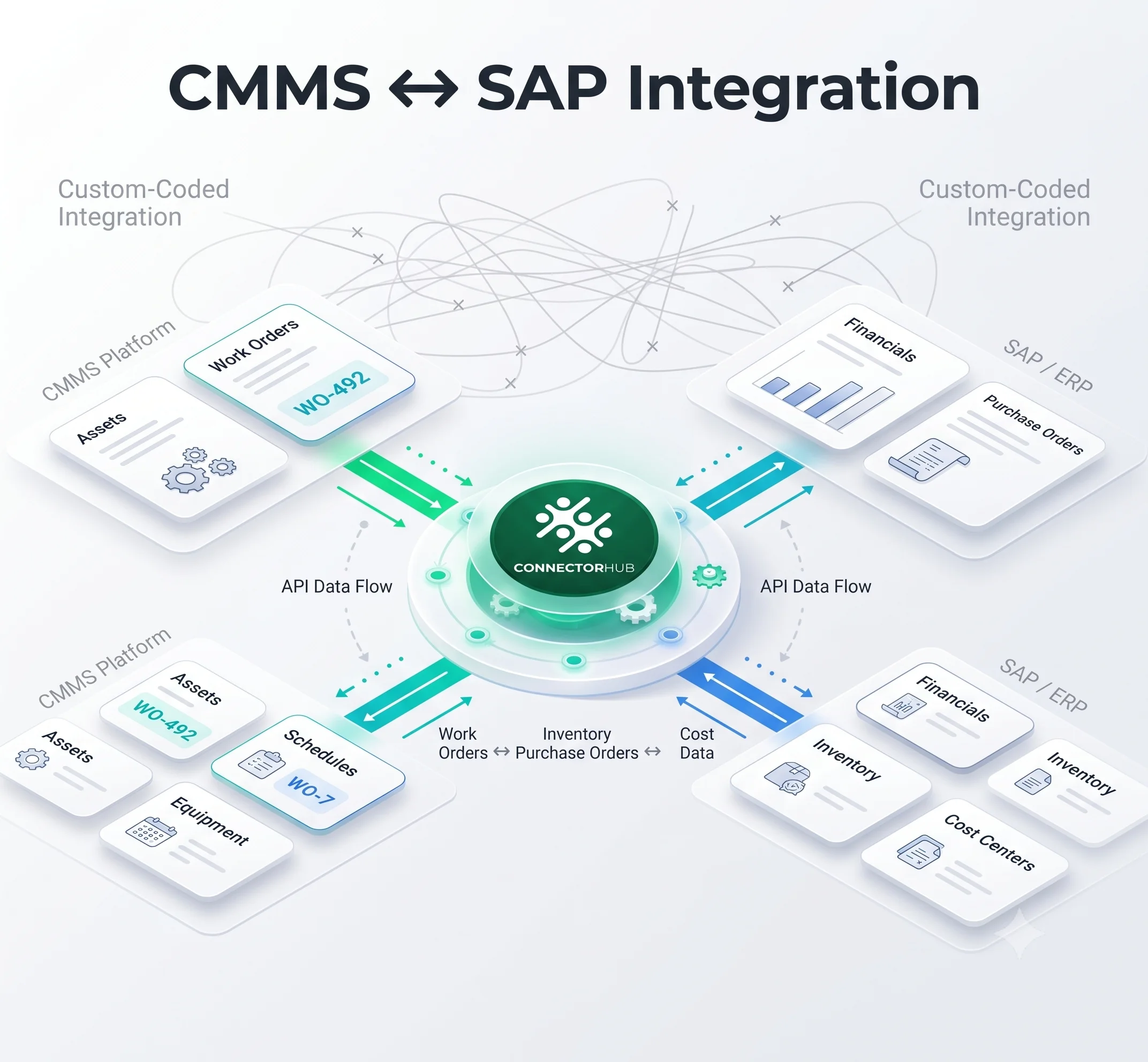
The current iPaaS solution is based on these advancements. It provides a cloud-native platform that supports legacy communication protocols and the latest API standards. Many organizations now view modern iPaaS offerings as a powerful iPaaS alternative to legacy middleware and custom-coded solutions.
Hybrid and modular designs enable organizations to select the optimal combination of components. This enables businesses to easily adapt without having to change everything at once.
Understanding iPaaS Fundamentals
An integration platform as a service, also known as iPaaS, is a collection of cloud-based services for integrating applications, data, and business processes.
It offers pre-built connectors for common business apps. These connectors support authentication, data mapping, and simple transformations to get started quickly.
Most iPaaS solutions come with low-code or no-code workflow builder interfaces. Business users can create and modify connections without needing to write a lot of code.
Data is transferred reliably between applications with error handling and retries. This prevents failed transfers and lost data.
The overall status of all integrations is visible in a centralized monitoring system. This assists in detecting problems early and optimizing based on actual usage patterns.
Unlike the traditional on-premises middleware, the iPaaS solution can scale easily to handle increasing demands. It is also appropriate for a hybrid setup that includes cloud-based services and legacy systems that are still in use.
Drivers Fueling the Adoption of iPaaS
There are several strong drivers that are currently propelling businesses to adopt integration platforms (iPaaS) at a fast pace.
- Digital Transformation: It still remains the primary driver of adoption for integration platforms. This is because businesses are eager to transform and be more agile in meeting the needs of their customers.
- Explosion of SaaS Applications: The need to integrate all the new SaaS applications that businesses are adopting is also a driver. This is because, without integration, the valuable data remains locked in separate applications.
- AI and Automation Initiatives: Organizations have realized that having clean and accessible data in their systems is a necessity for success in AI initiatives.
- Cost and Resource Constraints: The time and cost associated with custom integrations are consuming a lot of developer time, and hence, organizations are opting for iPaaS solutions that are ready to use.
- Security and Compliance Requirements: With the increase in security threats and the need for compliance, organizations are opting for platforms that provide strong governance, audit trails, and role-based access controls.
There are regional variations, but the general trend is that of acceptance across industries that rely on software ecosystems.
Differentiating Between Enterprise iPaaS & Embedded iPaaS
A New Era with the Emergence of Operational iPaaS
Operational iPaaS is all about managing integrations rather than developing them. It views connections as living services that need to be maintained. This is known as Integration Operations or IntOps. This lifecycle begins at the design level and goes all the way to incident response.
It is an alternative to traditional iPaaS solutions. It breaks away from the project's mentality. It provides predictable and subscription-based management. Governance in operational iPaaS is service-provider centric. It helps to eliminate blame games in multi-vendor setups.
The increasing use of agentic AI makes this approach more necessary. Autonomous agents need stable and orchestrated data flows to work properly. Operational iPaaS fills the gap between traditional integration and the requirements of dynamic and AI-driven operations.
AI-Driven Innovations in Integration Platforms
Companies have started to position themselves as “AI-first” companies. They use AI to automate tasks and make decisions on the platform. AI agents help developers create integrations quickly. They understand the requirements, create mappings, and even code transformation logic.
Predictive analytics warn teams of impending failures. AI is capable of analyzing patterns and making recommendations to prevent them. Real-time data synchronization is greatly improved. AI helps ensure consistency between systems even in high-volume and unpredictable events.
The successful implementation of AI is highly dependent on clean and accessible data. Without proper integration automation, most AI initiatives remain in the pilot phase.
The sector is progressing towards cloud-native solutions. These solutions provide the necessary elasticity for handling increasing workloads. Most connection-related tasks are now automated. Integration platforms now adapt to usage patterns instead of needing constant human intervention.
Small and medium-sized businesses are jumping on these platforms more and more. The affordable, low-maintenance options let them keep up with bigger companies.
How Embedded Integrations from Operational iPaaS Boost SaaS Product Value
Operational iPaaS delivers reliable, always-running integrations. When you build them right into your SaaS product, they feel completely native and smooth. That turns your solution into something customers actually rely on every day as part of their workflow.
Frictionless In-App Experience - Customers configure and manage their integrations right from your app. No additional logins or dashboards required.
Stronger Customer Retention - Native integrations let your product connect smoothly with the CRMs, ERPs, and other core systems your customers already rely on.
Faster Onboarding and Outcomes - With pre-built connectors and self-service setup, customers can get up and running quickly. They start seeing real value sooner and end up a lot happier.
Easier Sales Wins - Many customers require native integrations before signing up. Offering them removes a major roadblock, shortens the sales cycle, and opens the door to bigger deals.
Less Work for Your Engineering Team - Operational iPaaS handles all the tedious stuff like authentication, scaling, updates, bug fixes, so your developers can spend their time building new features instead of wrestling with integration code.
Trustworthy Real-Time Automation - Data is constantly updated and accurate through monitoring and trigger actions. Automated processes happen with no human intervention needed.
Enterprise-Ready Security & Scale - The inherent enterprise security, auditing, and multi-tenancy cover all aspects. The system scales with the number of customers.
By using operational iPaaS for embedded integrations, SaaS companies move from reactive and resource-intensive connectivity to proactive and product-led value addition.
Common Integration Bottlenecks & How Operational iPaaS Solves Them
Point-to-point integration in legacy systems is fragile and prone to failure when systems are updated. They do not possess the robustness required for today’s operations. A lack of skills hinders progress. Many organizations face challenges in finding personnel to handle complex integration scenarios.
Operational iPaaS solves these problems through managed lifecycle support. It offers skills and automation without increasing internal headcounts. Centralized observability reduces troubleshooting time. Teams identify and fix problems before they impact users.
The approach considers integrations as products with a lifecycle. It establishes long-term stability, which is ready to be leveraged by AI workflows.
What Makes ConnectorHub the Right Integration Solution for You
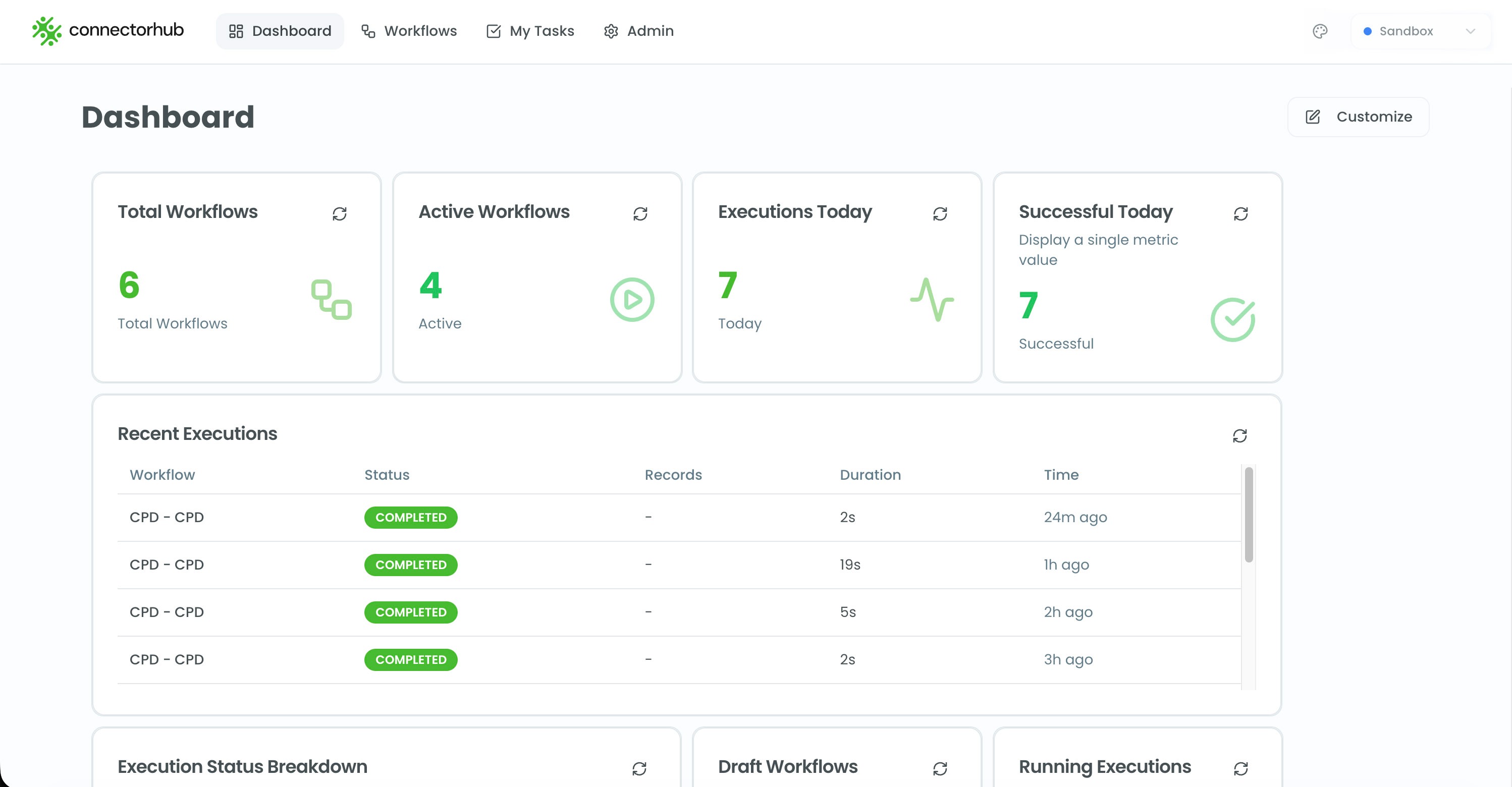
ConnectorHub offers the advantages of an operational iPaaS in a convenient form.
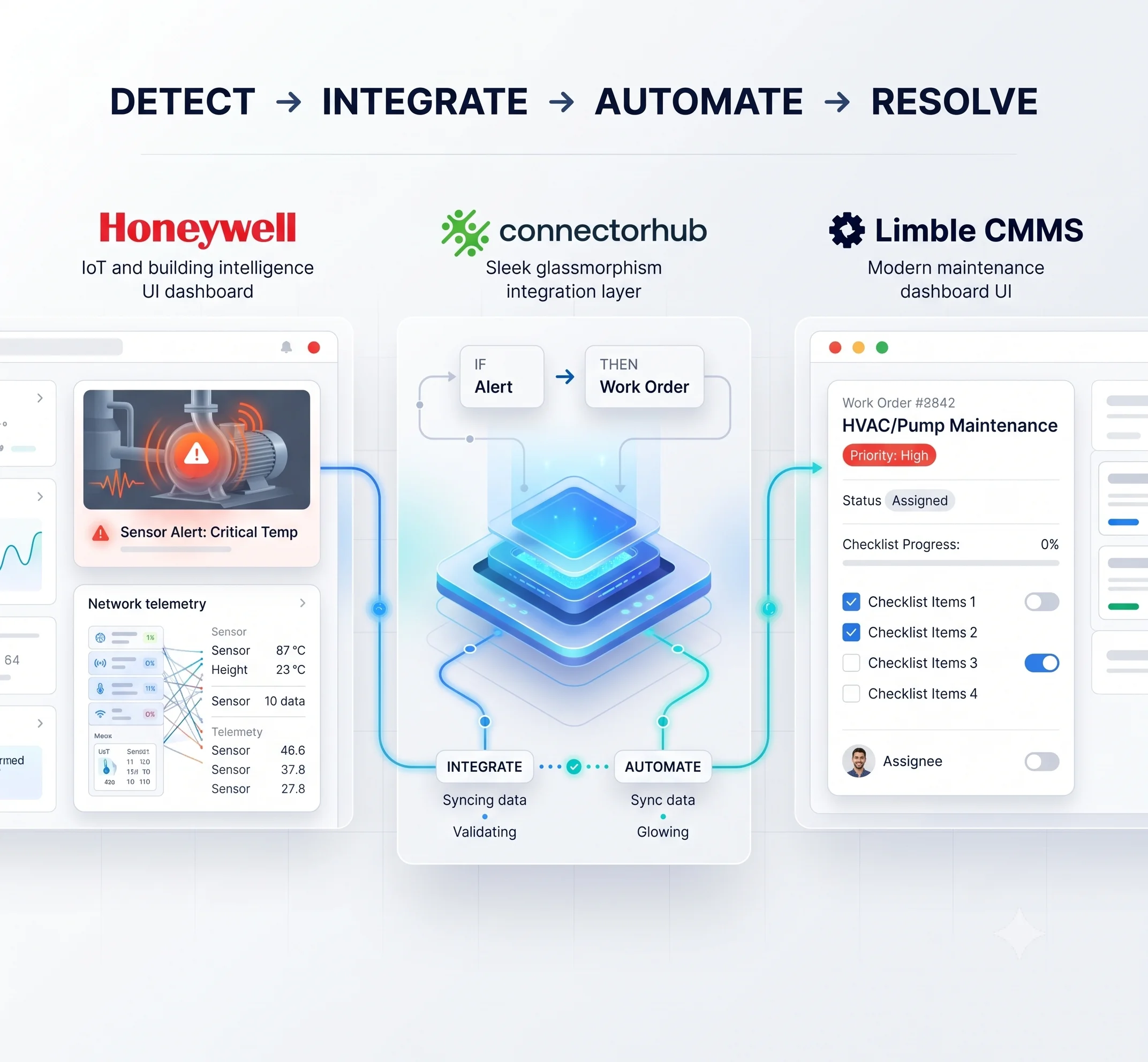
1.Comprehensive, Ready-to-Use Integration Library: It comes with 100+ pre-built and customizable connectors specifically designed for major systems such as CMMS, ERP, CRM, IoT sensors, smart buildings, and many others. A Custom Connector Toolkit is also provided for extending workflows at your own pace if needed.
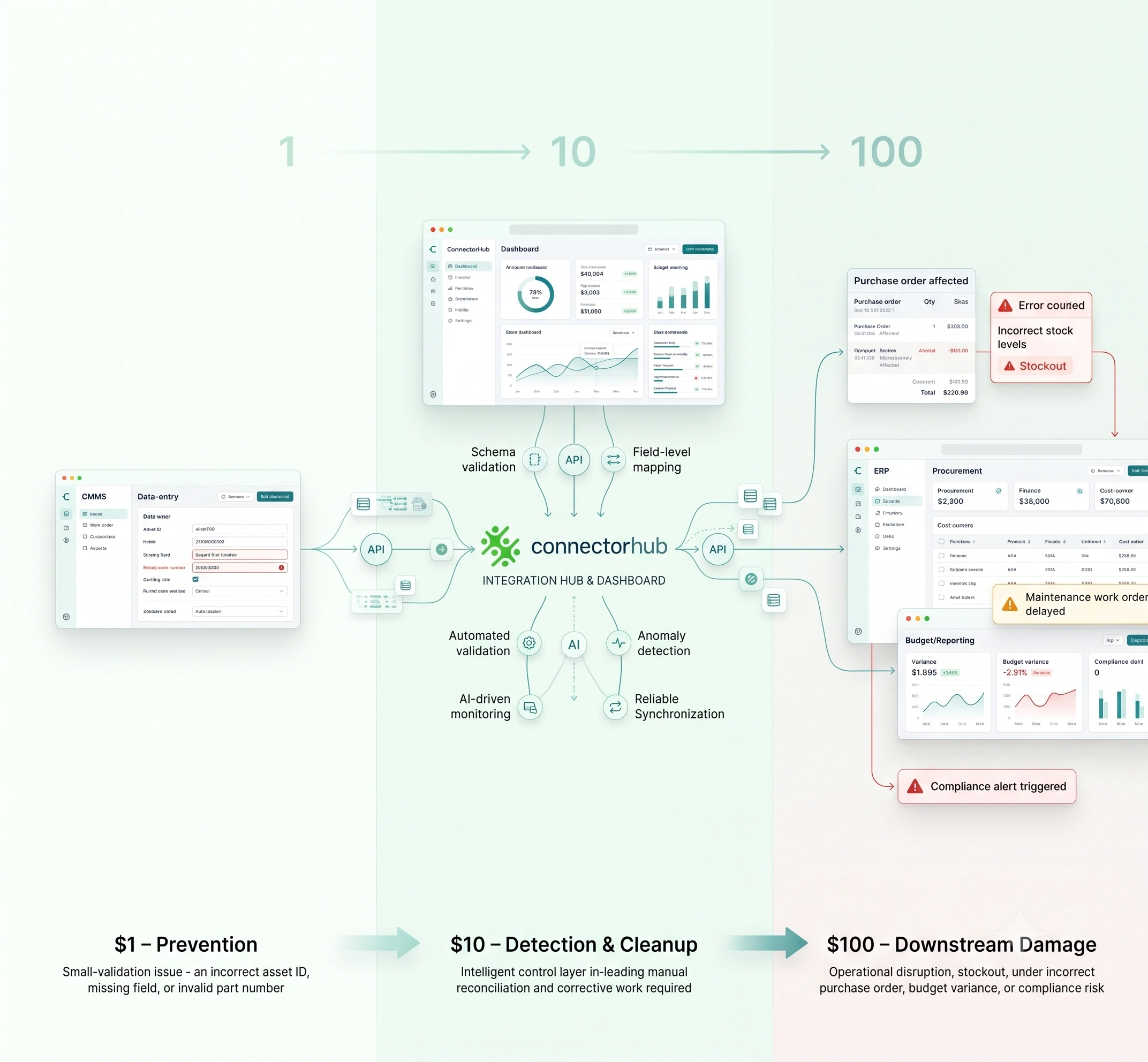
2.Powerful No-Code Workflow Builder: The visual drag-and-drop workflow builder makes it easy to build, map, and automate processes without coding. It comes with AI-assisted field mapping, intelligent anomaly detection through machine learning, live preview, validation, and ready-to-use templates/recipes for common use cases.
3.SaaS Integration and Process Automation: It is a fully multi-tenant SaaS platform that allows easy integration of various applications and ensures smooth and automated functioning. Process automation takes place in the background with minimal human intervention.
4.Real-Time Data Sync with Live Visibility: ConnectorHub keeps your key business data in sync instantly—think work orders, IoT sensor readings, energy usage, and maintenance updates. The Live Performance Tracker dashboard gives you a clear, real-time view of everything, complete with SLA alerts, performance insights, and active monitoring so you always know things are running as they should.
5.Designed for B2B SaaS and Embedded Applications: You can drop ConnectorHub right into your own app as a native integration layer, giving your customers seamless connections without ever leaving your product. With options like white-label licensing, SDK and UI embedding, plus ready-made workflows, you can launch faster, cut down on custom coding, and even open up new revenue streams through integration-as-a-service.
Conclusion
The embedded integration platform has evolved significantly since the days of simple document transfer. The operational iPaaS is the next evolution in this process.
AI, event-based architectures, and intuitive development tools are the forces behind the current evolution. The current platforms are centered on providing continuous reliability, as opposed to one-time projects.
Organizations that adopt the current evolution will find themselves more agile and have improved data flow. They will be poised to fully leverage the next generation of technologies.
The shift to operational platforms offers a vision for the future for digital software ecosystems where everything is connected.