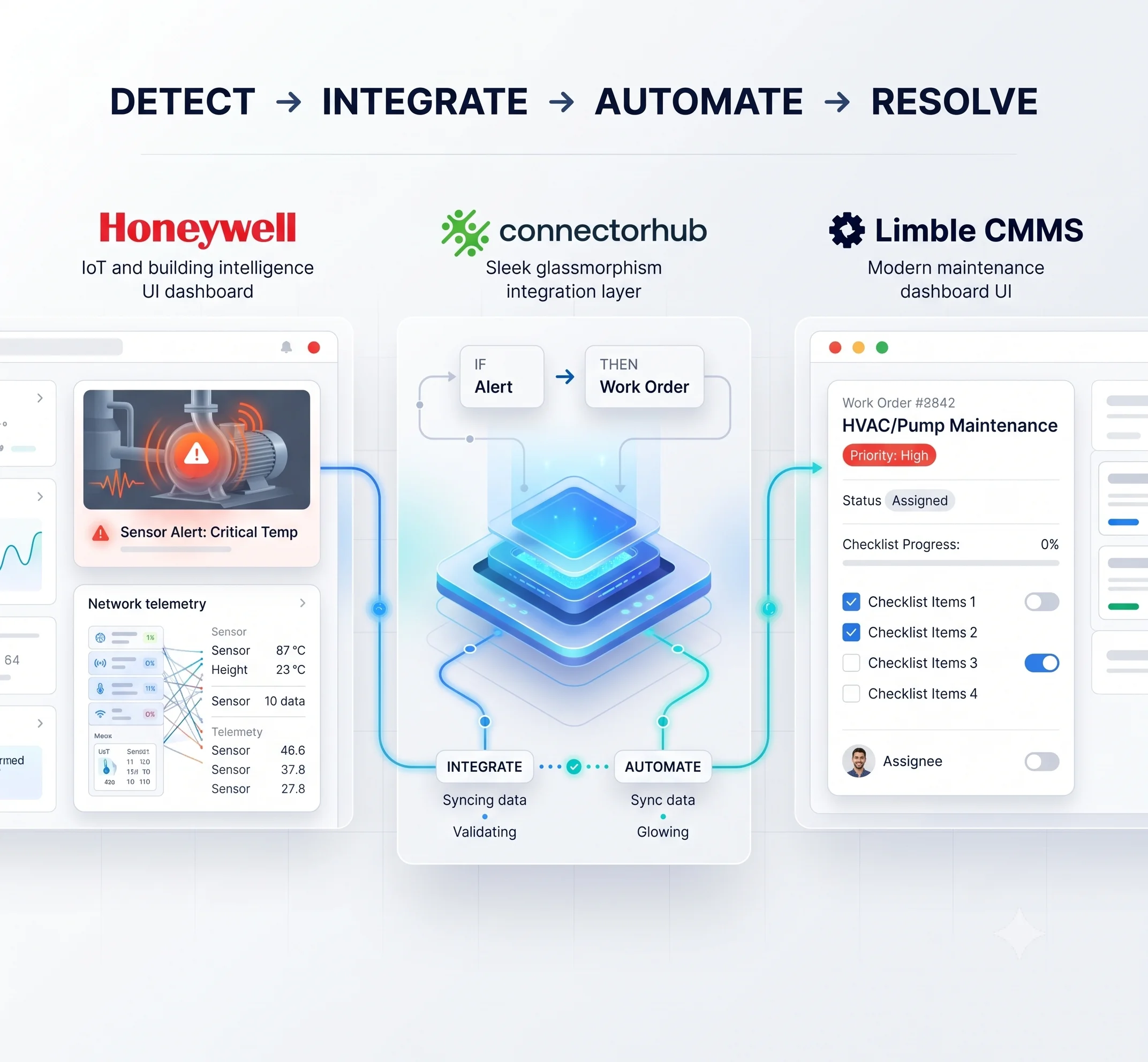
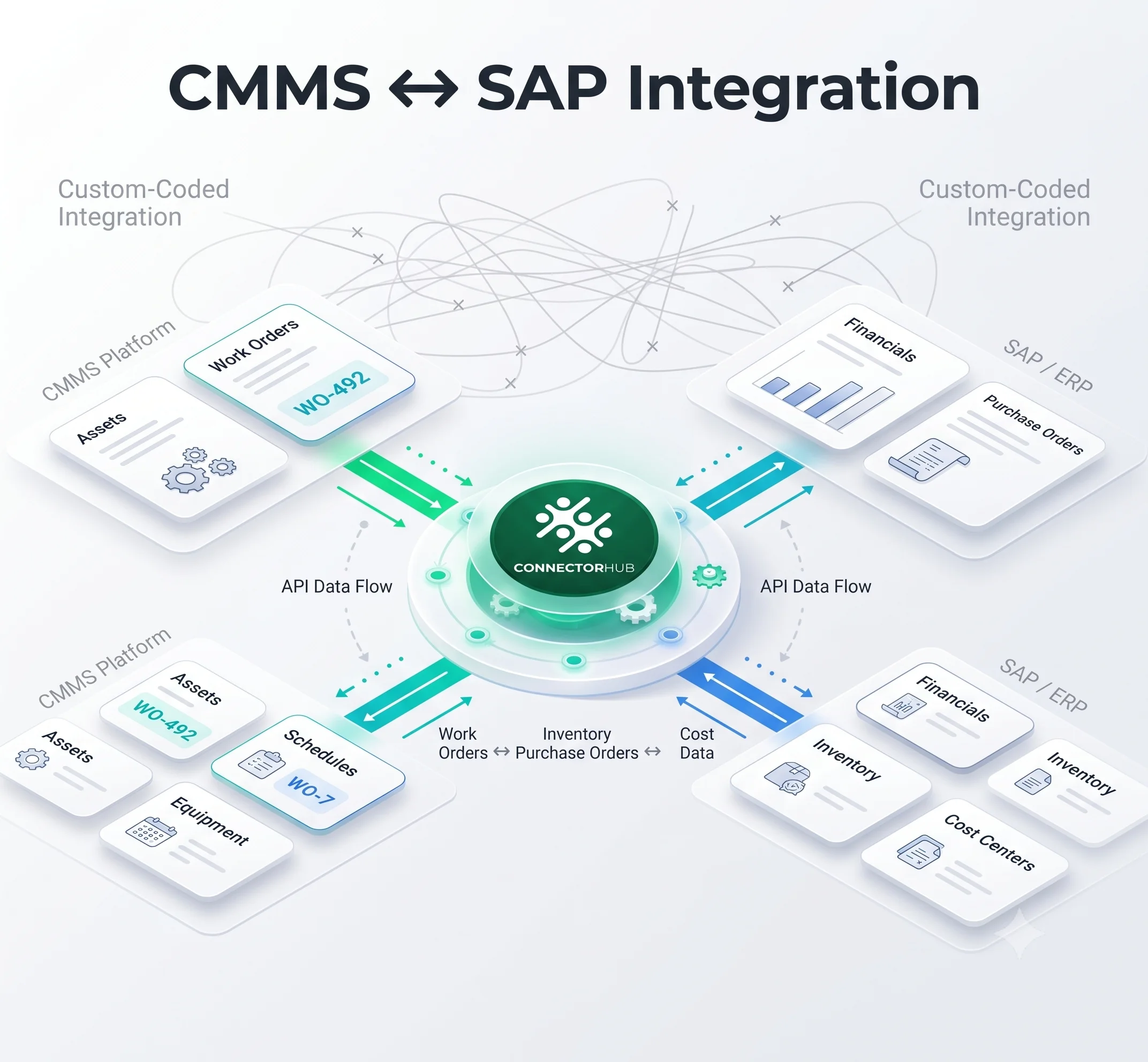
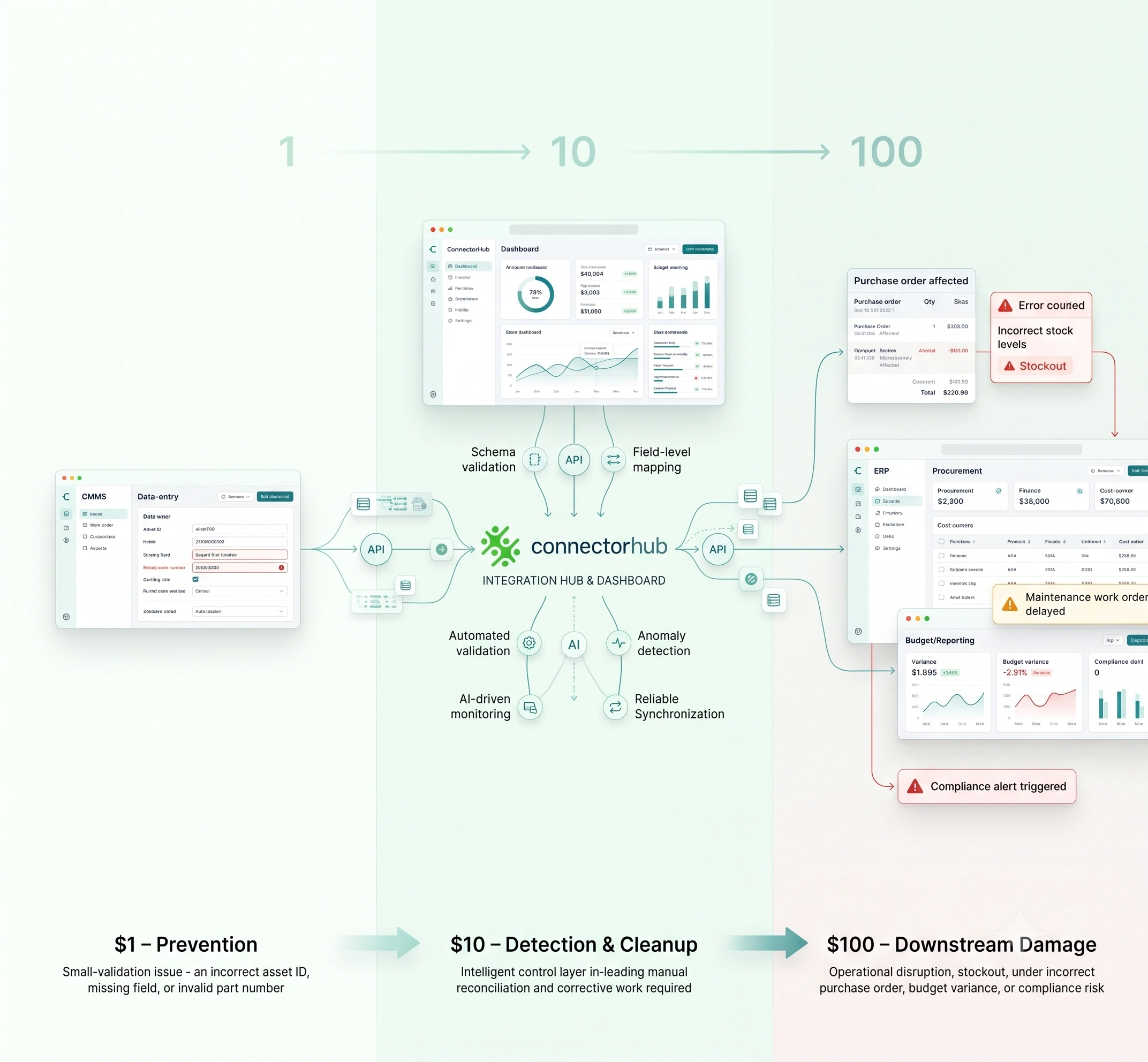
.svg)
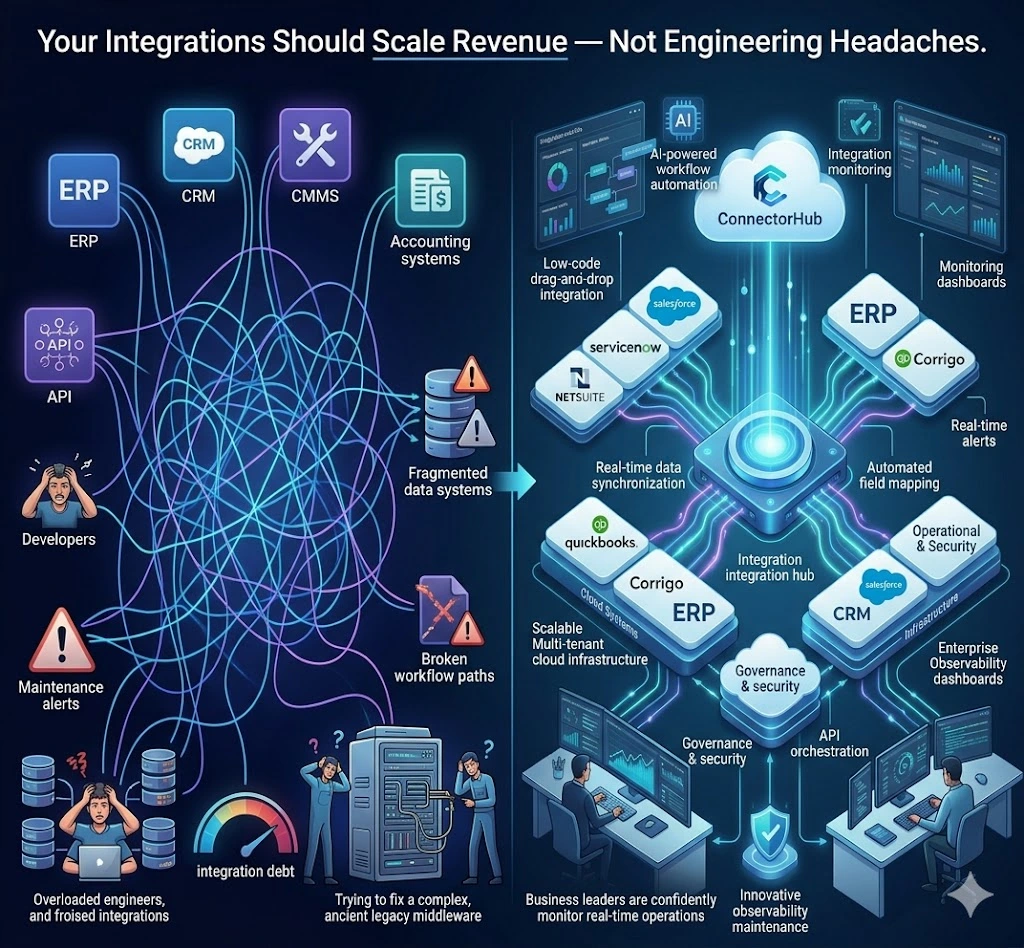
The way software companies think about connectivity has changed considerably over the past few years. Where once a single custom-built connector between two systems felt like a reasonable solution, it now represents a longer-term liability, one that costs engineering time, slows product releases, and quietly accumulates into what the industry calls "integration debt” without an automated workflow builder.
For software and platform provider executives, the question is no longer whether to integrate SaaS applications across their product ecosystem. That decision was made a long time ago. But the real question worth asking now is whether the way your team works today, usually a mix of one-off builds, point-to-point scripts, and aging middleware, can honestly keep up with what your customers expect from you.
The companies pulling ahead right now are the ones that replaced one-off builds with purpose-built infrastructure such as low code automation tools built around an automated workflow builder, multi-system integration architecture, data mapping automation, a data synchronization engine, and a framework that scales without multiplying engineering cost.
What Is SaaS Integration and Why It Matters More Than Ever?
SaaS integration connects cloud-based applications so that data and workflows move across them without manual intervention, whether that means syncing records between an ERP and a field operations platform, connecting your product to a customer's CRM, or triggering real-time events when a change occurs in one system.
The business case is straightforward. According to the 2025 State of SaaS Integration outlook, companies today rely on over 250 SaaS applications on average, with individual departments using between 60 and 80 distinct tools. Every one of those tools is a potential integration request sitting in your product backlog.
Companies that make API connectivity feel effortless inside their products tend to lose fewer customers, get new users up and run faster, and build relationships that last. Those that fall short are quietly getting knocked out of enterprise deals where buyers now walk in expecting native integrations to already be part of the package.
Key Limitations of One-Off Integration Approaches
One-off integrations feel manageable at first. By the time you are maintaining fifteen of them, each with its own authentication logic, error handling, data schema, and version dependency — the picture looks very different.
Point-to-point connections create what engineers call "spaghetti architecture." Each new connector adds exponential complexity. When a third-party API changes a field name or updates its authentication method, every custom-built connector touching that system needs individual attention. There is no shared update path.
The limitations of traditional approaches fall into four consistent patterns:
Rigidity: Legacy integration models were designed for specific, predefined problems. They do not adapt to new business models, changing data schemas, or new applications entering the stack. When your customers add a new platform, your team ends up back at square one.
High cost and long timelines: Custom builds require specialized developer time and system integrators for construction, maintenance, and every modification that follows. A single integration built from scratch can take weeks to scope, build, test, and deploy, multiplied across every customer-requested connector, this becomes a significant drag on your roadmap.
Poor scalability: Traditional integration platforms were built for a fixed operational scale. They struggle when data volumes increase, the number of connected systems grows, or the platform needs to support multi-tenant environments, particularly relevant for SaaS companies moving upmarket.
Data silos and delayed syncing: Without real-time data flow, teams across your customers' organizations work from different versions of the truth. Finance sees numbers that do not match operations. They translate into missed SLA targets, billing errors, and eroded customer trust.
The legacy SaaS integration landscape was built for a slower world. The average enterprise today is adopting new software far faster than point-to-point architecture was ever really built to handle.
What's Driving the Shift Away from Custom Builds?
Several forces have converged to push SaaS companies toward more structured integration strategies.
- Customer expectations have outpaced engineering capacity
Enterprise buyers now expect software to plug into their existing stack from day one. Telling them to wait six weeks for a custom connector is simply not going to fly anymore. A scalable integration framework has quietly become something you genuinely cannot afford to compete without.
- Integration debt accumulates silently
Unlike technical debt in your core product, integration debt tends to hide in plain sight until a critical connector breaks in production and suddenly everyone notices. The more one-off integrations a platform accumulates over time, the harder it becomes to confidently guarantee that all of them are holding up at the same time.
- Engineering capacity is too valuable to spend on maintenance
The opportunity cost of assigning senior engineers to aging integrations is substantial. The evolution of SaaS integrations is partly a story about companies reclaiming that capacity for differentiated product work.
- Cloud-native architecture demands a matching integration layer
Modern software runs in distributed environments. A cloud-based integration platform built for this context is multi-tenant, observable, and resilient to handle what legacy middleware was never designed to support.
How AI-Powered Integration Workflows Are Changing the Game?
The most meaningful shift in integration technology is not just automation, it is intelligent automation. There is a real difference between a system that moves data from point A to point B and one that understands that data's structure, identifies mapping errors before they propagate, and adapts when schema changes occur upstream.
AI-driven data integration platform capabilities now make it possible to auto-suggest field mappings, flag data anomalies before they reach destination systems, and surface health metrics that previously required manual monitoring. What once required a skilled developer can now be handled by a technical operations user through a visual interface.
This means the integration layer you offer your customers can be materially smarter than anything hand-coded two years ago. The automated business process becomes something customers simply benefit from, without ever needing to understand what's running underneath it. Modern platforms that support enterprise automation can also catch when a workflow starts producing unexpected outputs and flag it before anything downstream has a chance to feel the impact.
Calculating the ROI of Scalable Integration Strategies
The business case for moving away from one-off integrations comes down to four measurable outcomes: reduced engineering overhead, faster time-to-value, improved retention, and new revenue opportunities.
Software integration services delivered through a structured platform put things like centralized connector catalogs, version management, multi-tenant support, and built-in monitoring within reach, without needing to grow your engineering team at the same rate your complexity does.
How ConnectorHub Enables Smarter, Scalable SaaS Integrations?
ConnectorHub was built specifically for the integration challenges today’s enterprises face at scale. Rather than generic middleware, it provides an embeddable integration framework that platforms can deploy within their own product — white-labeled, governed, and operational within weeks.
With ConnectorHub, companies can license the connector engine directly into their product. Your customers experience integration as a native feature with the branding, interface, and workflows all carry your product identity.
ConnectorHub's drag-and-drop builder lets technical and semi-technical users configure field mappings, sync schedules, transformations, and trigger conditions without writing integration code, the low code automation tool experience that reduces engineering dependency for routine configuration.
The platform keeps tenants cleanly separated, so each customer operates in their own governed environment with clear boundaries. Role-based access control, encrypted credential storage, audit logging, and GDPR-aligned data handling are all baked in from the beginning to serve as a part of your compliance management.
ConnectorHub supports integrations with Salesforce, ServiceNow, NetSuite, QuickBooks, Corrigo, and a broad range of CMMS, ERP, and CRM integration systems.
Every deployment includes visibility into run status, records processed, version history, and error alerts. The integration insights dashboard gives both your team and your customers real-time confidence in the integration layer, without developer involvement to interpret what is happening.
Future-Proofing Your Integration Strategy with ConnectorHub
The integration challenges SaaS companies face today will not simplify as the ecosystem grows. ConnectorHub's approach to future-proofing is structural, built around capabilities that remain sound as conditions change.
- Versioned, immutable deployments. Draft, publish, and roll back workflow versions without disrupting in-flight runs — so integration updates never expose customers breaking changes.
- AI-ready data pipelines. ConnectorHub produces structured, validated outputs that serve as the foundation for AI-powered features your customers will expect in the coming years.
- Unified API alignment. The industry is moving toward Unified API models where a single layer abstracts differences between platforms. ConnectorHub's architecture supports this direction with less fragmentation, more standardization, and the reliability that defines mature iPaaS solutions.
- Scalable across growth stages. Whether managing twenty integrations or two thousand, the governance model, monitoring capability, and configuration workflow remain consistent. The infrastructure does not need to be rebuilt at each stage of growth.
Also Read: How SaaS Companies Scale Integrations Without Engineering Bottlenecks?
Conclusion
The shift away from one-off integrations is fundamentally a business strategy decision, not a technical one. SaaS companies that continue treating each integration as a standalone project accumulate costs and risks that compound quietly over time.
The integration layer is increasingly a product feature in its own right, evaluated by customers, raised in sales conversations, and tied directly to retention. Getting it right is not a back-office concern. It is a product and commercial decision with measurable consequences.
ConnectorHub gives software providers a straightforward way to embed a governed, scalable integration capability directly into their platform, without the cost or the time it would take to build something like that from the ground up.
The question is not whether to build a better integration foundation. It is how quickly you can get there.