.svg)
Operational delays in the oil and gas industry don’t usually happen because of a lack of data; they happen because the right data doesn’t reach the right systems at the right time.
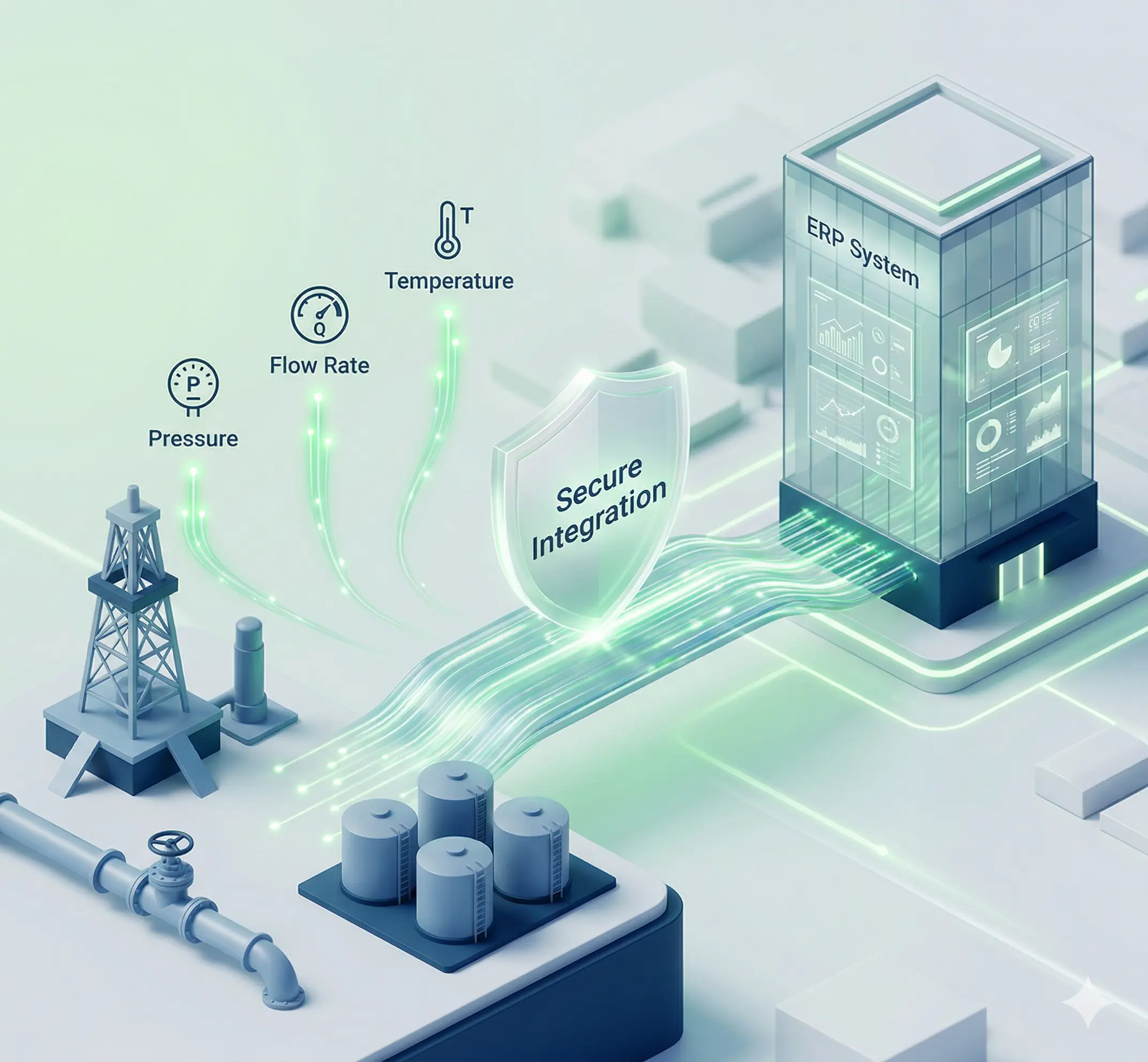
A change in pressure fluctuation in a pipeline, a problem with a compressor at a remote well, or a change in temperature at a refinery can all be identified in an instant. The problem comes in responding to this information at the business level.
Industrial monitoring systems are used by engineers to monitor changes in this way in real-time, but responding to this information is not always as smooth as it should be. There is a disconnect that can cause problems in responding to this information, slowing down business operations and creating risks in critical infrastructure.
This is why the importance of SCADA-ERP integration is increasing for energy firms. It allows organizations to integrate real-time monitoring systems with enterprise resources, which helps organizations transfer their operational data directly into business processes. This helps firms enhance asset visibility, hasten maintenance-related decisions, and develop intelligent operational strategies with the help of advanced automation system in oil and gas industries.
ConnectorHub enables organizations to implement SCADA-ERP integration by connecting industrial monitoring systems with enterprise applications through pre-built connectors, API-based integrations, and configurable workflows. This allows operational data from the field to flow directly into enterprise systems without manual intervention, improving response times and operational coordination.
The Role of SCADA in Modern Oil and Gas Operational Infrastructure
SCADA solutions are the functional core of digital oil and gas infrastructure. SCADA solutions are used for monitoring complex industrial environments in upstream exploration, midstream, and downstream facilities.
SCADA solutions are used for the continuous acquisition of telemetry data from sensors, flow meters, pumps, and control valves distributed throughout industrial infrastructure. The data is used by engineers to monitor operational status and identify anomalies before they become significant events.
In most energy firms, SCADA systems operate as a core component of their energy supply chain operations, enabling centralized control and monitoring of geographically distributed assets. This allows for remote monitoring of geographically dispersed resources. The SCADA systems enable the detection of leaks in the pipelines, the level of pressure, and the efficiency of production.
Another important functionality of SCADA systems is real-time remote monitoring. It is possible for engineers to remotely monitor the operating conditions of the pipelines or the drilling stations without having to be physically present.
However, despite their operational capabilities, SCADA systems often operate separately from enterprise platforms responsible for asset management and maintenance planning. Without integration, operational insights remain isolated from business decision-making systems.
Research carried out by the industrial technology research firm ARC Advisory Group points out that SCADA systems are critical for operational visibility in the energy sector but are most valuable when integrated with enterprise systems that provide support for operational decision-making.
Understanding SCADA-ERP Integration
Prior to delving into the discussion of how integration can benefit operational efficiency, it is imperative to first understand what integration means in the context of industrial and enterprise systems.
SCADA-ERP integration refers to the integration of SCADA systems and ERP systems to ensure that operational telemetry can directly interact with enterprise systems.
SCADA systems are responsible for the control and monitoring of industrial assets such as pipelines, compressors, pumps, and drilling rigs. These systems measure data from sensors and field devices, enabling engineers to measure operational efficiency and identify any anomalies in the operations.
Business processes managed by the ERP system include asset lifecycle management, maintenance schedules, procurement, and regulatory reporting.
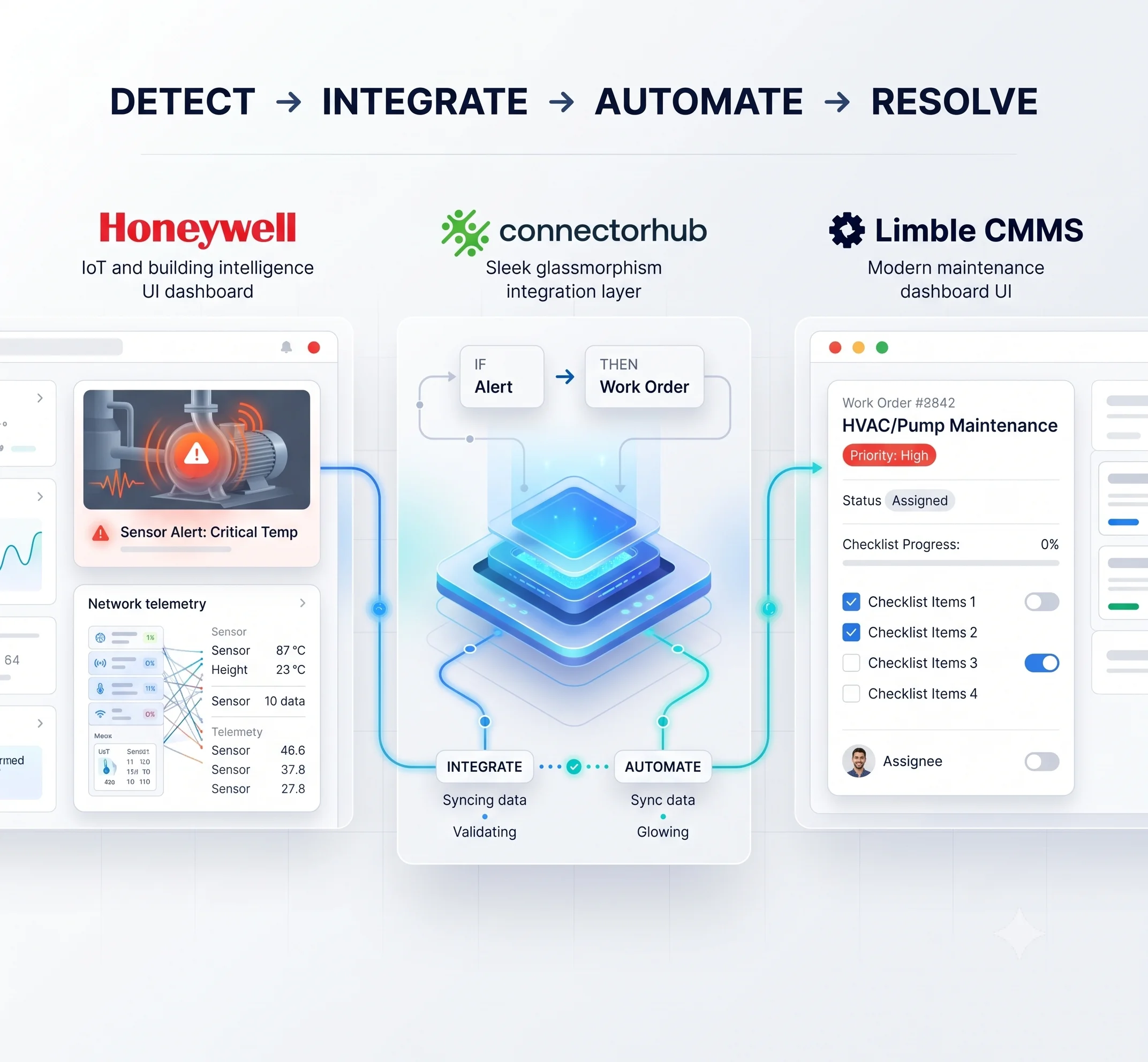
By using the operational systems, the ERP system can react to real-time data instead of waiting for the data to be entered later. For instance, abnormal pressure readings from the pipeline can trigger the maintenance request in the ERP system.
This way, the organizations can change from reactive operations to proactive operations with the help of oil and gas automation software.
Modern integration architectures rely on technologies such as API integration and scalable data integration platform frameworks to connect industrial systems with enterprise applications. According to industry research on ERP adoption in the energy sector, integrating operational monitoring systems with enterprise platforms significantly improves asset visibility and operational decision-making.
Integration Challenges in Oil and Gas Environments
Whilst the advantages of SCADA-ERP integration are undeniable, there are some technical issues that come into play when it comes to integrations in different environments.
Challenge 1: Legacy Industrial Infrastructures
Most of the oil and gas facilities have legacy SCADA systems that have been in place for decades. These systems were not built to integrate with other systems but to provide reliability and operational stability.
In this regard, integrating legacy systems with ERP systems may require specific integration frameworks that can convert industrial communication protocols into enterprise formats.
A digital transformation study in SCADA systems in industry environments highlights that legacy system integration remains one of the biggest hurdles in the digital transformation of the energy sector.
Challenge 2: Data Fragmentation Across Systems
The operational telemetry data collected from SCADA systems is normally archived in data historians that are optimized for high-frequency sensor data. On the other hand, ERP systems use structured enterprise databases that are optimized for transactional business data.
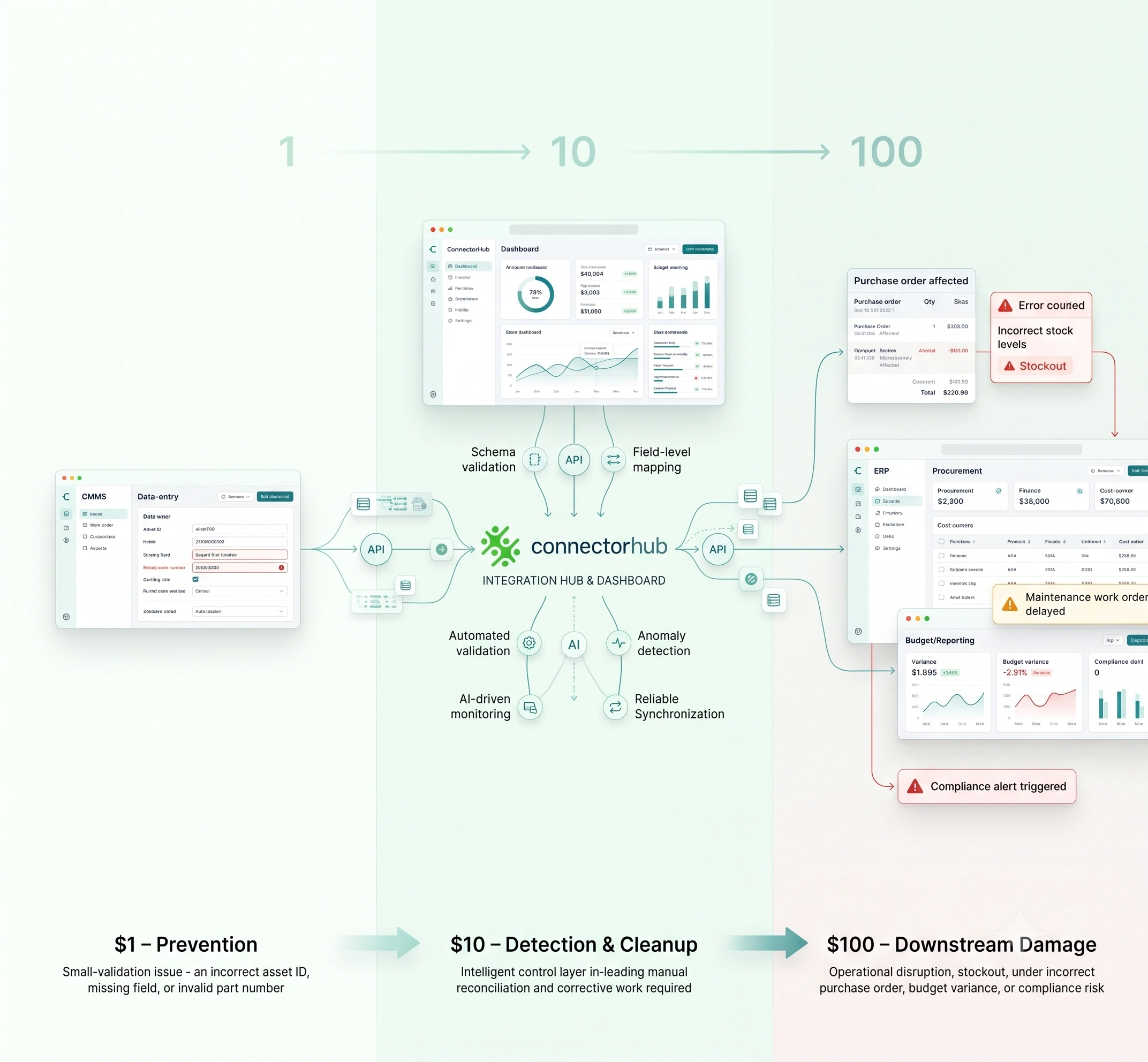
If not properly integrated, operational intelligence is not connected to enterprise processes. This creates a problem for organizations that want to relate equipment performance to maintenance or procurement processes.
Solutions such as a modern data integration platform help bridge this gap by synchronizing operational and enterprise data environments.
Challenge 3: Security and Compliance Requirements
Oil and gas infrastructure is classified as critical infrastructure in many countries. Integrating operational control systems with enterprise networks introduces cybersecurity risks that must be carefully managed.
Research on cybersecurity in SCADA environments emphasizes the importance of secure integration architectures that protect operational networks while still enabling enterprise connectivity.
Challenge 4: Distributed Infrastructure and Connectivity Constraints
Oil and gas activities may involve large areas of operation, including offshore platforms and pipeline networks. Such areas may have poor connectivity, making it difficult to synchronize data in real time.
Integration platforms should be able to provide communication pipelines that can maintain synchronization even in a distributed environment.
How Integration Platforms Enable Industrial Connectivity
Modern integration platforms are transforming how operational technology connects with enterprise software.
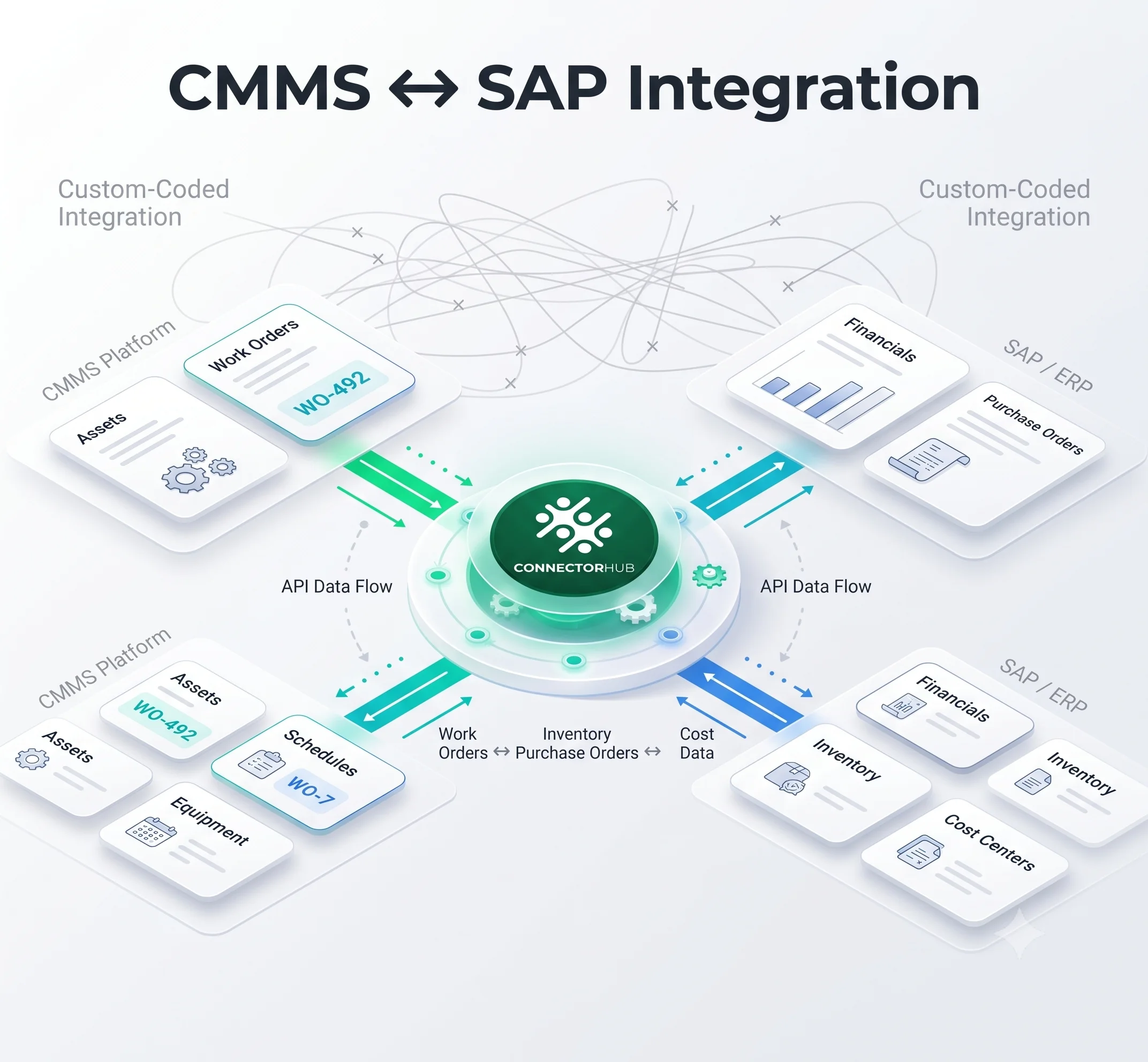
Instead of building custom middleware for every system integration, organizations can use centralized integration platforms designed to connect industrial systems and enterprise applications through scalable architectures.
Platforms like ConnectorHub enable organizations to integrate SCADA systems and enterprise software through secure API integration frameworks, supported by strong embedded integration capability that allows seamless connectivity without building custom middleware.
These platforms also support enterprise automation, allowing organizations to create automated workflows triggered by operational events.
For example:
- Pressure anomalies detected by SCADA systems can trigger automated maintenance tickets.
- Equipment performance metrics can update asset management dashboards in ERP platforms.
- Operational incidents can generate automated compliance reports.
By enabling organizations to automate processes, integration platforms help build more responsive and efficient industrial environments.
These capabilities form the foundation of modern integration platform architectures supporting digital transformation in the energy sector.
Also Read: How Manual CMMS ERP Integrations Create Facility Data Silos
Drive Smarter Oil & Gas Operations with SCADA–ERP Integration
If the monitoring systems and the overall enterprise systems are operating as a connected ecosystem, energy companies derive significant benefits.
- Predictive Maintenance and Asset Optimization
SCADA telemetry can automatically trigger maintenance workflows within enterprise asset management systems. This allows organizations to detect equipment degradation early and schedule maintenance before failures occur.
- Faster Operational Decision-Making
Integrated systems enable the flow of operational data directly into the enterprise analytics system. Operational managers get real-time visibility into operational performance, enabling them to quickly react to operational issues or equipment failures.
- Improved Compliance and Reporting
Oil and gas companies have to adhere to strict regulatory requirements. Operational data flowing directly into the enterprise reporting infrastructure improves accuracy and efficiency in regulatory reporting.
- End-to-End Operational Visibility
Integrated infrastructure enables oil and gas companies to have a single view of operational performance, including upstream exploration, midstream transportation, and downstream refining operations.
If the operational monitoring system and enterprise system are integrated with each other, then the organizations can benefit from the constant stream of real-time insights across the operations. This can help organizations coordinate the operations of the teams and business units more effectively.
This way, organizations can optimize the performance of the assets and develop effective oil gas asset automation strategies.
Enabling Connected Energy Operations with ConnectorHub
Implementing integrations across complex industrial environments can be difficult without the right technology infrastructure.
ConnectorHub helps energy companies simplify this process by providing a scalable data integration platform designed to connect operational technology systems with enterprise applications.
Through secure API integration architecture and modern connectivity tools, ConnectorHub enables organizations to build reliable data pipelines between SCADA systems and ERP platforms.
The platform has support for enterprise automation, which means that companies can create automated workflows that are based on events occurring within the enterprise. This ensures that organizations can respond to operational problems in real time, even as they minimize human involvement.
As a result of its ability to automate processes through API-based extensibility, ConnectorHub ensures that energy companies can improve their operational infrastructure, even as they maintain the reliability that is necessary for an industrial environment.
Also Read: From Chaos to Clarity: How System Integration Transforms Service Operations
Conclusion
Integrating the different environments of the oil and gas industry is not just about connecting them; it is about creating a system that can deal with industrial data, legacy systems, and real-time data without affecting the operations of the business.
ConnectorHub achieves this by creating a flexible integration system that connects SCADA systems with ERP systems through API-based connectors and pre-defined integration templates that are specifically designed for industrial environments.
For instance, SCADA system data, such as pressure, equipment, or fault conditions, can be integrated with the ERP system, allowing the data to be automatically mapped with the workflows of the enterprise, such as maintenance, tracking, or reporting.
ConnectorHub is also capable of creating custom workflows that allow the enterprise to design the workflow of the data, ensuring that the right business actions are taken at the right time.
With the ability to create a data flow between the different environments of the oil and gas industry, businesses are now able to improve their operations, eliminate lag, and create a connected environment that is responsive to the needs of the business.