.svg)

For today’s enterprise leaders, data is no longer an abstract concept managed by the IT department; it is the lifeblood of the organization.
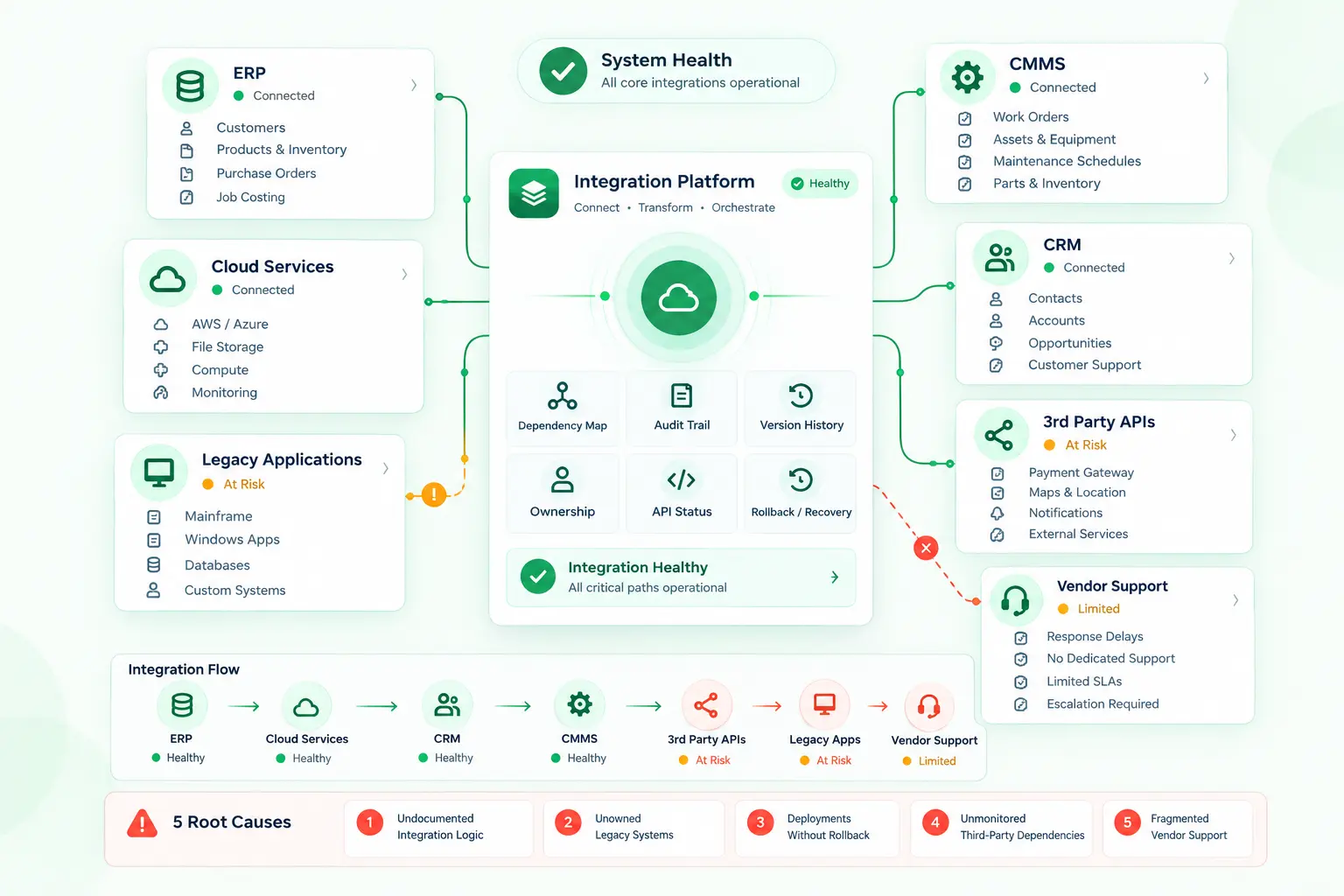
But with the increased deployment of specialized software systems, businesses frequently face what is known as the connectivity trap. You have got the best CRM, the best ERP, and the best CMMS, but each one operates under its own language system. To stay on top of shifting data demands, companies really need to choose between custom-built integrations, a standard iPaaS, or an embedded iPaaS.
The decision between building your own solution and going with a modern iPaaS will pretty much define how agile and adaptable your company stays for the next decade. This guide explores the nuances of these three paths, helping you identify which integration strategy aligns with your specific industry goals.
Why Integration Strategy Has Become a Board-Level Priority?
A few years ago, the question of what is integration was purely technical. Today, it is a matter of financial performance and risk management. When systems are disconnected, the data tax begins to accumulate. This tax manifests as manual data entry errors, delayed reporting, and a lack of real-time data synchronization that prevents leaders from making informed decisions.
A strategic iPaaS (Integration Platform as a Service) acts as the central nervous system of your business. It allows for enterprise automation that removes the friction from daily operations. In a world where market conditions change in hours, not months, the ability to pivot your data flows is a massive competitive advantage. Boards are now looking at integration not as a cost center, but as a prerequisite for digital transformation and secure data transfer.
Think of an integration platform like a universal translator for all your software. Instead of building a messy custom link between every single piece of software which ends up as a total spaghetti mess of code, it gives you one clean dashboard where you can see and control every connection from one spot.
Every application in your ecosystem, whether it's a CRM integration for sales or a salesforce integration with netsuite for finance, connects to this central hub through pre-built data connectors that let it easily shake hands with your other applications. Once the connection is live, it steps into three essential roles:
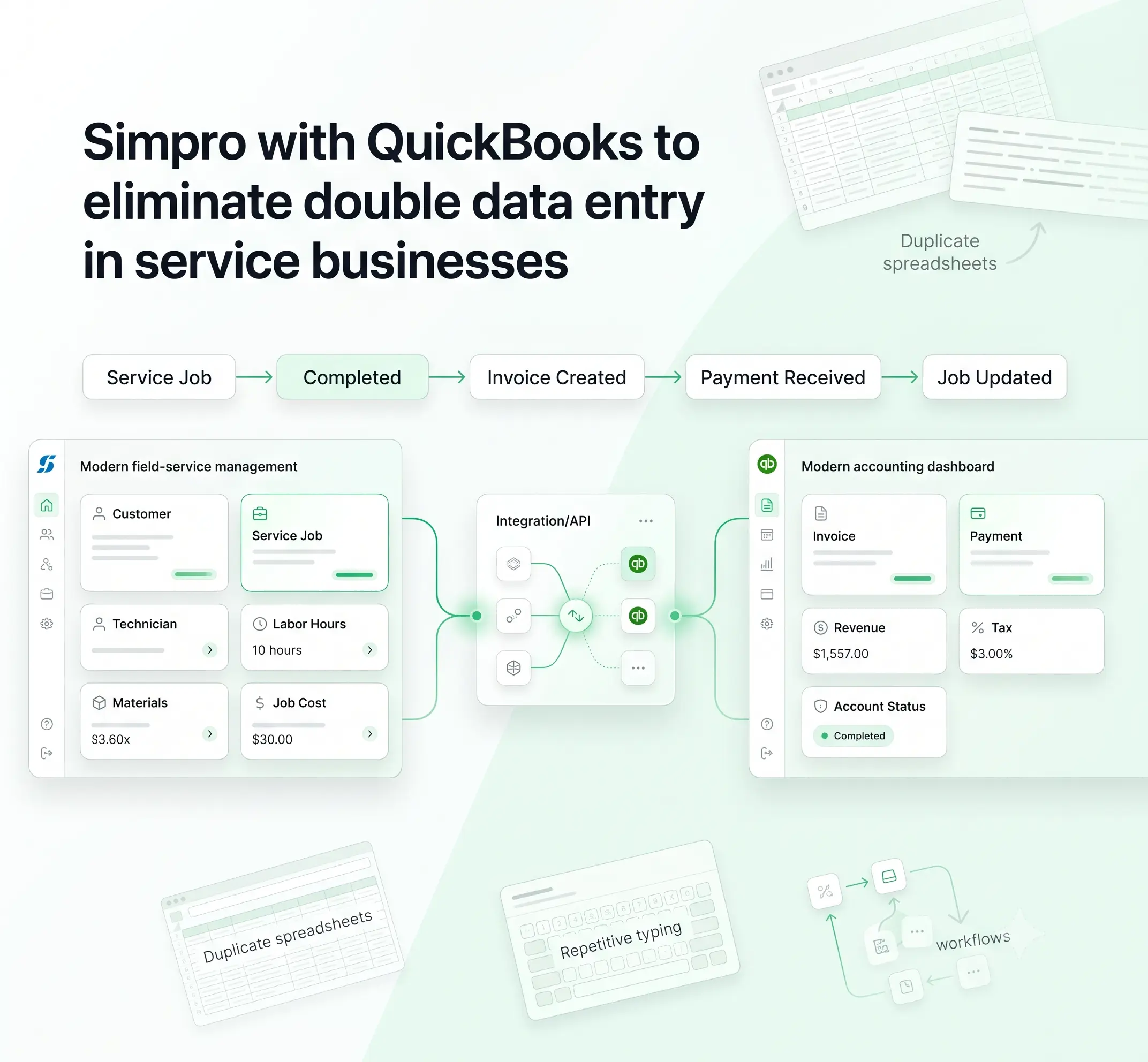
- Orchestration: As soon as you have a new lead in your CRM system, the record automatically gets created in your ERP system without the need for manual intervention.
- Transformation: This revolves around converting data from one software application to another in order to make sure that the data format stays perfect.
- Security: It locks everything sensitive in strong encryption while it’s moving between systems, keeping it safe from beginning to end.
The best-of-breed software movement has led to an explosion of SaaS applications within the average enterprise, and managing these via manual API integration is no longer sustainable. Without a centralized platform, you end up with shadow IT — different departments building their own brittle connections that the central IT team can't monitor or secure. As companies move toward AI driven data management, the quality of data being fed into AI models becomes paramount, and an integration platform ensures that data is clean, consistent, and delivered in real time.
This is also what keeps your IT services running with almost zero downtime. When a key server crashes, the platform instantly spins up a high-priority ticket, pings the right engineers, and refreshes your customer status page, all at the exact same time. That kind of smart automation slashes resolution time and protects your company's reputation without anyone lifting a finger.
Types of Integration Platforms and Their Key Components
Not all integration platforms are built the same, and picking the wrong one can cost you more than you'd think.
iPaaS solutions broadly fall into three categories:
- Standard iPaaS, built for internal IT teams to connect their own tools;
- Embedded iPaaS, made for SaaS companies that want to offer streamlined integrations directly to their customers;
- Legacy middleware, the older on-premises solutions that tend to be clunky and hard to scale in today's cloud-first world.
To truly be among today’s middleware solutions, a platform must have:
- Low-Code/No-Code Interface: This allows business analysts, not just senior developers, to automate processes.
- Robust API Management: Tools to handle different API types and monitor the health of every integration of API.
- Error Management and Logging: In case of synchronization failure, the software must inform you of the specific reason for this and try to restore the connection itself.
- Mapping Tools: This is to enable accurate alignment and transformation of process data between systems.
What Are Custom Integrations and Why They Still Tempt Leaders?
Custom integration involves your internal engineering team (or external software integration services) writing bespoke code to connect two APIs. It feels like the purest form of API data integration because you aren't paying for a third-party platform license.
This approach often tempts leaders because it promises full control, tailored functionality, and the perception of lower upfront costs.
The trap of custom coding is that the initial cost is only the tip of the iceberg. Over time, you face:
- Technical Fragility: When a vendor updates their API, your custom code breaks. Your developers then have to drop their current projects to fix a legacy connection.
- Knowledge Gap: The problem of knowledge gap arises when the programmer who developed the solution moves on because then you end up with black box code which cannot be understood by anyone else.
- Scalability Problems: Your solution becomes non-functional as soon as your dataset grows from hundreds to millions and needs real-time synchronization.
There are rare instances where custom code is necessary. If you are using a highly specialized, proprietary system built in-house that no iPaaS integration platform supports, custom work is your only option. However, for most business use cases, the build route becomes a long-term liability due to high maintenance costs, scalability challenges, and ongoing developer dependency.
For example, research shows that custom integrations often come with significant hidden costs, where initial development accounts for only 30–40% of total ownership cost, with the majority spent on maintenance and updates over time.
iPaaS as a Cloud-Native Workhorse for Internal Integration
An iPaaS is a cloud-based shortcut to efficiency. It removes the need for expensive infrastructure and allows you to automate the process of data flow using pre-built logic. It’s essentially integration as a service, where the provider handles the security, uptime, and API updates, leaving you to focus on the business logic.
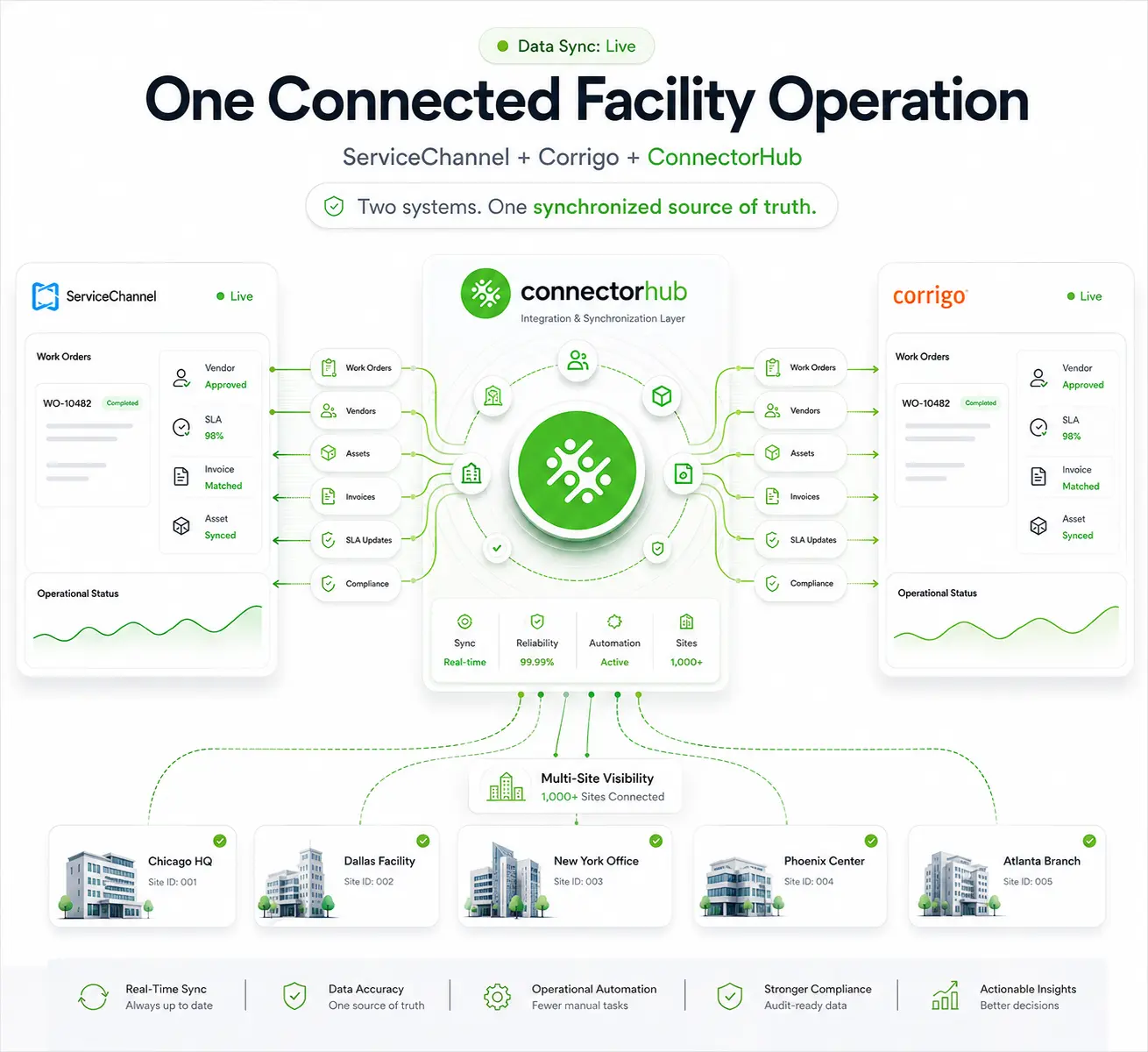
Platform like ConnectorHub are excellent examples of iPaaS solutions that handle everything from CRM integration to complex application integration solutions. The main challenge is often data readiness ensuring your internal teams have a clear map of what data needs to move where. Once the strategy is set, the implementation of a cloud-based integration platform is significantly faster than any custom alternative.
Mid-market companies often find themselves stuck in the middle. An iPaaS levels the playing field, allowing a small team to manage operational automation that would otherwise require dozens of developers. It provides the cloud integration software necessary to scale operations without a proportional increase in headcount.
Embedded iPaaS as Product-Native Integration Layer
If you run a SaaS company, your customers probably expect your product to talk to the tools they already use like their ERP or CRM. An embedded integration platform lets you build those connections right into your app so your developers don’t have to create everything from scratch.
While a standard iPaaS is for your internal use, an embedded iPaaS is a white-labeled solution for your customers. It allows you to offer a library of API integration tools as a feature of your software. This reduces churn and makes your product stickier in the enterprise.
Modern SaaS companies actually run two integration platforms at the same time. Behind the scenes, they use a standard iPaaS to handle their own internal work like automatically syncing marketing data with sales data. At the same time, they use an embedded iPaaS to power the integrations their customers see in the dashboard. It’s a smart dual-track approach that keeps them productive on the inside while making the product genuinely useful to customers on the outside.
A Quick Comparison: Custom vs. iPaaS vs. Embedded iPaaS
Choosing the right path requires a clear understanding of the trade-offs.
When you compare an iPaaS to a custom build, the most important factor is agility. In a custom-coded world, adding a new system to your stack is a major project. In an iPaaS world, it’s a configuration change. For industries requiring data synchronization between CMMS and ERP, this speed is the difference between a proactive maintenance schedule and a reactive, expensive repair cycle.
Which Path Fits Your Industry Context?
The right integration approach often depends on the realities of your industry.
In operations and manufacturing, for example, the tight synchronization of CMMS and ERP systems will be essential. Any data inconsistency may cost the company time and productivity due to unnecessary downtime, which is why in these industries iPaaS tools are almost inevitable.
In e-commerce and retail, the point of focus will be the synchronization of real-time information. It is essential to integrate CRM and maintain live inventory management in order to keep the customers updated regarding product availability and price. The absence of live information can affect the company’s image.
When talking about SaaS businesses, the point of focus will be scalability and demand expectations. Large clients require highly scalable and deeply implemented integration, and meeting their needs with each project will soon overwhelm any team's resources. That is why embedded integration solutions will prove to be more effective in this scenario.
Also Read: CMMS to ERP Integration: Architecture, Challenges, and Best Practices
Finding the Right Fit for Your Operations
Choosing the right solution comes down to how well it fits your day-to-day needs.
- Depth of Library Integration: Is there an already existing set of connectors that will integrate the exact applications that you utilize on a daily basis?
- Scalability of Platform: Will it be able to cope with the sudden influx of large volumes of data during your peak working hours?
- Data Governance: Are there adequate logging and auditing capabilities included within the platform?
Modern Middleware Solutions That Deliver the Best of All Worlds
The market is currently moving toward a Unified Integration model. Modern iPaaS solutions are becoming more modular, allowing you to use them for internal automation processes today and then turn on embedded capabilities for your customers tomorrow. This flexibility ensures you don't outgrow your platform and can maintain a single, clean API integration platform for all your connectivity needs.
How ConnectorHub Becomes the Ideal All-in-One Integration Solution?
ConnectorHub is for those who no longer wish to cobble together disparate systems and hope for the best. Instead, it offers a complete solution where both internal process automation and external customer-facing integrations can happen without adding to your workload.
Whereas many of the best data integration tools offer either depth or usability, but not both, ConnectorHub brings both together in one convenient package. This lets everyone on your team get involved in planning your integration approach, no matter whether they’re technically oriented or not, and enables you to build complex, industry-specific workflows with ease.
Designed with the real world in mind, ConnectorHub helps manage the synchronization of data within ERP and CRM solutions, as well as workflow orchestration among field service, financial, and asset management software. With built-in connectors and an intelligent orchestration engine, it delivers seamless and timely data transfers in every case.
Security isn’t an afterthought. ConnectorHub provides enterprise-grade data security by utilizing end-to-end encryption, role-based access control, and compliance-ready infrastructure following SOC 2, HIPAA, and GDPR standards. In this way, confidential company data is securely transmitted across platforms.
Its other benefit is flexibility. With ConnectorHub, you won’t have to overhaul your system when your organization expands. It will be capable of handling higher amounts of data, more apps, and new use cases without having to completely change the existing structure. Therefore, ConnectorHub is an ideal solution for businesses seeking a flexible integration platform for the long run.
Also Read: How SaaS Companies Scale Integrations Without Engineering Bottlenecks?
Conclusion
The walled garden era in enterprise software is officially over. To really thrive in 2026 and beyond, companies need to be built on a foundation of open, free-flowing data. Honestly, choosing between custom builds and a modern iPaaS is probably the single most important architectural decision any executive will make right now.
The adoption of iPaaS by many enterprises stems from the quest for speed, flexibility, and simplicity. While building custom systems gives one more freedom, their inflexibility may prevent the ability to adapt to changes and new data requirements efficiently. Flexible integration platforms with pre-built functions make such adaptation much easier and faster.
In summary, the proper approach to integration depends entirely on the nature of operations and future plans. An investment in an integration approach that guarantees secure, flexible, and timely data flow will enable you to go beyond mere integration and get down to doing things that actually help businesses grow.