.svg)
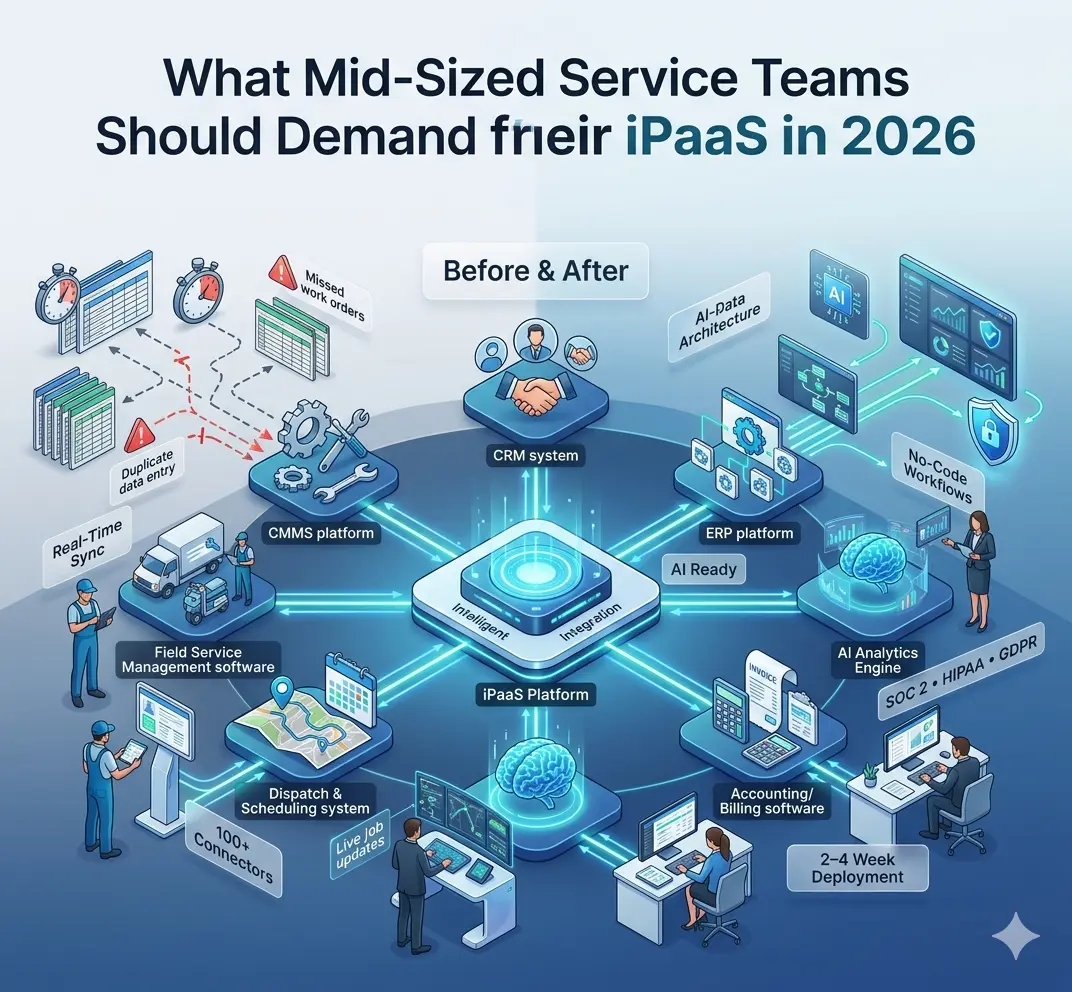
Service provider automation software has shifted from competitive differentiator to baseline expectation, and teams that still rely on manual data movement between disconnected systems are falling behind in ways that compound every quarter.
The numbers support this clearly. This year’s global application integration market is set to reach $17.4 billion, while mid-market enterprises are now handling anywhere from 150 to 250 software as a service application. But that is even more shocking considering 72% of the enterprises are using multiple integration platforms concurrently, indicating that the fragmentation is no coincidence.
This is particularly damaging for organizations running landscaping business automation, scheduling and dispatch automation, and other field-service workflows with AI assistance. Fragmented systems do not just slow teams down. They quietly kill AI initiatives before those initiatives ever get off the ground, because no AI tool performs well on data that is scattered, duplicated, or out of sync.
The no-code platform for field service automation conversation has matured considerably since 2023. What mid-sized service teams need now is not just connectivity. They need operationally aware, financially accessible infrastructure that treats integration as an ongoing operational function rather than a one-time IT project.
Unique Integration Pressures on Service Teams
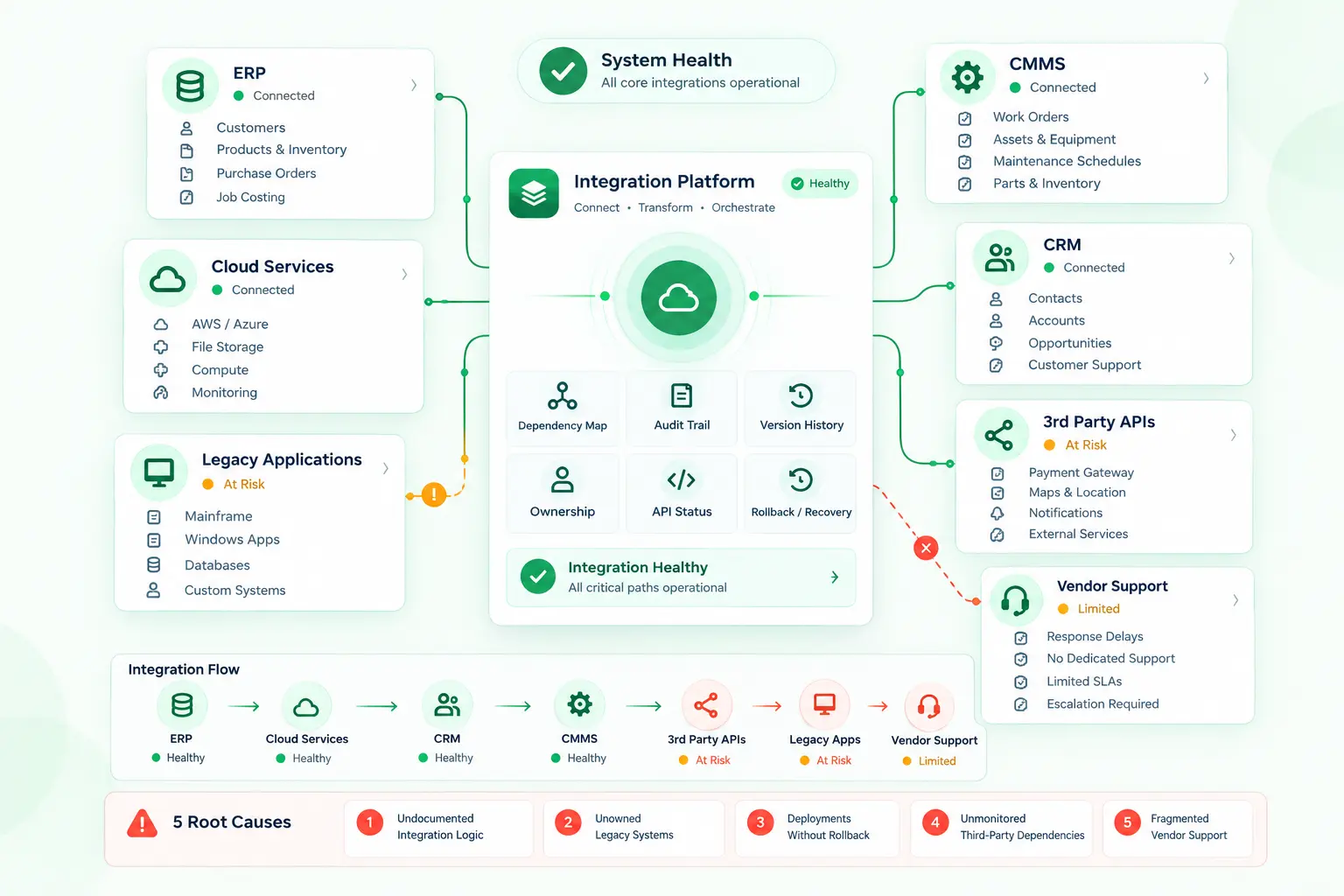
The generic iPaaS conversation focuses on connecting a CRM to an ERP and calling it done. Service operations teams work in a more demanding environment. Most service teams run six or seven core platforms at any given time: a CMMS, a field service tool, a ticketing system, an ERP, a CRM, and billing software. Not one of them was built to talk to the others.
The friction points that follow is specific and costly:
- Ticket routing across disconnected platforms creates assignment delays that cascade into missed SLAs
- Work orders opened in one system do not automatically update job status in another, forcing dispatchers to cross-reference multiple screens for information that should surface in one place
- Finance teams spend hours manually matching billing records to completed work orders because data integration for facility service providers has not been addressed
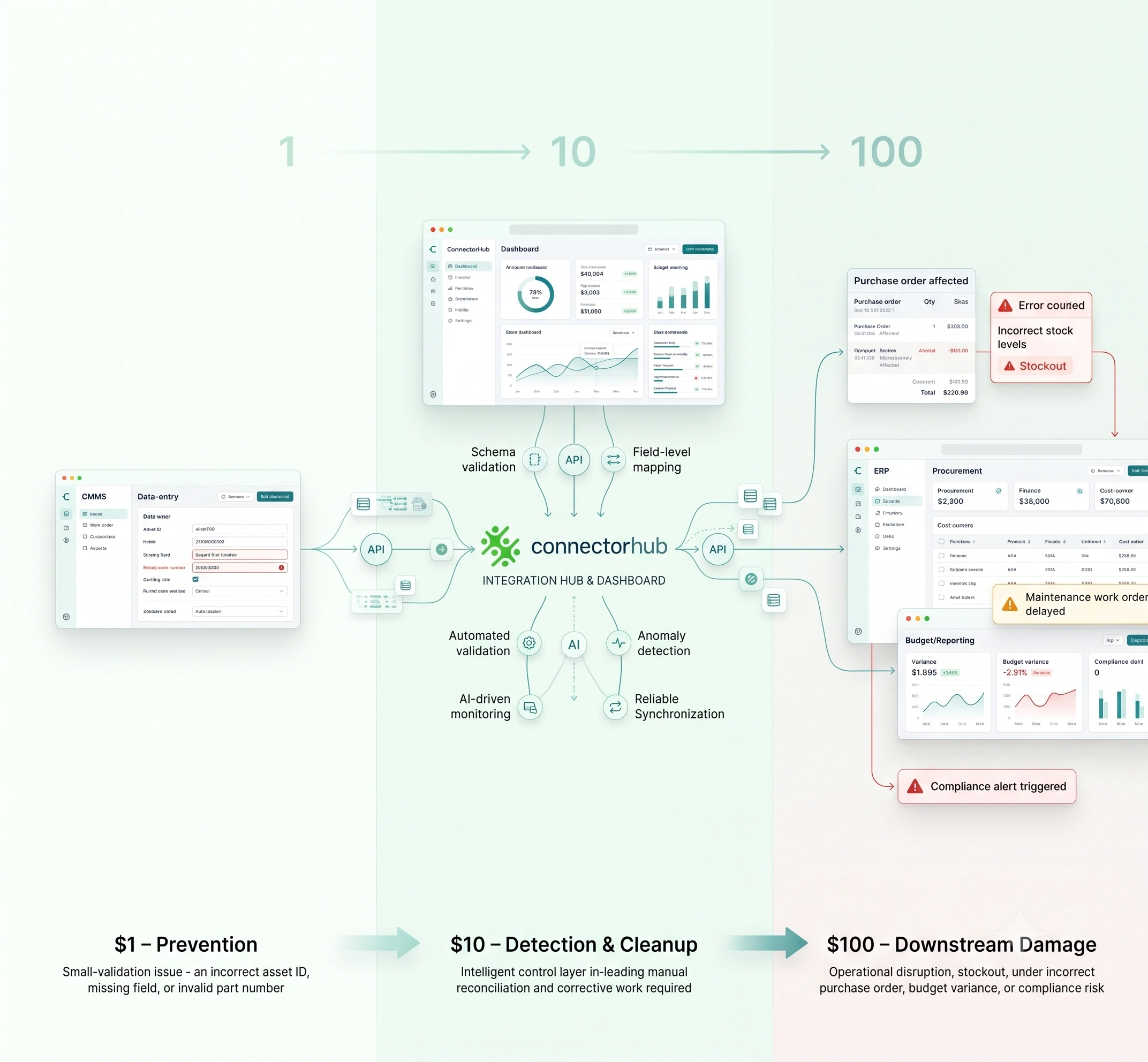
- 54% of companies deal with integrations that fail silently, where sync errors go undetected until the downstream damage has already accumulated
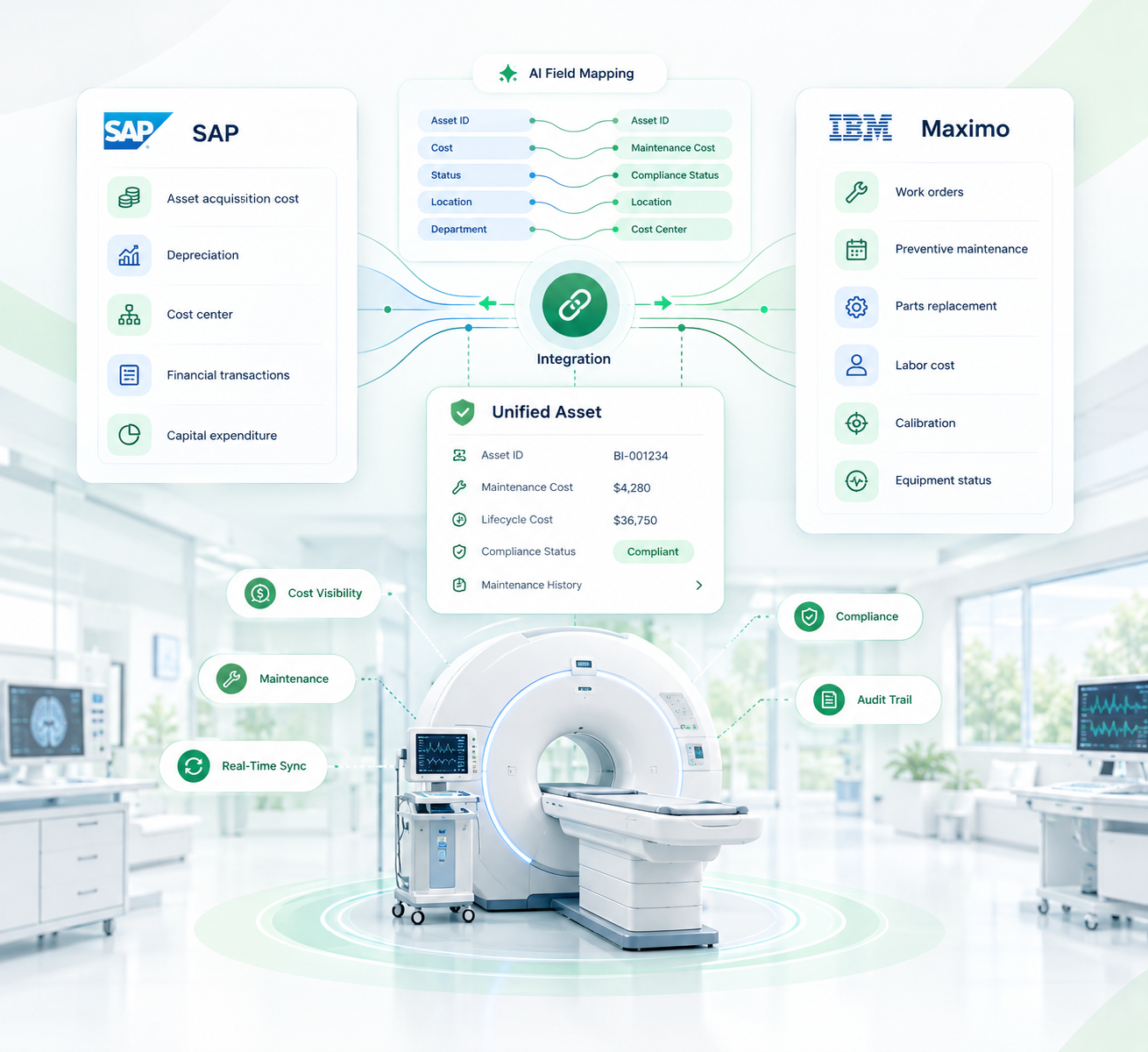
The need to connect CMMS with CRM for service teams goes far beyond solving a technical integration challenge. When field performance data does not flow accurately into customer relationship records, it affects contract renewals, account expansion opportunities, and the quality of reporting executives' use to make resourcing decisions.
How the Market Has Matured for iPaaS in 2026?
There are now over 900 integration software solutions available, with approximately 270 classified as dedicated iPaaS platforms. More options have not made the buying decision easier. If anything, vendor proliferation has made it harder to identify platforms that are genuinely built for specific operational contexts versus those attempting to serve every use case at once.
Two shifts define the current landscape. First, event-driven architectures have largely replaced batch processing as the default integration pattern. For service operations where real-time job tracking for technicians directly affects dispatch accuracy and SLA performance, this distinction matters operationally. Batch sync means a field technician may be working from data that is two hours old. Event-driven sync means changes propagate the moment they happen.
AI-assisted maintenance is starting to reduce the overhead that quietly kills mid-market integration programs. Intelligent field mapping and autonomous agents can cut maintenance burden by around 60%. Most mid-market teams are not there yet, largely because the platforms offering it were priced for budgets three times their size.
That is the core problem with the current market. Enterprise iPaaS overshoots on complexity and cost. SMB tools undershoot on depth and governance. Mid-market service teams keep landing on platforms built for someone else.
Integration Demands That Define an Effective iPaaS for Service Teams
Below are the non-negotiable requirements mid-sized service operations teams should apply to any iPaaS evaluation.
Demand 1: No-code and low-code workflow configuration
Business teams should not need a developer every time a workflow changes. Service operations evolve constantly. New enterprise clients bring different platform requirements. SLA structures shift. Billing configurations are revised. A platform that routes every adjustment through an engineering queue creates operational lag that accumulates into real cost.
The relevant metric is time-to-first workflow. If initial setup takes weeks of configuration, that timeline is incompatible with mid-market deployment realities.
Demand 2: Pre-built, service-industry connectors
The evaluation question is not how many connectors a platform lists. It is how many connectors exist for the systems a service team actually runs. Generic libraries that include Salesforce and Slack, but not Corrigo, FMX, Nuvolo, or ServiceNow are not useful to a facility or field service operation. CRM connectors built for field service carry entirely different data mapping requirements than standard sales integrations.
Demand 3: Real-time data sync
Batch processing works where data lag has no operational impact. Service teams rarely have that condition. API orchestration enabling real-time, bidirectional sync is a baseline requirement, not a premium tier feature. A job gets completed in the field, but the invoice does not move. A client request sits in a queue for an hour because no one was notified. These are not edge cases. This is what happens when real-time sync is treated as optional.
Demand 4: Know what you are paying before you scale
Integration debt grows when the pricing stops making sense at scale. Consumption-based models that charge per workflow run create unpredictable costs that make budget planning impossible. Mid-market teams need to model costs at projected growth volumes before signing a contract. If the vendor cannot support that exercise clearly, that is a meaningful signal.
Demand 5: AI-ready architecture
The application data integration infrastructure deployed in 2026 will be the data foundation on which AI tools operate. Predictive maintenance models need clean equipment data. AI dispatch optimization needs accurate job status feeds.
Demand 6: Security and compliance should not be an upgrade
SOC 2, HIPAA, or GDPR depending on the vertical. The expectation is the same regardless: encrypted data, controlled access, and a complete audit trail. That comes with the platform, or it does not belong in the conversation.
Demand 7: Deployment speed and operational support
68% of mid-market integration projects are delayed by two to six months due to resource constraints. For service teams, that delay means continued manual operations and continued billing errors during the period the platform was supposed to fix them. A support team that requires the customer to explain what a work order is cannot provide the operational guidance these teams need.
iPaaS Evaluation Scorecard for Service Teams
Future-Proof Your Service Operations to Stay Ready for What's Next
Integration spending is migrating from capital expenditure to operational expenditure. ipaas solutions are becoming as fundamental to enterprise IT as cloud infrastructure, and the organizations treating integration as a one-time IT project will keep revisiting the same problems at every growth stage.
The architectural decisions that matter now are not complex. They are disciplined.
- Treat integration maintenance as a recurring operational budget item, not a post-implementation afterthought
- Document all integration workflows so that a vendor API change does not create an undocumented emergency
- Build with connectors that are vendor-maintained, not custom-built internally and left to age
- Evaluate platforms on how they handle change, not just how they handle initial setup
Automated business process management through properly maintained iPaaS compounds over time. The teams that invest in this infrastructure now will onboard new enterprise clients faster, adapt to platform changes without extended downtime, and have the data foundation that AI-powered tools require to deliver value.
Cloud integration software that scales with the organization and provides continuous data flow visibility will increasingly separate competitive service operations from those perpetually reacting to integration failures.
ConnectorHub Delivers the Balanced Solution Service Teams Need
ConnectorHub is purpose-built for the mid-market service environment. The platform covers the systems mid-sized service teams use: ServiceNow, Salesforce, Corrigo, Nuvolo, FMX, QuickBooks, and more, with pre-built connectors that reflect service operations data models rather than generic enterprise templates.
How ConnectorHub maps to the demands outlined above:
- Visual drag-and-drop workflow builder allows operations teams to configure and adjust integrations without routing every change through engineering
- 100+ pre-built connectors span CMMS, ERP, CRM, and field service platforms, with new connectors added on an ongoing basis
- Real-time bi-directional synchronization for maintaining up-to-date information on job status, billing info, and changes in the field
- Compliance with SOC 2, HIPAA, GDPR with role-based access control, credentials encryption, and audit trail as an inherent part of the base system
- Intelligent field mapping with ML-based anomaly detection reduces the maintenance overhead that typically derails integration programs at scale
- PropTech and ERP-CRM integrations deploy in two to four weeks, supported by a Technical Success team with operational context in service environments
For teams that have been priced out of enterprise iPaaS and underserved by lightweight tools, ConnectorHub delivers the governed, operationally focused software integration services infrastructure that mid-market service operations have consistently needed.
Also Read: How Modern SaaS Platforms Are Turning Integrations into Revenue Drivers?
Conclusion
Start with a stack audit. Map every system that touches operational data, verify which systems the platform has maintained connectors for, and do not accept "custom connector available" as equivalent to a documented, supported integration.
Ask for deployment references in similar operating environments. Pressure-test pricing at scale before any contract is signed. And test support quality before committing, because a support team's operational familiarity with service environments will determine how quickly production issues get resolved when they occur.
The right API integration platform for a mid-sized service team solves the right operational problems at a financially sustainable price point, with the depth of domain knowledge that service operations require. Integration of infrastructure built on those terms does more than connect systems. It becomes the operational foundation that makes every other part of the technology stack perform at a higher level.