.svg)
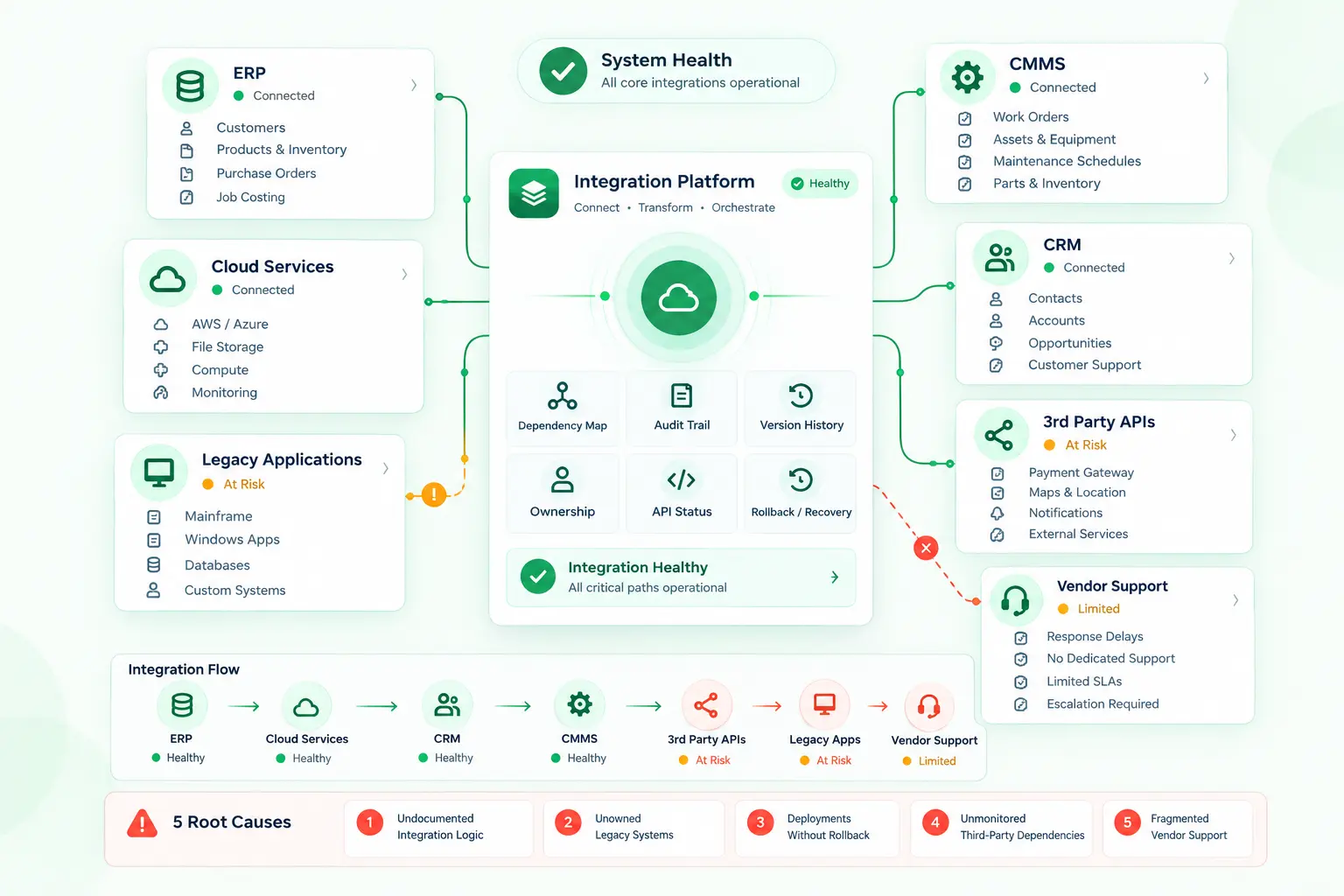
A CFO approves a new patient engagement platform. A COO signs off on a vendor promising faster equipment tracking. In both cases, the compliance team often gets pulled in only after protected health information is already moving between systems that were never built to talk to each other. That is usually where the real exposure starts.
Healthcare has held the highest average breach cost of any industry for 14 consecutive years, and breaches in the sector still take longer to detect and contain than almost anywhere else. It's rarely because hospitals don't have policies in place on paper.
The real issue is how data behaves once electronic health records, telehealth platforms, wearables, and third-party apps start exchanging information continuously, not in the occasional, controlled batches these systems were originally built for. To understand what HIPAA, GDPR, and SOC 2 actually require for live, active data flows, you have to look well beyond the text of the regulations themselves.
For executives evaluating healthcare compliance software integration, comparing vendors on HIPAA compliant integration credentials, or considering no-code healthcare integrations to reduce dependence on stretched engineering teams, the priority is the same. Understand where the exposure actually sits before the contract gets signed, because workflow automation in healthcare is now a compliance decision as much as an efficiency one.
The Escalating Cost & Risk of Healthcare Data Breaches
The Cost of a Data Breach Report 2025 puts the average healthcare breach at $7.42 million. That's roughly 1.7 times the $4.44 million average across every other industry combined. Healthcare has topped this list for 14 years running now, and it still takes longer to catch a breach here, 279 days on average versus 241 industry-wide.
Third parties eat up more of that risk every year. HIPAA Journal's read of HHS breach-portal data puts business associate involvement at roughly a third of reported healthcare breaches recently and climbing.
Here's what that means for anyone picking a vendor: your own security team can do everything right and you'll still eat the cost and the headlines if the breach happened two steps upstream, inside someone else's integration. The vendor's compliance posture is now part of your risk, whether or not it's on your org chart.
Key Compliance Frameworks Reshaping Healthcare Data Flows
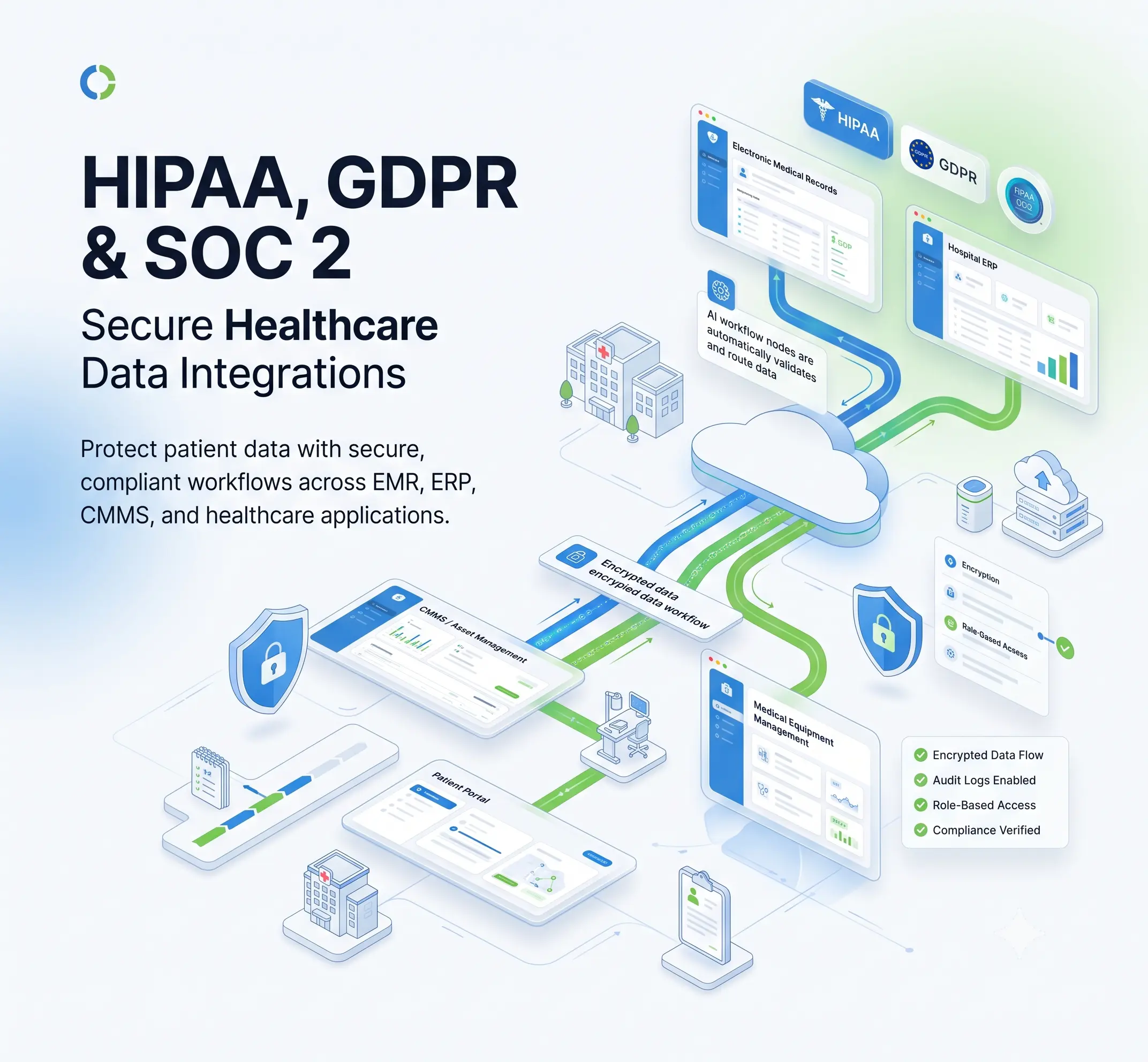
While HIPAA, GDPR, and SOC 2 originated under separate goals and distinct legal systems, today each framework enforces clear, practical demands on how integration pipelines are designed and run.
- HIPAA Compliance Essentials
HIPAA's Privacy, Security, and Breach Notification Rules are the floor for any US integration handling PHI. In practice, the Security Rule means encryption in transit and at rest, access control tied to roles, and audit logs that catch every read, write, and transfer, down to the routine ones nobody thinks to check.
A Business Associate Agreement passes that liability down the chain to every vendor involved. The minimum necessary rule caps what an integration is even allowed to move. If a scheduling workflow only needs a name and an appointment slot, and the integration pulls the full chart anyway, you've got a problem, no matter how good the encryption is.
- GDPR Data Compliance Requirements in Healthcare
GDPR kicks in whenever you're processing data belonging to someone in the EU, which now covers plenty of US health systems with international patients or research ties. Health data sits in GDPR's special category, meaning it needs a specific lawful basis and extra protection on top of what ordinary personal data gets.
Patient rights here aren't abstract. Access, correction, erasure, portability, each one has to work across every connected system, not just the record it started in. A deletion request that only clears the source database and leaves three downstream copies intact isn't compliant, it's a liability waiting to surface. Cross-border transfers need a recognized legal mechanism, and organizations processing health data at scale need a Data Protection Officer on staff. Penalties can hit 4% of global revenue, which tends to focus the mind.
- SOC 2 Type II Considerations for Privacy of Sensitive Data
SOC 2 isn't law. It's become the thing business partners and payers actually ask for before they'll connect a system to yours. The Trust Services Criteria, Security, Confidentiality, and Privacy especially, call for ongoing evidence, not a certificate you frame and forget.
A Type II report proves the controls held up over months, which counts for more in an integration context than a snapshot from one good day. Think of it as the layer that covers what HIPAA and GDPR assume is happening, the operational discipline and change management, without spelling out exactly how.
Overlaps, Differences & the Practical Impact on Data Flows
These three frameworks share far more common ground than basic compliance checklists suggest, but key differences matter most right where data moves between systems.
For a typical healthcare IT systems integration, this plays out at five distinct points: discovery, movement, transformation, storage, and deletion. Discovery has to confirm which fields count as PHI before a single record move through an API integration. The movement and transformation of the data must involve encryption and mapping of the fields in a manner that does not disclose more data than the target system needs. Storage must comply with data residency requirements under GDPR, while deletion must include all copies of the data.
Take a simple example from practice where the integration of EHR to billing is sending full clinical documentation even though the system at the other end needs only the diagnostic codes and account numbers. The pipeline works technically, but it violates HIPAA's minimum necessary standard and triggers unnecessary GDPR exposure if any patients reside in the EU.
Data Classification & Inventory for Compliant Healthcare Integrations
None of the frameworks above can be satisfied without knowing what data exists and where it currently flows. Most healthcare organizations underestimate how many systems actually touch PHI, particularly once departmental tools and shadow IT integrations are counted. This matters just as much for operational data, such as hospital asset management integration records tied to a specific patient encounter, as it does for clinical notes.
Building a usable inventory usually involves:
- Mapping every system that stores, processes, or transmits PHI, including third-party and departmental tools.
- Classifying data into tiers such as PHI, general sensitive data, and de-identified data.
- Tagging each integration point with its data classification and the frameworks it falls under.
- Revisit the inventory on a set schedule. Not only when an audit is coming.
A data integration platform with discovery and mapping built in turns this into something that updates itself instead of a scramble every December. That matters, because manual inventories are stale by the time anyone opens them again.
Best Practices for Compliant Healthcare Data Integrations
The privacy by design and security by design approach is most effective when integrated as part of the architecture itself rather than added later. There are a few techniques that always seem to differentiate between companies that breeze through audits and those that scramble every year.
- Encrypt and tokenize sensitive fields whether in transit or at rest, and implement role-based access control even to the field level if possible.
- Log everything, including reads, not only writes, since audit readiness depends on proving who accessed what and when.
- Consent and preferences should be treated as metadata that travels with the record so that the downstream systems treat them with the same permission as the source system.
- Minimize data in every pipeline by only moving the fields a workflow genuinely requires.
- Vet vendors on their own compliance posture, not just the certifications listed on a sales page, and build automated compliance checks into onboarding.
Organizations that are implementing these workflows in cloud integration find it easier to maintain consistency of controls in the system because policies can be set centrally as opposed to individually at each connection point.
Implementation Challenges & Common Pitfalls to Avoid
Legacy systems are almost always obstacle number one. A lot of CMMS, ERP, and EHR platforms were built long before modern API standards existed. This comes up constantly in medical equipment tracking integration work, where a decades-old asset database was never built to expose clean data anybody could audit, so teams end up writing custom middleware that's harder to review and easier to get wrong.
The second mistake shows up just as often: treating one tool, an encryption product, a logging dashboard, as if it covers everything. Compliance runs the length of the whole chain. Gaps in error handling are where sensitive data actually leaks out, in debug logs, in a failed-transaction queue nobody's watching.
Enterprise workflow projects have a habit of growing past their original scope, a pilot integration quietly expands to systems it was never audited for. Phase the rollout. Audit each phase before you expand it. And close the right-to-be-forgotten gaps in every downstream system, because that's usually where the correction gets expensive.
How ConnectorHub Enables Compliant, Secure Healthcare Integrations
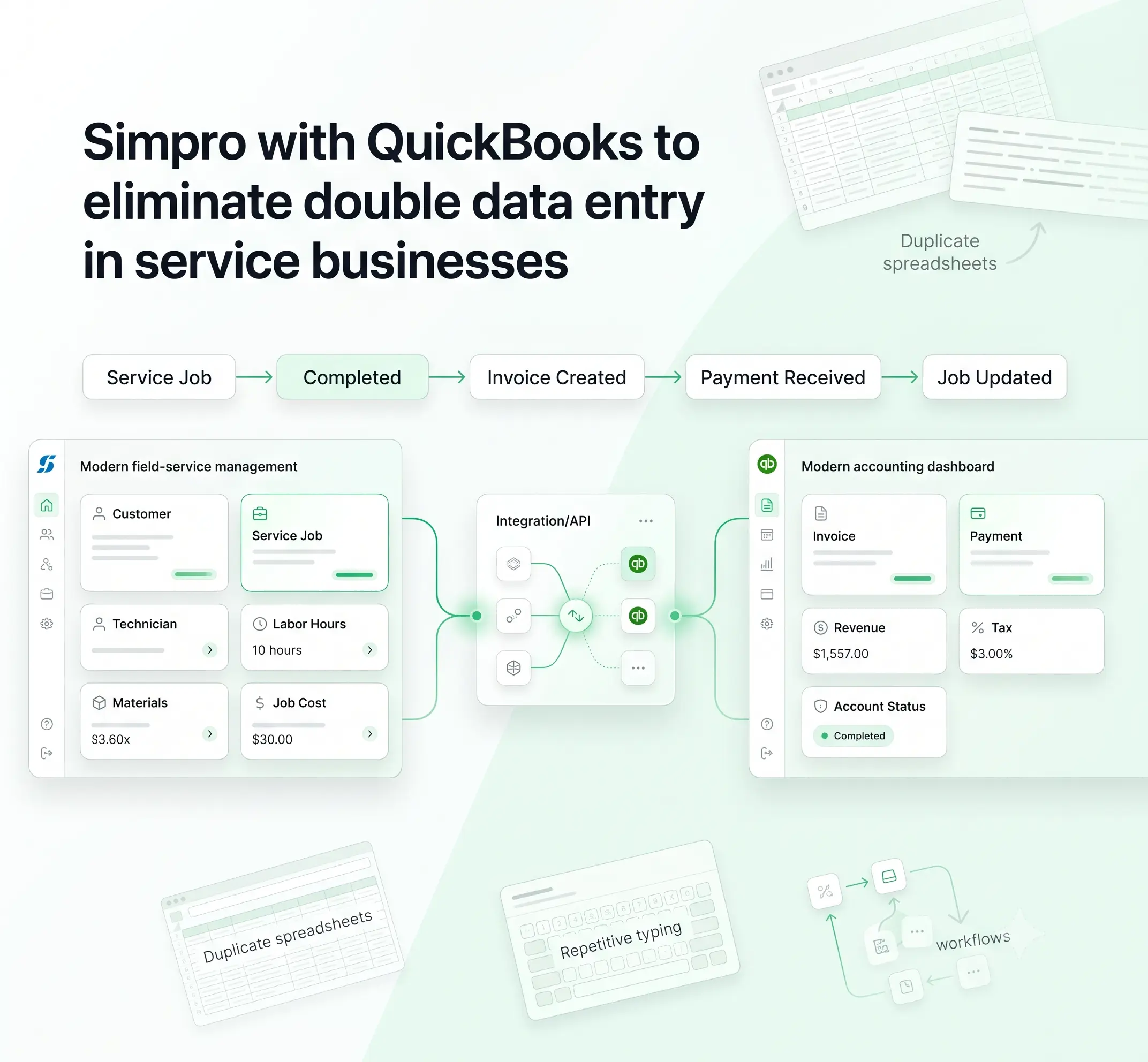
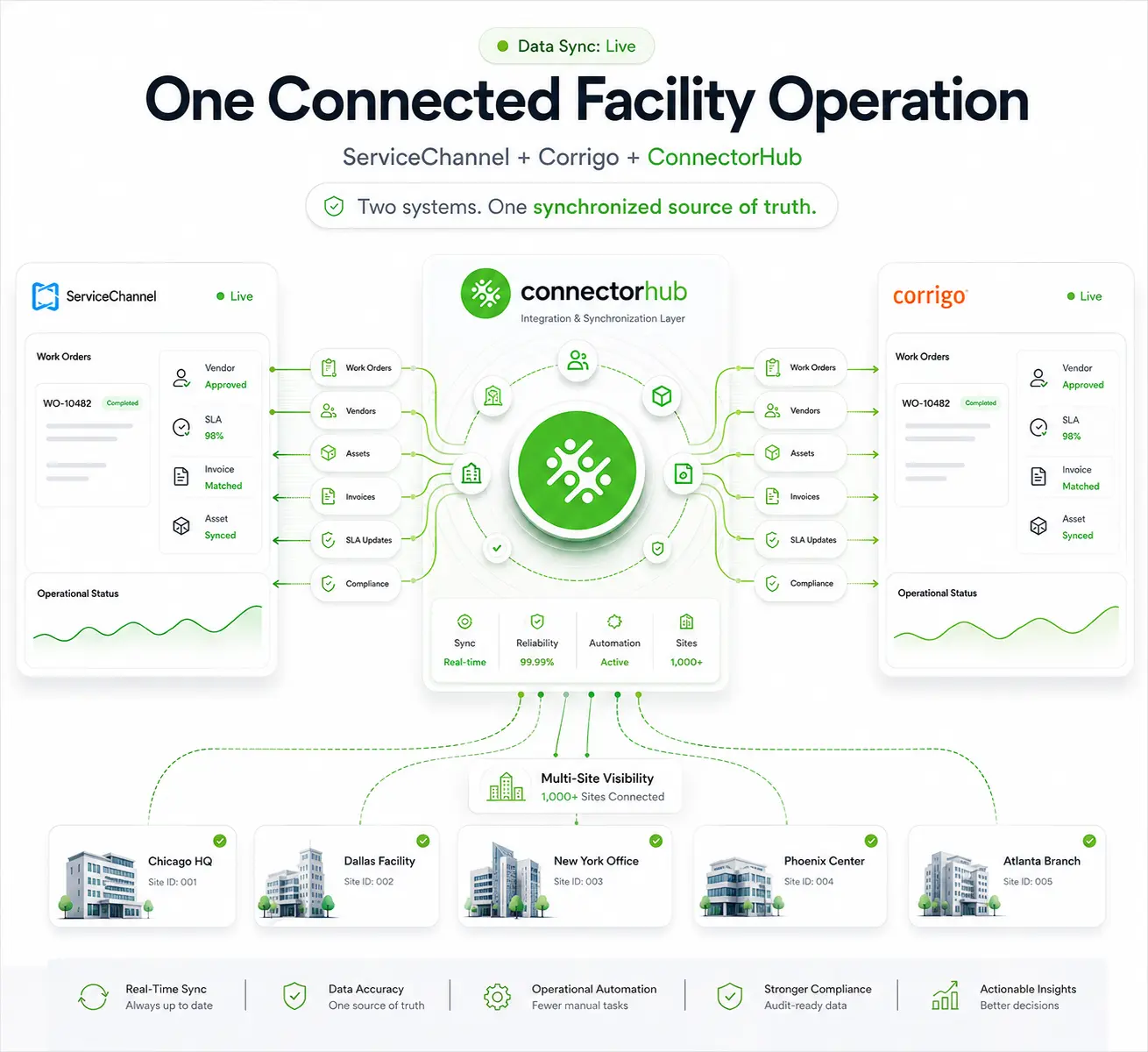
ConnectorHub was built around the reality described above: healthcare data rarely lives in one system, and every additional connection is another point where compliance can quietly break down. It provides hospitals and healthcare institutions with the ability to connect CMMS, ERP, and EMR for hospitals using the visual and no-code interface as opposed to complex coding which is hard to trace later.
Every workflow includes audit logs aligned with HIPAA, GDPR, and SOC 2, along with encrypted credential storage and role-based access control, so compliance evidence is built in from day one. That means preventive maintenance schedules, work orders, and asset records stay in sync across departments, with no manual reconciliation and no data moving without oversight.
ConnectorHub is an iPaaS provider built specifically for operational and clinical data. We typically get healthcare integrations live in two to four weeks, backed by real-time dashboards that show you are audit-ready before an inspector ever asks.
Also Read: How Integration Platforms Help Enterprise Teams Scale Without Adding Headcount?
Conclusion
HIPAA, GDPR, and SOC 2 rarely trip organizations up at the policy level. The failures happen at the exact moments data moves, transforms, or gets deleted, usually inside an integration that got approved for speed and never got a second look for compliance. Business associates now carry a real share of healthcare breaches, which means a vendor's compliance posture matters almost as much as your own security team's.
The organizations staying ahead of this treat data flow mapping, encryption, and audit logging as part of the integration itself, not something added before an audit. Get that right, and you protect patients. You also protect whoever's name ends up on the breach notification letter.