.svg)

Healthcare billing has evolved far beyond sending invoices; it is now a high-stakes, complex process that requires many steps to be coordinated properly. Any disruption in these steps causes problems that affect the financial health of the hospital.
Majority of the healthcare organizations still use disparate systems, which means their EHR system and their billing system are working independently of each other. This has resulted in inefficiencies as there is no integration between these systems, which has caused duplication of work, inconsistent data, and denied claims. The administrative burden slowly piles up.
This is where the healthcare data integration solution comes in. With the help of hospital operations automation, healthcare organizations can move towards a more integrated ecosystem in which data can flow easily across different systems. This way, instead of relying on manual handoffs, healthcare organizations can use a data integration platform to automate their processes.
Ultimately, the value lies in building a billing infrastructure that can handle more as the organization firms, without breaking under the weight of it.
Understanding the EHR–RCM Data Flow Gap
Simply put, Electronic Health Records (EHRs) are systems that maintain patient data like patient demographics, patient history, diagnoses, and treatment details. On the other hand, Revenue Cycle Management (RCM) handles claims processing, billing, and payment processing.
Ideally, these two systems should function as a unified ecosystem built on single source data unification, but in practical scenarios, they are used as separate systems or islands. This creates a huge information flow gap, as the information collected at the point of care in the clinical domain does not get fed into the financial domain in a timely or useful manner.
When there is no healthcare IT systems integration, hospitals face a situation of delayed patient data synchronization. This results in problems during the billing process. Small variations, such as missing insurance details or incorrect procedure codes, may lead to delayed or rejected claims.
According to reports, the rate of claim denial for new claims can be as high as 12-15%. Additionally, as many as 87% of these denials are preventable, and a large number of these are due to the lack of integration between EHRs and RCMs.
However, the biggest challenge lies in the absence of standardization between different platforms, as many existing EHR systems are still using proprietary or older HL7 v2-based interfaces, while newer RCM systems are using FHIR-based APIs.
Proper application-to-application integration can solve this issue because, with real-time and accurate communication from clinical systems directly into billing systems, manual re-entry of the data can be avoided, which can result in a clean claim from the very beginning.
Why Traditional Healthcare Data Integration Approaches Fall Short
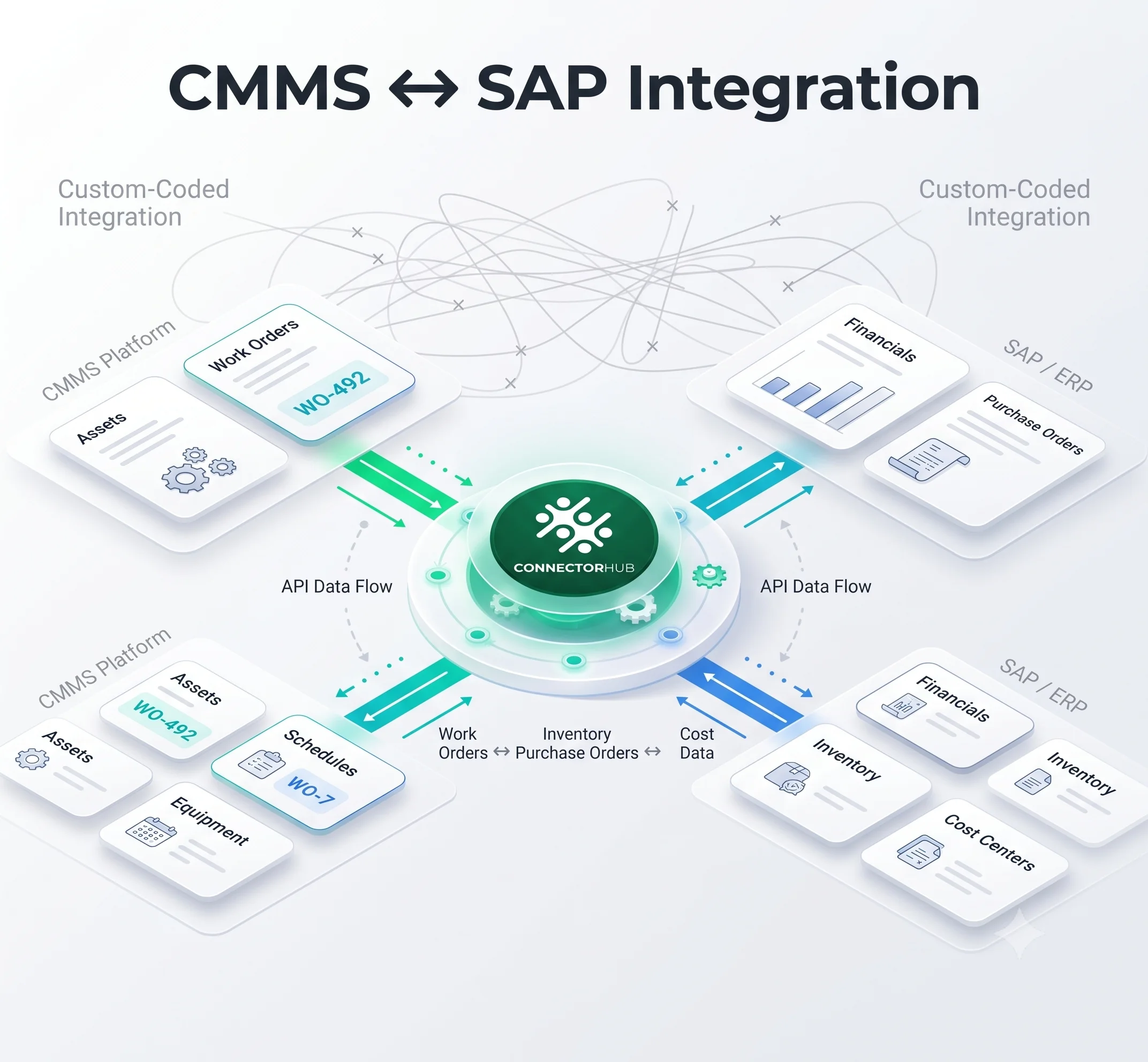
In the past, healthcare organizations have typically used custom integrations to connect their systems. Although these measures may be successful in the short term, they are unsustainable in the long term with the increase in system count.
As each integration is added to the process, it is becoming increasingly complex to manage, maintain, and scale. The maintenance is resource-intensive, and any changes to any part of the integration process have the potential to impact the entire process. This model also does not provide flexibility to accommodate changes in healthcare needs.
Another important limitation that has been identified is that of compliance. This is mainly because ensuring HIPAA compliant integration across various disconnected systems is not easy, especially when there is no control over data flow. This could result in an organization not complying with the required standards.
The modern healthcare environment needs not only connectivity but rather intelligent integration platforms that are capable of handling complex workflows, supporting real-time data exchange, and providing compliance mechanisms.
API-Driven Workflows for Real-Time Billing Synchronization in Healthcare
This API-driven integration is rapidly becoming the standard for such integrations, especially between the EHR and Revenue Cycle Management (RCM) systems. Unlike traditional batch-based information exchange, which usually involves a lag, API-based systems allow for a real-time and event-driven information exchange.
Traditionally, information such as patient information, insurance details, charge entries, and documentation within the EHR can now trigger billing activities immediately. This minimizes the gap between service delivery and billing, allowing healthcare providers to send clean claims quickly while at the same time reducing the possibility of denied claims resulting from out-of-date or incomplete information.
The modern API integration platforms act as a bridge or a conduit through which information is shared between two or more systems. The API-based integration platforms are more than just a bridge. They are designed to ensure information is shared between systems following strict standards such as HL7 FHIR.
For instance, upon the registration of a patient, an API workflow can be designed to automatically perform eligibility verification, initiate prior authorization processes, and create a preliminary claim record within the RCM system.
Once the clinical documentation is complete, coding workflows can be automatically initiated, followed by automated charge capture and claims submission. This linear, connected workflow minimizes human interface and consequently reduces the possibilities for human error.
Studies and industry benchmarks have shown that healthcare organizations utilizing hospital workflow automation software to connect their EHR and RCM systems can achieve various benefits related to revenue cycle performance, including:
- A reduction in days in accounts receivable
- An increase in the number of claims accepted on the first pass
- A decrease in billing inaccuracies
However, the benefits of API workflows are not limited to the advantages of speed. API workflows can provide a more reliable billing system where the integrity of the data is consistently maintained throughout the entire revenue cycle.
Automating the Revenue Cycle with HIPAA-Compliant Integrated Systems
In the current healthcare environment, the revenue cycle process, which includes patient registration, insurance verification, claims, billing, and payment posting, still represents one of the most labor-intensive and error-prone business processes in healthcare organizations.
With the advent of integrated systems facilitated by secure APIs, the revenue cycle process in healthcare systems could be revolutionized, ensuring end-to-end automation and the integrity of protected health information (PHI). Integrated systems that provide healthcare integration solutions are essential to enable the healthcare industry to realize the benefits of faster revenue cycle, reduced costs, and minimized claim denial.
The contemporary process of the revenue cycle occurs as a result of the application of RESTful APIs, as well as the use of standards for interoperability, for example, HL7 FHIR and HL7 v2.x, in integrating different systems, for example, EHR systems, billing systems, insurance systems, lab systems, as well as patient portals, among others.
The application of intelligent integration solutions has the potential for the automatic mapping of unstructured clinical notes to standardized codes, for example, ICD-10, SNOMED CT, LOINC, as well as the automatic conversion of legacy HL7 to FHIR, thereby generating uninterrupted workflows. Hybrid integration platforms take this a step further by keeping sensitive PHI on-premises or in customer environments, securely orchestrating workflows in the cloud.
The future of healthcare revenue cycles will be characterized by touchless operations. If you are a healthcare organization considering a healthcare compliance software integration, you should seek out platforms that offer FHIR-native APIs, hybrid environments, and automated compliance monitoring tools. Whether you are a hospital, specialty clinic, or multi-site practice, HIPAA-compliant automation of your revenue cycle management process can help you achieve a strong ROI by streamlining your revenue process.
Enabling Scale with No-Code Healthcare Integrations
Once you have a secure, API-driven automation in place for your revenue cycle, the next challenge is growth. This is where no-code healthcare integrations can help you change the equation. They can help your existing teams build, modify, and expand your connections in a completely secure, HIPAA-compliant way.
So what’s different about them? They equip your system integration process with pre-built connectors for popular EHRs, billing systems, payer systems, lab systems, and patient engagement tools, among others. They also provide you with a way to map out your data, set rules, and trigger actions through a drag-and-drop workflow, eliminating the need for coding.
This drastically cuts down weeks of development to a matter of days or even hours, enabling rapid implementation velocity and allowing you to grow your organization with new connections or changes to existing ones without impacting your existing operations.
The real advantage appears when scaling. No-code tools handle increased volume easily. This means whether you need to sync records across multiple locations or handle increased claims volume, no-code tools do this easily. Hybrid models keep critical patient information on-premises or in your control while keeping the orchestration layer in the cloud. This model ensures strict compliance while enabling real-time data exchange via FHIR and HL7. It eliminates the risk of traditional batch transfers.
Everyone involved is enjoying the change. Clinical and revenue cycle staff get to be part of the configuration of these new workflows based on their current process. IT staff get to move from maintenance to strategy. This means they get to implement new capabilities and adapt to changing regulations and payers quickly.
For those healthcare organizations looking to grow without a corresponding increase in technical debt, enterprise automation through no-code integration offers the flexibility to scale with confidence. It builds on top of the automated foundation of your revenue cycle and turns isolated systems into an integrated ecosystem.
How ConnectorHub Powers Efficient EHR–RCM Integration
ConnectorHub is the no-code solution that bridges the long-standing gap between your EHR and RCM systems. It enables data to flow straight into your billing systems without any issues or custom code.
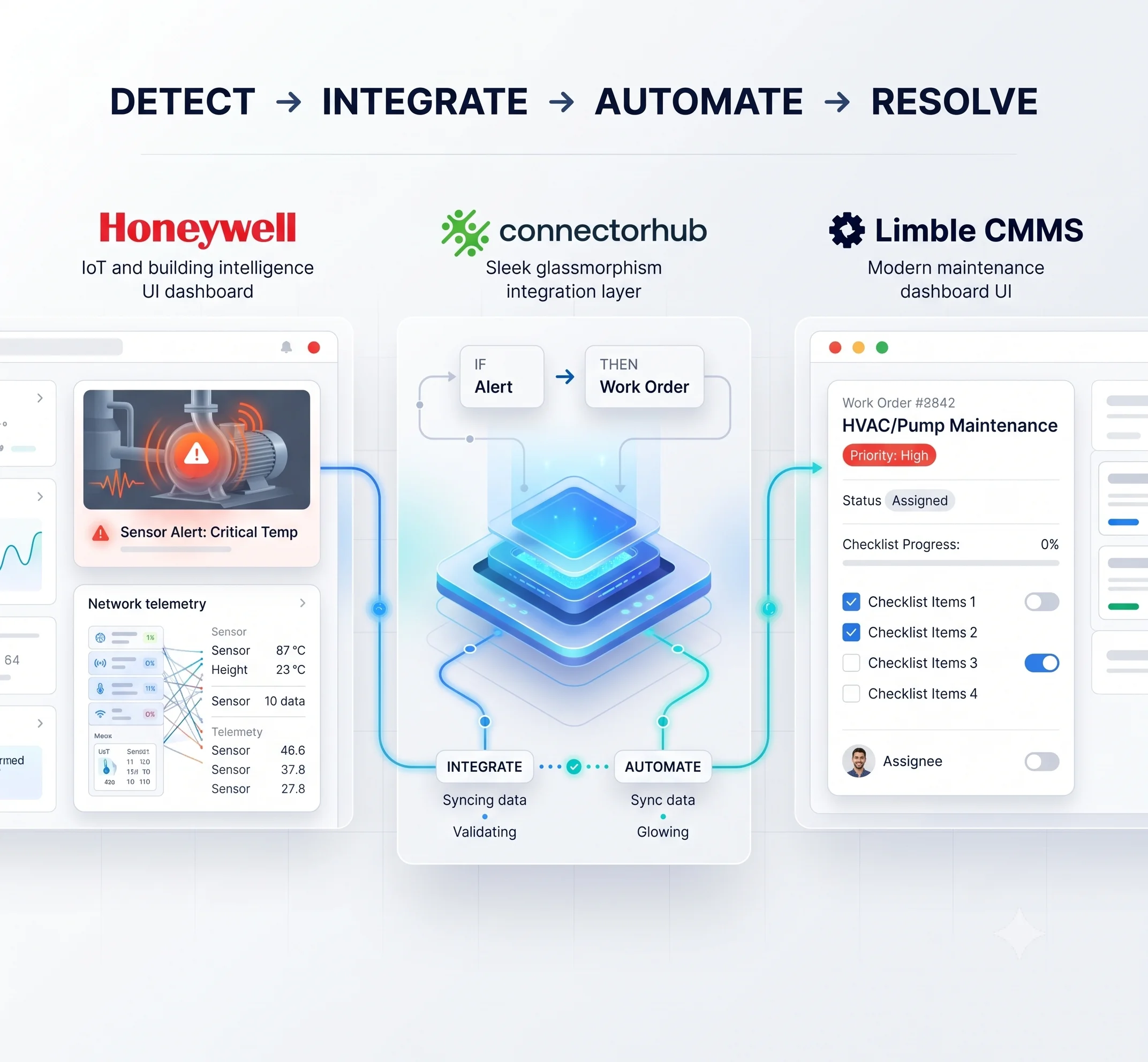
It has a visual interface that simplifies complex workflows into a series of simple steps. You can connect your major EHR systems, such as Epic, directly with your ERP and billing systems through our pre-built connectors. This could be something like Nuvolo with Epic for real-time visibility of asset and patient data, ServiceNow with SAP for real-time syncing of maintenance, procurement, and invoice data, or Oracle ERP with your CMMS for automated work order creation and cost allocation.
Patient demographic, charge, clinical, and insurance data is all transferred in real-time, which in turn triggers eligibility, coding, and claims generation as soon as the documentation is complete. No need for nightly batches or manual entry.
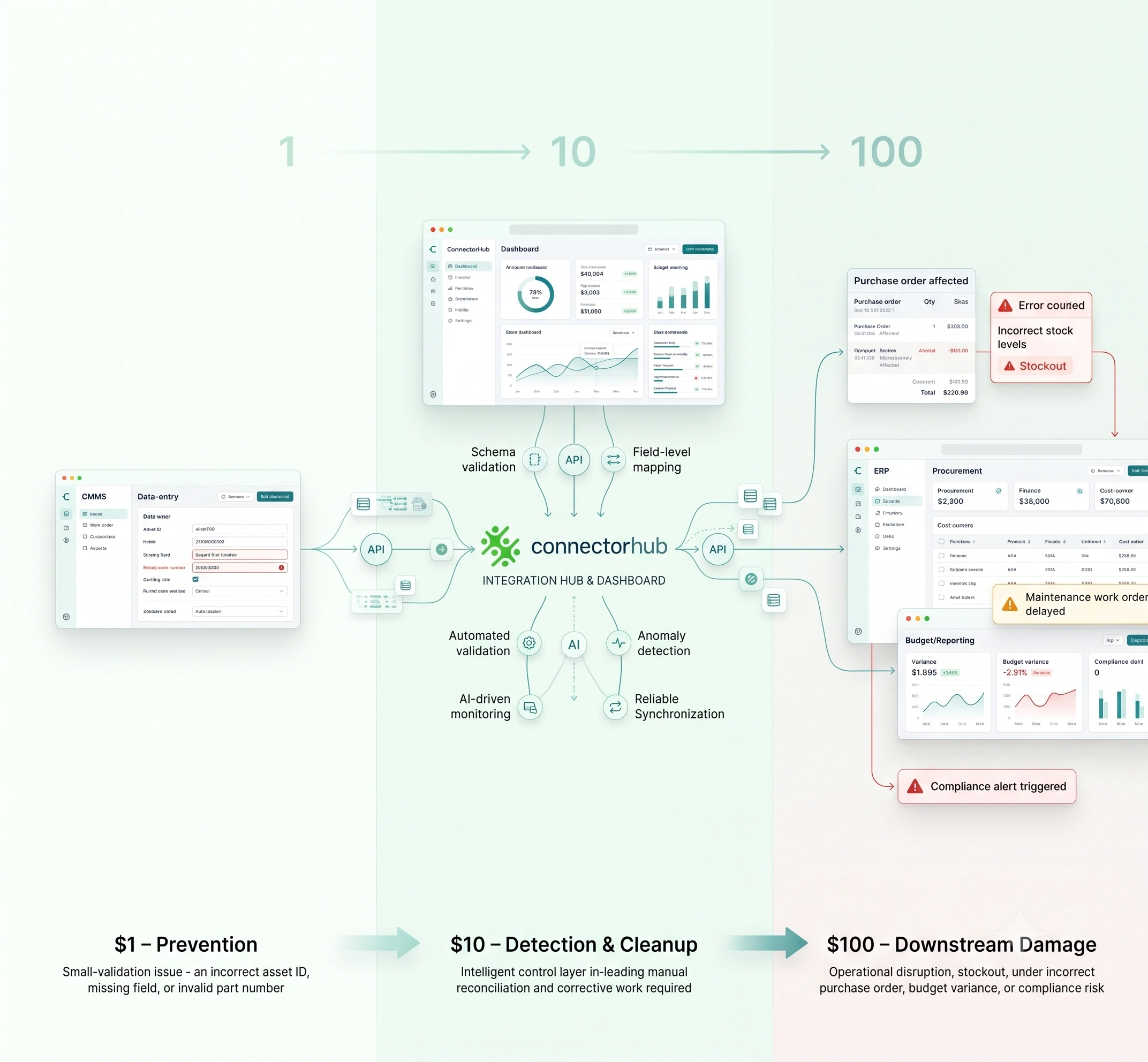
What makes this process so efficient for healthcare, though, is the intelligence and compliance built in. The AI-driven mapping catches discrepancies before they even enter the revenue cycle, and the anomaly detection catches problems early on. Every connection runs with full HIPAA, SOC 2, and HITRUST standards, with encryption, access controls, and immutable logs that produce reports for easy auditing at a moment's notice. Data is kept secure in your environment, and the orchestration layer gives you instant synchronization between departments.
Also Read: Ensuring SLA-Protected Data Flows Through HIPAA-Compliant Healthcare Workflow Automation
Conclusion
The disconnect between the EHR and RCM systems has continued to plague healthcare systems, leading to inefficiencies that range from manual rework to increased claim denial ratios.
New technologies, such as API-based and FHIR-based systems, provide a clear roadmap for the future, allowing for the exchange of data in real-time. When paired with intelligent automation, a HIPAA-compliant solution, not only will errors and manual work be a thing of the past, but a reliable revenue cycle will also be a reality.
What does the future hold for healthcare billing? It is a future where accuracy is guaranteed, from point of care through to final payment.
Platforms such as ConnectorHub provide this solution by effectively bridging the gap between EHR and RCM systems through a no-code API-based solution. Future healthcare systems that invest in solutions such as ConnectorHub will be well positioned for a future that is not only less costly but also sustainable.