.svg)
Fresh challenges pop up daily in health care, making it crucial to guard patient details while ensuring systems work without hiccups. What matters now isn’t just speed but quiet reliability behind every record and routine.
In 2025, close to 57 million people were affected by healthcare data breaches. At least 642 separate events, each affecting 500 or more individuals, landed on the U.S. Department of Health and Human Services' Office for Civil Rights (OCR) desks. All this just shows how exposed data flows can be. Furthermore, the average cost of a healthcare breach amounts to $7.42 million last year, which undoubtedly made it a very expensive industry hit.
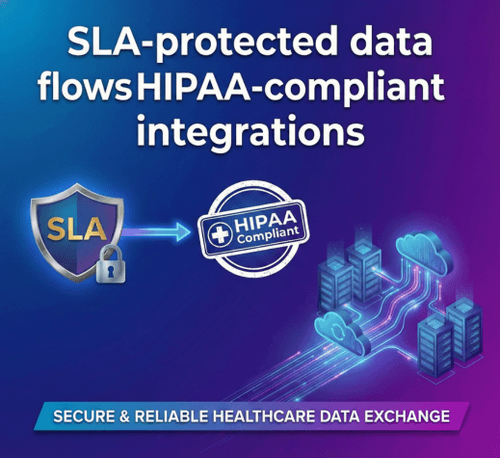
As such attacks become commonplace, hospitals and clinics increasingly turn to automated systems to speed things up in a smarter way. That's where SLA-protected data flows and HIPAA-compliant integrations take pace.
At ConnectorHub, we focus on straightforward, clean integrations that protect your data and streamline processes, so providers can refocus on optimizing healthcare processes and patient care.
Understanding HIPAA Compliance in Healthcare
Back in 1996, a new federal law called HIPAA started shaping how medical data gets guarded across the U.S. What counts? Well, mainly two sections stand out when talking about patient records. One of them, known as the Privacy Rule, lays down who can access sensitive health details and under what conditions they might pass it along.
Then there's another piece, the Security Rule, focused purely on digital files; it demands careful management practices, secure facilities, and tech defenses to keep ePHI safe from exposure
Fines often follow when rules get broken. To stay safe, the software handling tasks should guard information with encryption, while also recording every move in clear logs, on top of locking down who gets in.
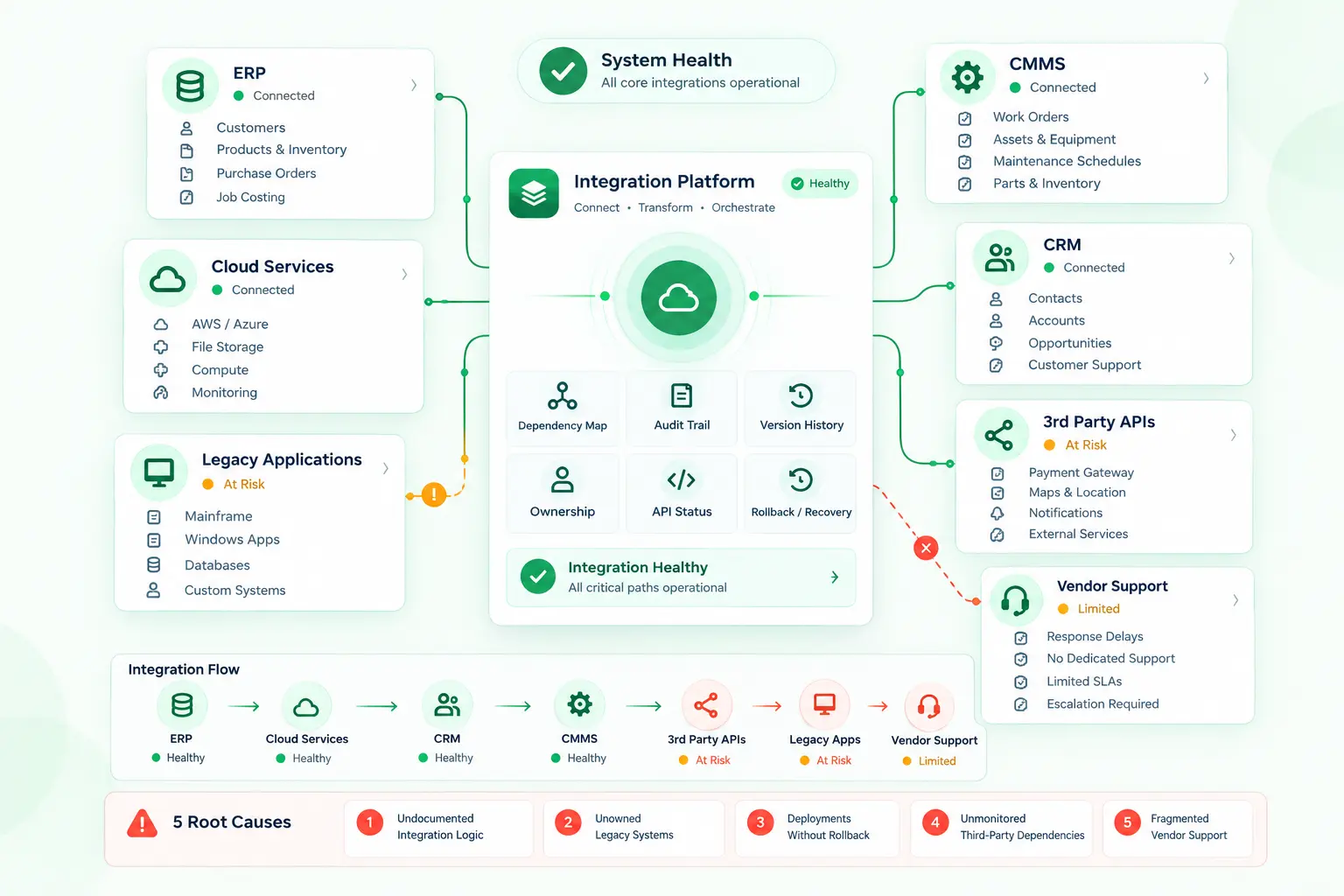
When systems are not properly connected, they create silos. That setup raises the chances of mistakes and accidental data exposure. Information gets duplicated, overlooked, or mishandled.
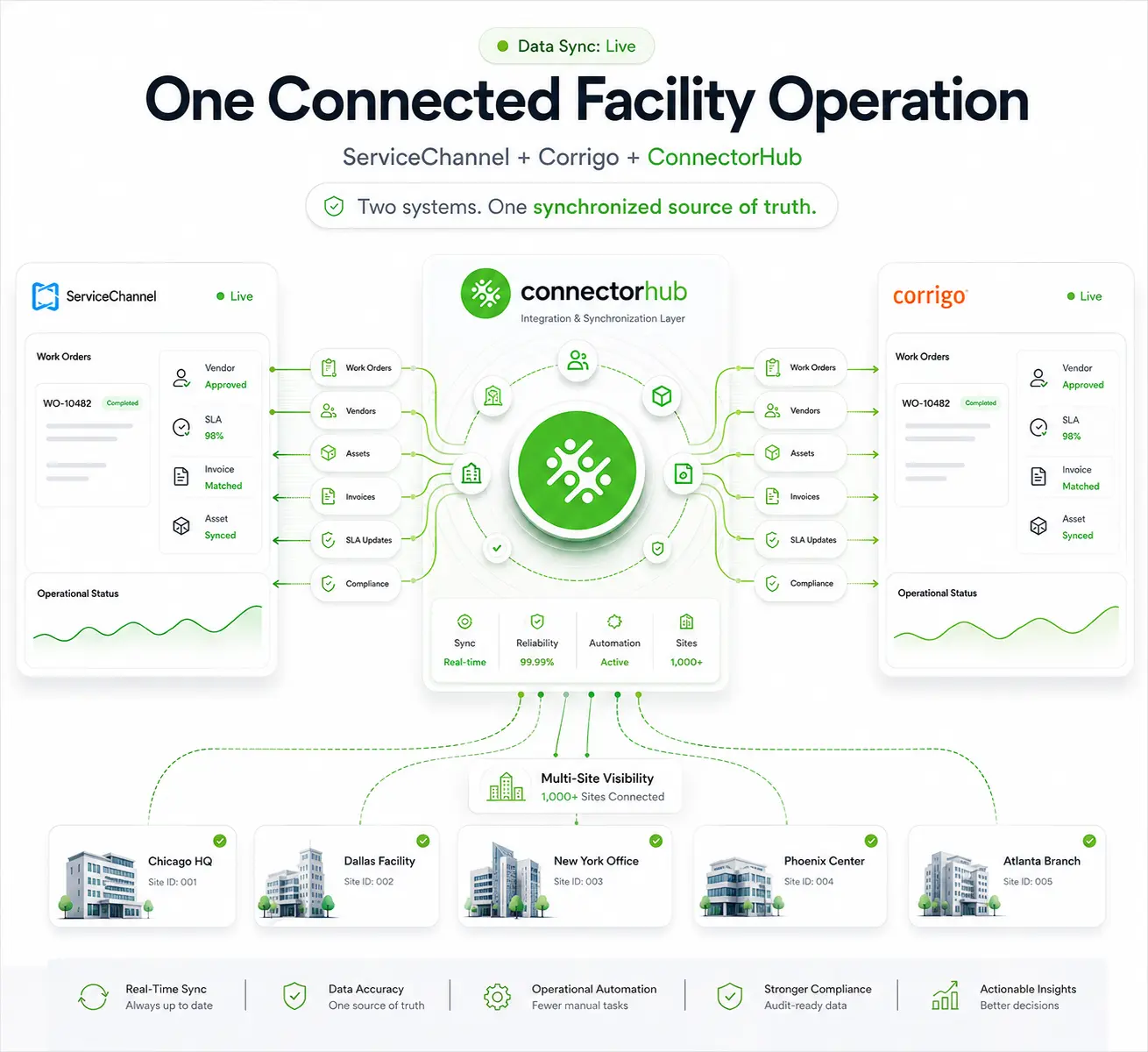
This is where healthcare data integration solution works. When systems link properly, information flows without hiccups between them, staying safe and steady. Gaps shrink when rules stay uniform, making sure each platform follows along naturally.
Strong data governance ties it all together. It keeps information accurate and secure while allowing its effective flow. Done well, it turns compliance from a risk into a practical advantage in everyday work.
The Role of SLAs in Ensuring Steady Data Flows
Service Level Agreements (SLAs) are essentially formal contracts that realistically define performance expectations, such as uptime and error rates. Within data pipelines, timing matters. Data must appear when expected, stay accurate, and ready for access. Delays or inaccuracies introduce trouble: financial loss appears possible; even danger arises quietly. SLAs reduce uncertainty by stating exactly what should happen.
SLAs often reflect broader data practices, though tailored specifically for sectors like medical billing. Through these terms, financial consistency becomes measurable, and responsibility shifts become visible across clinics and third-party partners.
When looking at how SLAs play a part in risk mitigation through automation, think about response delays along with recovery time objectives (RTO). These set hard limits on downtime after failures. Such controls help protect data integrity while moving between systems, linking overall system stability with healthcare-specific compliance needs.
Establishing Healthcare Workflow Automation
Automating workflows in healthcare means applying tools that handle repeated jobs. Time drains away when work stays paper-based or requires constant human input. Staff members often spend over fifteen hours weekly on routine paperwork, slowing down care delivery.
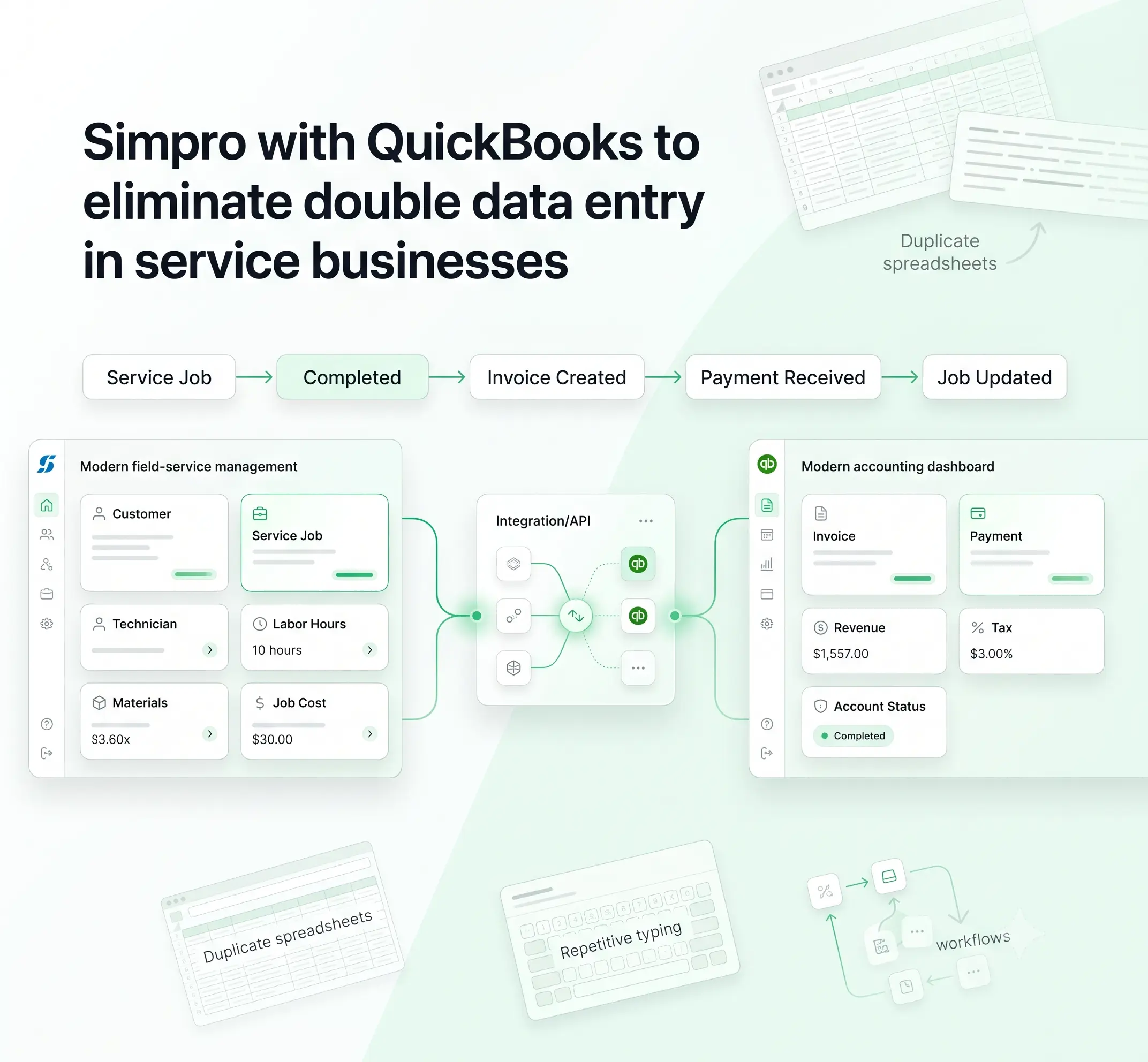
Automation such as healthcare CMMS-ERP integration allows staff to spend more time with patients while computers handle the busy work.
Start by looking at the routines your team handles every day. Knowing how things move now helps spot delays. When those problem spots stand out, it becomes clearer which parts should be automated next. Where effort piles up, change often matters most.
The next step is to identify the tools that suit your needs and can integrate with the software that you are currently using. Effectiveness of automated workflows depends on smooth interaction between programs already in place. This ensures that electronic health records, scheduling software, billing software, and other software do not create data stuck ups.
Low-code platforms are widely used because they allow teams to create automation without necessarily having extensive coding knowledge. They are capable of managing activities such as appointment reminders, eligibility verification, prior authorizations, and claims processing. Such automation can significantly reduce no-shows and errors by large margins.
Transparent implementation is critical. Assemble a team consisting of clinical professionals, administrators, IT personnel, and executives. Because training helps people adapt, explain each step clearly along with its purpose. Starting small means picking initiatives that show results fast - this builds confidence before moving forward. As comfort grows, broader changes become easier to manage.
The payoff is significant. Many organizations experience dramatic reductions in processing costs and times.
Automating Healthcare Workflows with HIPAA Compliant Integration
A single slip in handling patient details can trigger major consequences, so using tools that have HIPAA-compliant integration is compulsory. Responsibility spreads across every party when vendors sign Business Associate Agreements, locking in shared duty. Protection comes into the picture through encrypted transfers of PHI, quietly working behind each exchange.
You have different paths to take for the system adoption depending on your environment. Open-source platforms can be hosted in-house and it lets you have complete control over where your data lives. With enterprise options, ready-made links work straight into older setups, so moving forward does not force a full swap right away.
The integration of HIPAA-compliant workflows in the healthcare settings changes how forms, visits, payment checks, and specialist transfers are handled, keeping information protected throughout. Information will flow from systems such as EHRs, billing systems, and labs on its own without violating any rules.
Moreover, to keep everything visible, audit trails record system activity so you can trace what happened if issues arise. Access controls limit who can view or handle sensitive data.
Connect CMMS, ERP & EMR for Hospitals to Drive Smarter Data and Resource Management
Linking the CMMS, ERP, and EMR systems builds one uninterrupted ecosystem that ties together maintenance, finances, and patient records. With Electronic Medical Records in the loop, you get updates on equipment status in real time from the CMMS side and correct cost figures from the ERP.
This setup lets data flow naturally between the three. For example, when maintenance logs show a device needs service, it can automatically flag related patient schedules in the EMR to avoid any holdups. Billing stays spot-on because costs from repairs or parts pull straight from ERP records.
It tackles those annoying fragmented reports that make it hard to see the full picture. When teams from different areas access identical updates, coordination of treatment tends to grow smoother while tools are applied more efficiently.
Staying current happens automatically, thanks to systems that monitor how fresh the information remains. Updates roll through without needing someone to step in. This process runs on its own, making sure nothing falls behind.
In the end, hospitals end up with smarter decisions on assets, better planning for staff and supplies, and fewer surprises that could affect patient care. Everything runs more predictably and efficiently.
Breaking Down Barriers to SLA-Protected Data Flows with Healthcare Data Integration Platform
A good healthcare data integration solution eliminates these data silos by aggregating information from electronic health records, lab systems, billing systems, imaging solutions, and more. Modern solutions use standards such as HL7 (Health Level Seven) for simple messaging and FHIR (Fast Healthcare Interoperability Resources) for fast, API-level exchanges that ensure everything stays organized and secure.
Fragments of patient details often sit apart, locked inside separate digital spaces. Pulling pieces from EHRs links them with lab outputs, financial tracking modules, scans, along with other sources. Systems now speak through common modern standards such as HL7 (Health Level Seven) that handles core alerts, messages traveling short distances.
Meanwhile, FHIR opens doors for live exchanges to happen fast using APIs, moving information cleanly without losing protection or form between platforms.
FHIR, in particular, is a game-changer in healthcare integration with its modular, RESTful APIs. Instead of revealing full medical histories, its design allows selective retrieval, think allergy lists, drug regimens, or test outcomes, one piece at a time.
Because requests are smaller, responses come faster, benefitting point-of-care tools and portable health software alike. Even so, privacy stays intact; methods such as encrypted transfers and verified login tokens align with HIPAA rules throughout.
The main perks stand out clear:
- Better analytics that help with community health trends and custom treatments.
- Lower admin expenses from automatic cleanup and removing duplicates.
- Stronger teamwork in care, since providers get a full, current snapshot of the patient.
On top of that, governance features keep data reliable through auto-checks, spotting weird patterns, and linking patient IDs to fix mix-ups between systems.
In setups guarded by SLAs, these solutions lock in benchmarks like responses in under a second or nearly perfect accuracy at 99.99 percent. That stops any slip-ups from missing or late data that could mess with compliance.
Pulling down any existing workflow constraints with modern middleware’s cloud-native architectures and pre-built connectors, organizations achieve true interoperability, turning broken data pathways into actionable insights for better outcomes.
Best Practices for Successful Healthcare IT Systems Integration
To make healthcare IT systems integrate well, there has to be a proper strategy that emphasizes standards and design. This approach ensures systems grow steadily, stay protected, and exchange information without trouble.
By 2026, integration-first architectures have become non-negotiable, prioritizing trust-worthy data flows over custom fixes and enabling automation without workflow disruptions.
Here are recommended best practices to guide fruitful implementations:
- Adopt an Integration-First Architecture — Design with interoperability in mind. Rather than stacking isolated tools, shape your setup using cloud-based platforms centered on API integration. As a result, data flows freely between electronic health records, lab systems, office software, and outside applications. With these links in place, teams rely less on repetitive fixes done by hand. Deployment speeds up, not because of shortcuts but through alignment across components.
- Emphasize the Usage of Standards like FHIR and HL7 — Leverage FHIR to give you RESTful APIs and modular resources that let you share exactly the data you need in real time. For older systems still running HL7, use bridges or hybrid setups to ease the switch. Widespread FHIR adoption for the times ahead lines up with regulatory compliance and makes it easier to use data in different locations.
- Set Up Strong Data Governance and Collaboration — Define objectives clearly, assign responsibility per dataset, then establish transparent guidelines. Tools like data catalogs support structured access through role-based access controls (RBAC), alongside consistent identity tracking across systems. Instead of working in silos, cross-functional teams adjust integration efforts to match daily operations more closely, reducing resistance naturally. Ownership without confusion grows when everyone knows their part.
- Incorporate Security and Compliance Measures from Day 1 — Start security and compliance right away by building encryption into every part of the system, using unchangeable logs for tracking actions, applying zero-trust rules consistently, while running frequent checks for potential risks. Vendors must sign BAAs without exception, even as operations follow standards set by HIPAA, ONC, and TEFCA across all processes.
- Involve Clinical Staff and Start Small — Clinicians who handle day-to-day tasks should join early stages, staying involved as systems are shaped and tested. Their presence keeps designs grounded in real use, easing the effort required to adopt them. Instead of broad rollouts, select just one key process where improvements matter most. Success in one area creates momentum, encouraging wider adoption over time. Experience gained during these small cycles strengthens later expansions into different functions.
- Tie Everything to Quantifiable SLAs — What ties it together? Measurable service standards. Aim for clear goals like uptime at 99.9%, response speed limits, correct data handling, defined escalation steps. Tracking happens nonstop through live displays, paired with auto-notifications. This setup supports consistency, flags issues early, ensures follow-through.
These steps come straight from what's working in the field right now, drawn from industry trends like TEFCA advancements and FHIR mandates, to create resilient, future-proof integrations that support value-based care and protect SLA-enforced data flows.
Choosing the Best HIPAA Compliant Integration Software
Selecting an apt HIPAA compliant integration software for your organization involves evaluating a number of factors that facilitate curated integration mechanisms for your healthcare workflows.
At ConnectorHub, our solutions stand out by combining SLA enforcement with HIPAA compliance, aiming to deliver customized integrations for optimal and automated healthcare data management.
Conclusion
In these times, healthcare organizations face rising pressure to protect patient data while maintaining the operations easily with no interruptions. SLA-protected data flows through HIPAA-compliant workflow automation have become the need of the hour.
By connecting systems securely, enforcing clear performance commitments, and eliminating data silos, healthcare organizations can protect sensitive information, minimize costly disruptions, and free up valuable time for what matters most, ensuring quality patient care.
This approach turns compliance from a burden into a foundation for safer, and more productive operations.
At ConnectorHub, we are here to make that foundation strong and uncomplicated. Get started with us today.