.svg)
Facility managers today are under constant pressure to do more with less, such as streamline operations, reduce downtime, and still meet strict SLA expectations. This is where integrated systems make a difference.
With modern CMMS integrations delivering up to 15–20% reductions in maintenance costs, nearly 50% less unplanned downtime through predictive capabilities, and ROI reaching as high as 250% within the first year, the shift toward connected workflows becomes a strategic move at this point.
By integrating Salesforce’s intelligent, CRM-driven scheduling with FEXA’s flexible asset and workflow engine, facility teams can eliminate manual coordination, accelerate response times, and ensure consistent SLA performance without added complexity.
Challenges in Traditional Facility Maintenance Workflows
The reality is that in many facility operations today, it’s not that they lack tools, but that there exists a lack of connectivity between tools. When tools aren’t connected, even basic maintenance tasks become needlessly complicated. Legacy setups keep CRM and facility management systems in silos.
- Fragmented Work Order Management : FM teams juggle multiple tools, manually log work orders in one system while critical customer or location data sits in another, creating gaps and inefficiencies.
- Delayed Vendor Coordination: Teams are not receiving vendor updates in real time, resulting in missed follow-ups, scheduling conflicts, and delays in essential maintenance activities.
- Out-of-Sync Asset Management: Without connected systems, FM asset data quickly becomes outdated, making it harder to plan and execute maintenance effectively.
- Missed or Buried Alerts: Without real-time monitoring and alerts, critical anomaly notifications are often lost or overlooked, preventing facilities from addressing issues before they escalate into costly repairs.
The disconnected workflow between tools like Salesforce and FEXA creates friction in the day-to-day operations that slows facility lifecycle down and eroding service quality.
What Happens When Salesforce Field Service Meets FEXA CMMS
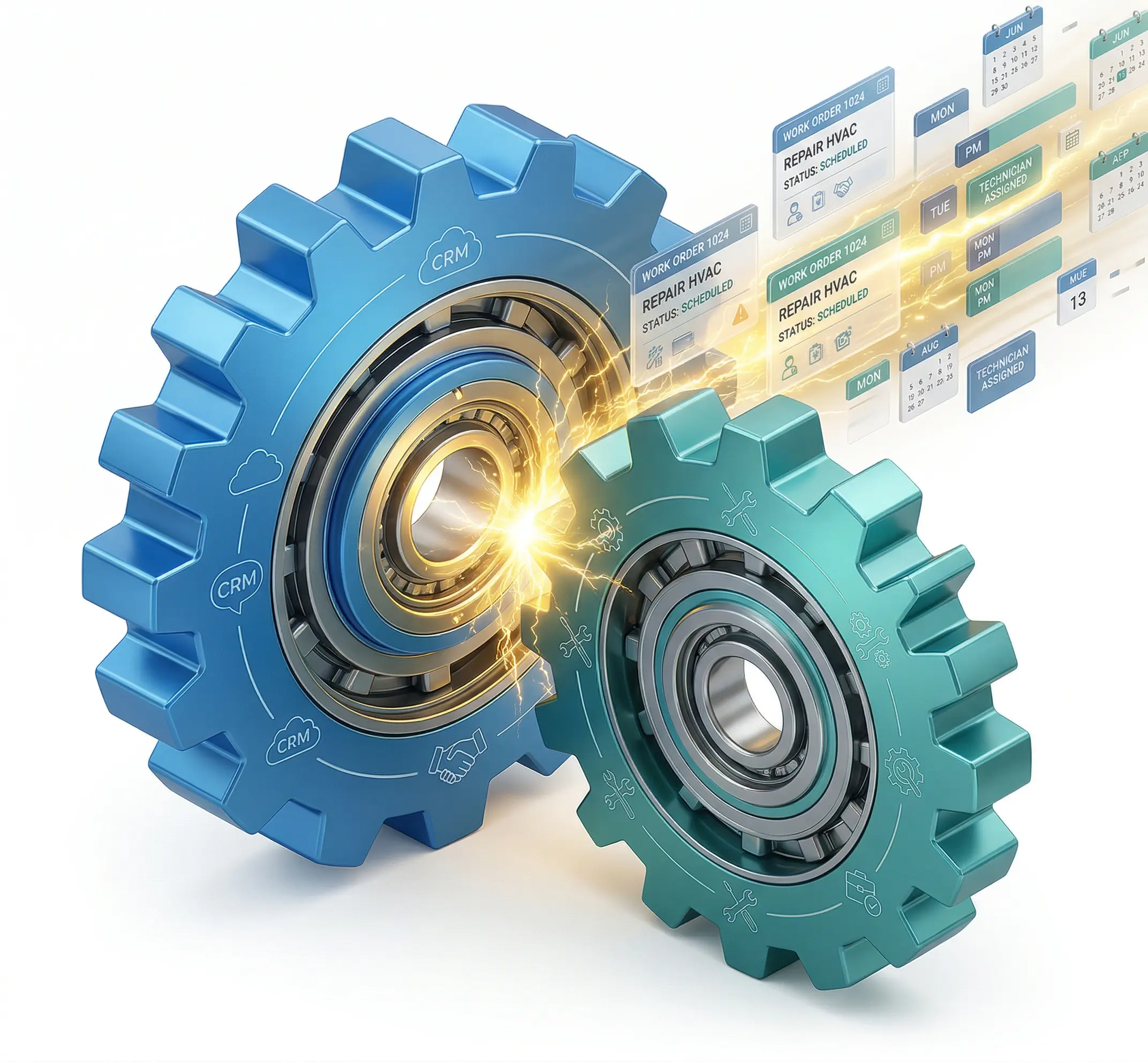
When combining Salesforce and FEXA CMMS, scheduling and maintenance execution transcend individual activities to become part of a holistic and intelligent process.
Salesforce introduces CRM-native capabilities like skill-based dispatch, dynamic scheduling, and live route optimization, ensuring that each maintenance activity is dispatched with the appropriate resource and complete visibility into customer relationships & service expectations.
On the other hand, FEXA CMMS fortifies the operational foundation with flexible preventive maintenance planning, IoT-based asset tracking, and vendor management that adjusts to intricate facility operating models. It ensures that all facility and asset information, service histories, and maintenance signals are always current and actionable. The facility operating model becomes a dynamic system that is constantly informing when, where, & how maintenance should take place.
The two work in tandem to produce a closed-loop ecosystem wherein customer information is utilized to inform maintenance decisions, with each field activity having a two-way feedback loop with CRM in real-time. The end product is a smooth flow of automation processes with the information beginning with a request, then execution, followed by reporting, all in a timely manner that maximizes asset performance.
Fusion of CRM with FM Platforms via Intelligent APIs
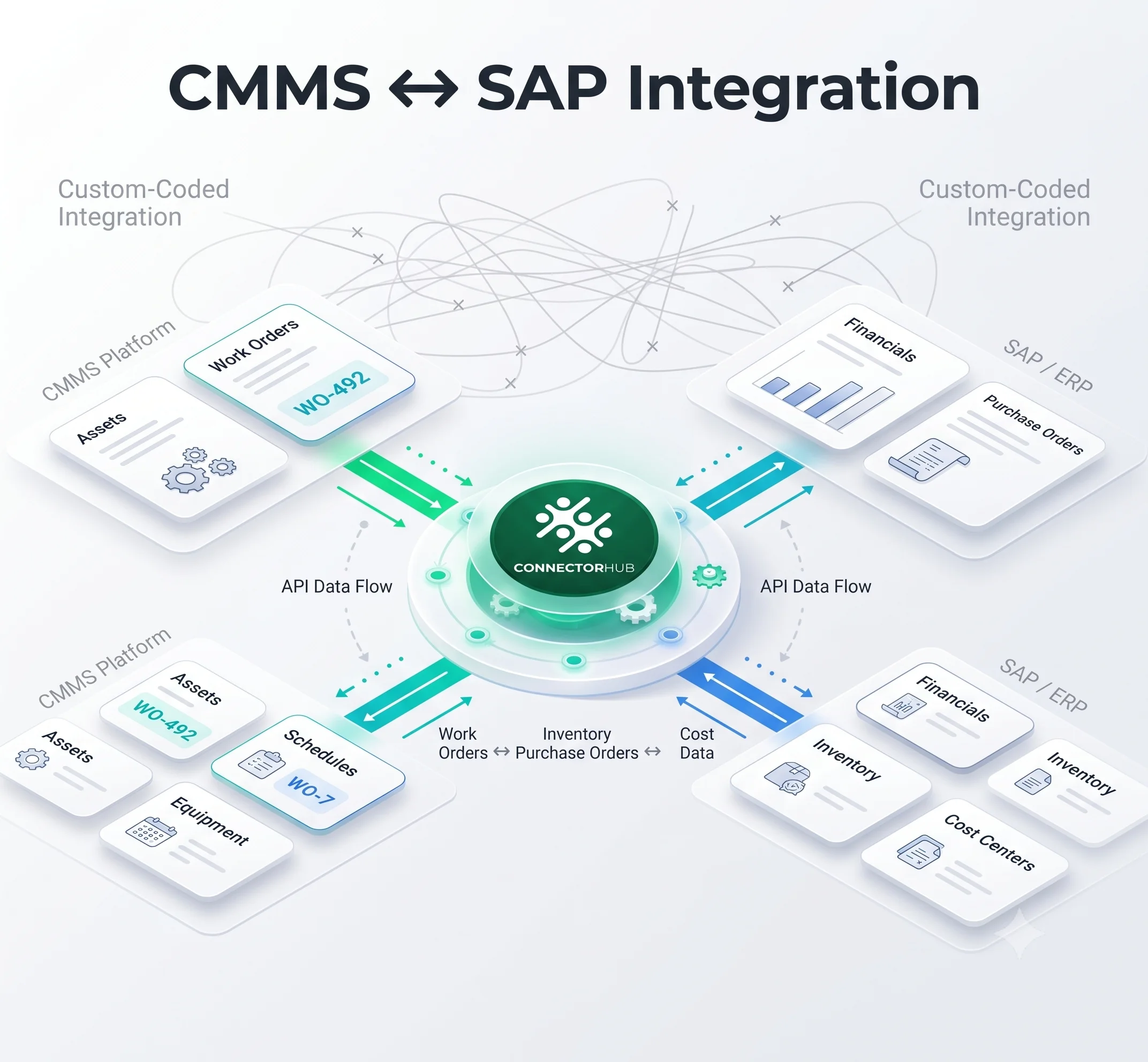
The actual magic happens in the integration layer, where the fusion between the two platforms is done using intelligent APIs. Here, we have bidirectional APIs that allow two-way, real-time interactions. This means that work orders created in the FEXA facility management platform can be reflected in the Salesforce CRM in real time.
Similarly, any updates done in the field are reflected in the Salesforce system without manual intervention. This creates a synergy where decisions are made based on not only the schedule but also the actual history and real-time facility conditions.
Here, different API types work together with each other without compromising on the efficiency and speed of operations. This is done using RESTful APIs, webhooks, and bulk APIs. These structures ensure that the operations are carried out in an intelligent and connected manner where everything is linked and decisions are made in real time.
This way, an organization is one step closer to achieving an integrated platform for FM software where the facility management and the CRM are two sides of the same coin.
Automate Work Orders in Facility Management Lifecycle
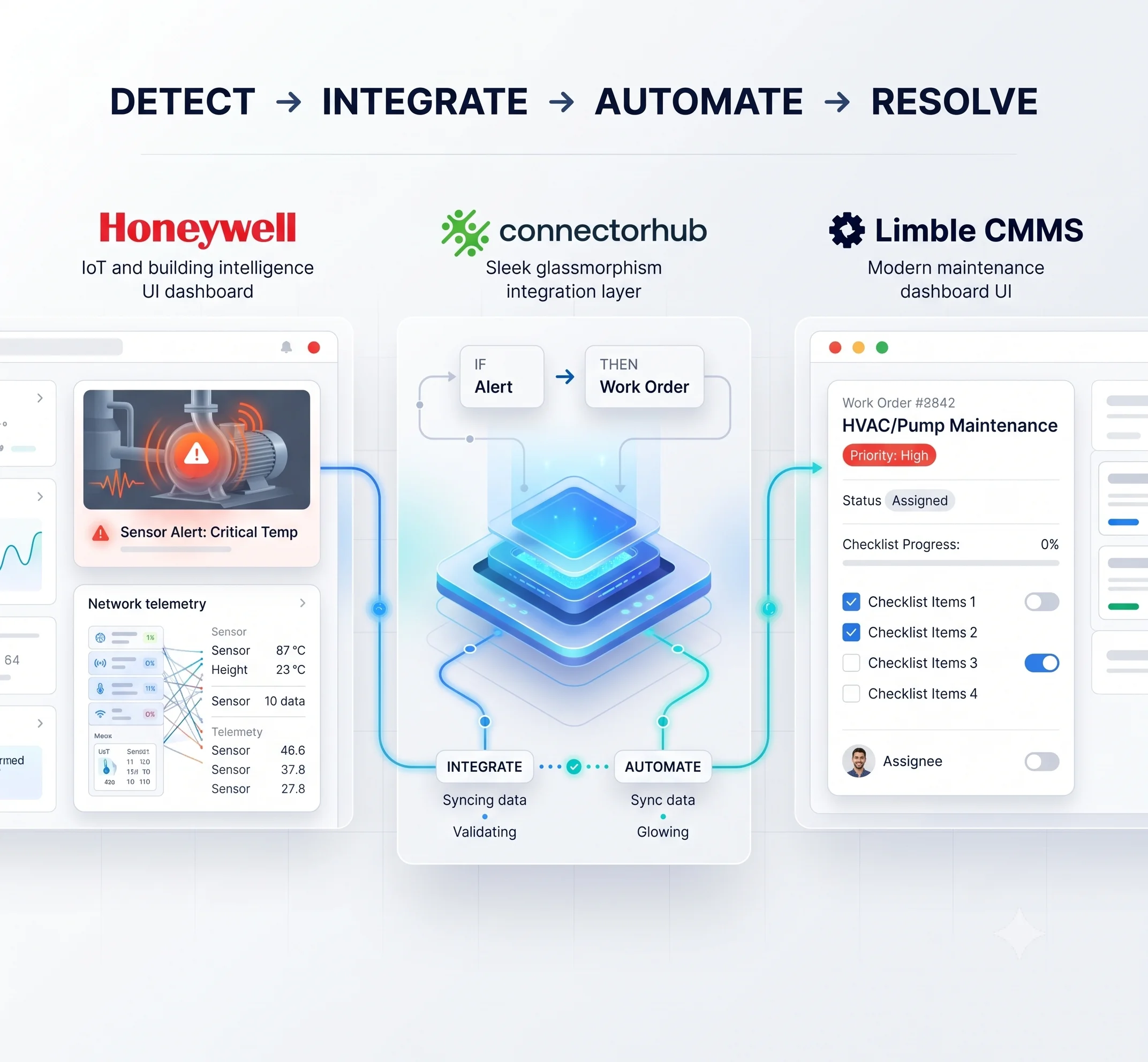
Automating all phases of the process, from detection to resolution, under one integration solution for service providers with Salesforce-FEXA connection changes the way facilities operate. The encompassed aspects that clearly shows differences are as follows:
- Enhanced Intelligence from Integrated Data Streams
IoT devices continuously stream data into the FEXA platform. This is followed by AI-powered analytics picking up on anomalies such as vibration peaks, temperature fluctuations, or abnormal usage rates. These anomalies automatically appear as alerts in Salesforce with associated priority levels.
Facility managers will no longer need to worry about waiting for equipment failures, as the system will predict failures with days or weeks of lead time based on pattern detection algorithms.
- Automated Dispatching Action in Minutes
Once an anomaly is identified, Salesforce optimization algorithms will automatically determine the best technician based on availability, skill level, location, and parts required before sending out the work order. The entire process will take place in a matter of minutes instead of hours.
- Real-Time Asset Sync Between Systems
Real-time syncing ensures that the information of the assets is the same across both platforms. If the pump is repaired in FEXA, the information is immediately synced with the updated information in Salesforce, including the service history of the pump and the warranty on the pump.
- Extending Equipment Life with Predictive Maintenance
With the combined insights of FEXA, the maintenance of the equipment is not done at predetermined intervals, as was the case before, but is done when the equipment actually needs it, saving up to 40 percent of unnecessary maintenance activities.
The information obtained from the repair history of the equipment in Salesforce, combined with the trend information obtained from the sensors of FEXA, provides the most accurate information on the lifespan of the equipment, thus extending the lifespan of the equipment.
- Effective SLA Compliance
With the automated tracking of the maintenance of the equipment, reports are easily generated, showing the timestamp of the maintenance, the notes of the technician, and the evidence of the solution, thus easily showing that the SLA has been met, without the need of spending weeks gathering the information needed to prove the compliance with the SLA.
Multi-site operations gain powerful connectivity when APIs and IoT layers link facilities directly to centralized systems. No-code integration for facility management, as provided by middleware solutions such as ConnectorHub, lets teams map data fields visually, matching Salesforce cases to FEXA work orders or syncing IoT feeds from different properties, without writing a single line of code. This creates consolidated oversight across portfolios while preserving each building’s unique maintenance rules.
Features to Look for in Facility Management Data Integration Tools
When considering FM operations integration products, it is not just a question of integrating different software systems but also ensuring that this integration is continuous, streamlined in execution, and scalable enough to handle various tools like Salesforce and FEXA.
These are some of the primary features to be prioritized in an iPaaS for SaaS application integration for your facility operations:
- Real-time, Bi-directional Data Sync
A unified integration layer enables continuous data exchange across connected systems, creating a single source data unification such that all teams within the organization are able to operate with the latest information. For instance, work orders can flow out while technician updates, facility changes, and customer notes flow simultaneously.
- Pre-Built Connectors with Flexible APIs
A solid data integration tool makes linking different apps smooth, using ready-made connections along with adaptable APIs. Instead of rigid setups, it supports flexible API access through methods like REST API or webhook API.
- Workflow Automation and Orchestration
In the context of Salesforce and FEXA integration, integration should mean automatically generating work orders from service requests, allocating workers based on skills and availability, and updating the status of jobs in real-time. Through the right level of orchestration, processes such as preventive maintenance scheduling, managing vendors, and service level agreements will be able to operate with minimal intervention.
- Data Mapping and Transformation Capabilities
Facility and CRM systems may store data in different formats. Therefore, a good integration solution should allow for easy data mapping, transformation, and normalization.
- Scalability for Multi-Site Operations
As the facility operations grow, the complexity of integration needs will increase. Therefore, the solution should be able to scale to accommodate the operations of the facility in accordance with the evolution of FM processes.
- Monitoring, Logging, and Error Handling
A good integration solution should provide some level of monitoring, logging, and error handling capabilities. This will allow the facility to know the status of the integration process at any specific point.
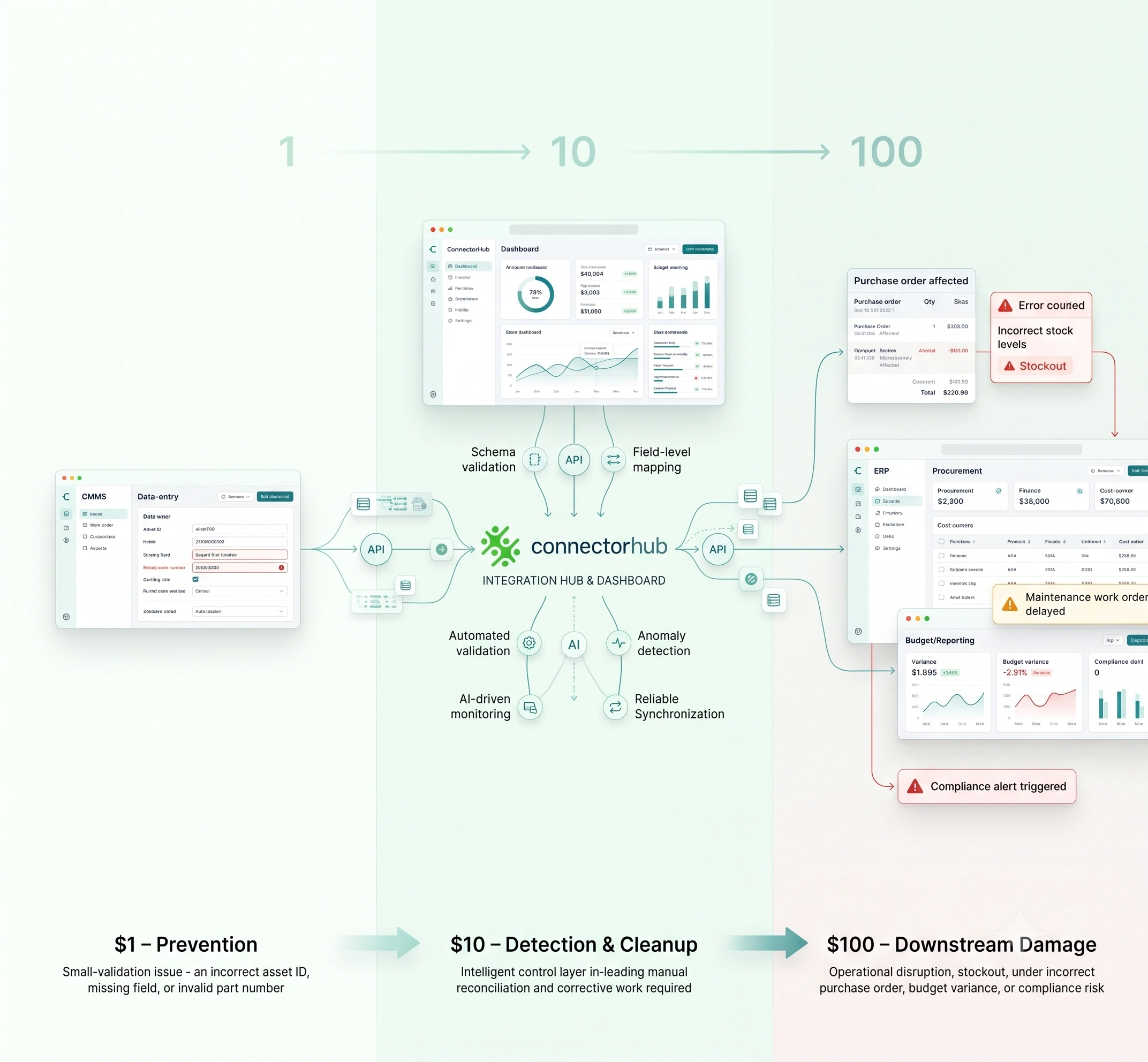
Moreover, the ideal solution combines visual workflow builders, AI anomaly detection during mapping, real-time monitoring dashboards, and enterprise-grade security (SOC 2, encryption, audit logs). Best data integration platforms like ConnectorHub stands out by delivering pre-built Salesforce-FEXA connectors, intelligent auto-mapping, and performance trackers that guarantee uptime.
A Brief Implementation Guide to Salesforce-FEXA Integration with ConnectorHub
With a no-code integration platform such as ConnectorHub, it is more about configuration than actual creation. At its core, ConnectorHub acts as an orchestration layer that connects systems, manages data flow, and automates processes behind the scenes.
What makes it reliable is its durable execution engine, which ensures workflows continue running even during failures, with automatic retries, logging, and complete traceability. This means your data stays consistent, up to date, and traceable, even during heavy operations or unexpected disruptions.
Step 1: Connect Systems Securely
Begin by linking Salesforce and FEXA using secure authentication. ConnectorHub supports different authentication methods, so you can connect systems safely without getting tied to a single approach.
Step 2: Map Key Data Points Visually
Next, map your data using the visual workflow builder. It’s a simple drag-and-drop setup where you align fields like asset IDs, work order status, technician details, and service notes, so both systems stay consistent. In many cases, AI-assisted mapping can even suggest the right field alignments for you.
Step 3: Configure Triggers and Workflows
Next, design how your Salesforce-FEXA integration should behave. You can set up triggers based on events (like a new service request), schedules, or conditions. Add logic such as approvals, data transformations, or routing rules so that actions like dispatch scheduling or issue detection happen automatically.
Step 4: Test End-to-End Scenarios
Before going live, test your workflow using sample data. ConnectorHub allows you to validate each step, catch errors early, and even debug workflows in detail if something doesn’t behave as expected.
Step 5: Go Live and Monitor Closely
Once everything is ready, activate the workflow. From there, ConnectorHub continuously runs the integration, while dashboards and logs give you full visibility into performance, success rates, and any failures. This way, you will be able to see how things are going and even tweak things as needed.
Over time, this just becomes part of how things run. The system handles the repeat work quietly, and the team does not have to keep going back and forth between tools to keep things moving.
Conclusion
As the complexity of facility operations increases, the distinction between reactive management and smart, building maintenance integration will be defined by the level of communication between systems. Blending systems like Salesforce and FEXA is about developing an ecosystem where every piece of data is leveraged to make the smartest decisions possible.
With the right strategy in place, with the right support from the latest technology stacks like ConnectorHub, facility operations can break away from the limitations of fragmented processes and manual management to achieve the elusive goal of successful facility outcomes.