.svg)

Every organization hits a point where more tools don’t mean more progress. The dashboards get too full, the reports grow longer, but progress grinds to a halt. Somewhere between the CRM tools, billing tools, and ticketing solutions, people begin to fill the gaps that need to be closed by hand. That quiet drag is the start of the swivel chair problem.
It isn’t loud or visible at first. It hides inside the small tasks, a repeated log-in, an exported spreadsheet, a rekeyed order, until those seconds turn into hours. By the time management notices, the cost isn’t just time; it’s rework, confusion, and lost accuracy.
The Early Signs of Swivel-Driven Inefficiency
You don’t need analytics to feel it. The clues show up in daily operations long before reports catch them.
- Inconsistent data: Numbers don’t match between systems. Sales reports show one total, billing another. Reconciliation takes extra time because someone has to “check both sides.”
- Slow SLAs: Deadlines stretch not because of workload, but because tasks bounce between screens. Each update needs a human to move it forward.
- Dual entry: The same customer ID or invoice number gets typed twice, once in the CRM, again in a finance tool. Everyone knows it’s wasteful, but the habit sticks because the tools don’t talk.
- Patchwork spreadsheets: Staff export data to Excel just to merge results or fix errors manually. These sheets become invisible systems of their own, and that’s where mistakes multiply.
- Growing manual work orders: Requests and tickets pile higher each week since every step still needs a person to move it forward. More volume just means more waiting.
When these patterns appear, the swivel chair problem is already alive. It feeds on silos, outdated integrations, and a lack of unified process flow.
Why It Happens in the First Place
Most enterprises didn’t plan for it. The swivel chair problem grows naturally in environments with too many tools chasing too many goals.
They use specialty software for every function, from the CRM system to support and finance, and specialist software for operations. Each handles one piece of the puzzle but pays no attention to the rest. They create a network of apps that are independent and require humans to connect them.
This problem deepens when older systems stay in the mix. Many legacy and local systems can’t talk to anything beyond their own walls. Every time a person becomes the middleware, accuracy drops and frustration rises.
Over time, the company runs hundreds of hidden micro-processes that no one owns, yet everyone depends on.
Swivel Chair in Action in the Real World & Common Triggers
The swivel chair problem manifests differently across sectors, but its effects are universal. In healthcare, the nurse toggles through unlinked systems to record patient information, pull up diagnostics, and update treatment plans-a process that often takes more time than it should and is prone to errors. One head of a university department does the same with 11 different systems each day and knew "on day one" that a better way had to be found.
Each industry has its own flavor of swivel pain, but the warning signs are remarkably similar.
- Customer Support: Agents jump between CRM, ticketing, and knowledge base platforms to resolve one issue. Call handle times stretch, and updates fall out of sync.
- Finance: Reconciliations rely on exported spreadsheets. One wrong column breaks the monthly close. Manual work orders appear for corrections that automation could handle instantly.
- IT Operations: Teams switch between monitoring dashboards, incident systems, and asset databases. Alerts are copied by hand. Escalations lag.
- E-commerce: Orders move through warehouse, logistics, and sales platforms with no shared data flow. Each change creates a new point of manual risk.
- Healthcare Administration: Teams rekey claim information between the EHR and payer sites, and every small mistake means a denial, another submission, and wasted time. In every case, the swivel chair problem lives in the gaps between tools. The sooner those gaps are measured, the cheaper they are to fix.
Why You Need to Act on Your Swivel Chair Problem Now
Neglecting the swivel chair problem might appear innocuous at the time, but the pressures mount ominously until disaster strikes.
The expenses build up quietly and subtly. Overtime accumulates as employees punch clocks for repetitive manual work and result in hiring more personnel to merely deal with increasing amounts of data.
Re-work occurs seamlessly within various company units as errors generated by manual processing have a ripple effect on reports, invoices, and other operations.
Often, these hidden costs get disguised under “normal” expenses and overtime within financial reports and statements and remain hidden for what they truly are—financial drains for organizations.
Then there is the breaking point, which could include an issue of compliance, SLA breach, or an audit failure. Manual processes in the regulated domains of healthcare, finance, and insurance are likely to result in a breach of regulations, which could result in fines starting from thousands to millions of dollars, to say nothing of reputational damage, which could result in the loss of contracts. An SLA breach could result in losses ranging from thousands to millions of dollars.
In companies that move fast, manual input is a warning sign and not a status quo. Proactive and automated mitigation via workflow automation and middleware can result in fast ROI returns by reclaiming tens of thousands of hours and minimizing errors.
The longer you wait, the more the "leak" weakens the foundation. Identify the problem of the swivel chair now and how to turn a hidden liability into a powerful tool.
Investigating the Cost Curve
At first, the swivel chair problem looks like minor friction. Then it scales. A five-minute data transfer repeated across 50 employees adds up to thousands of hours each year.
Leaders usually spot it late. By then, the fallout has touched both revenue and reputation. Missed deadlines, billing errors, and drawn-out reconciliations all come from one source, people filling in for disconnected tools.
How to Catch Swivel Chair Consequences Early
To find the swivel chair problem before it costs real money, look at the boundaries where tools and teams trade information. Look out for:
#Sign 1: Multiple logins for the same task
If users move between three or more systems to finish one request, there’s a gap worth fixing.
#Sign 2: Duplicate fields
Any form that asks for information already stored elsewhere signals a broken flow.
#Sign 3: Lagging reports
If dashboards take days to update, it means someone’s exporting and merging data behind the scenes.
#Sign 4: Too many “exceptions.”
A high number of manual overrides means your systems aren’t aligned.
Users of middleware solutions for automated integration such as ConnectorHub, often find these clues when mapping their current workflows. ConnectorHub’s platform visualizes data movement and flags repetitive entries between systems. Once seen, it’s hard to ignore how much time those loops consume.
From Visibility to a Fix & Prevention of Swivel Chair Problem
After spotting the swivel chair problem, the next step is creating visibility that lasts. Quick fixes fade unless the cause, disconnected workflows is replaced by real coordination.
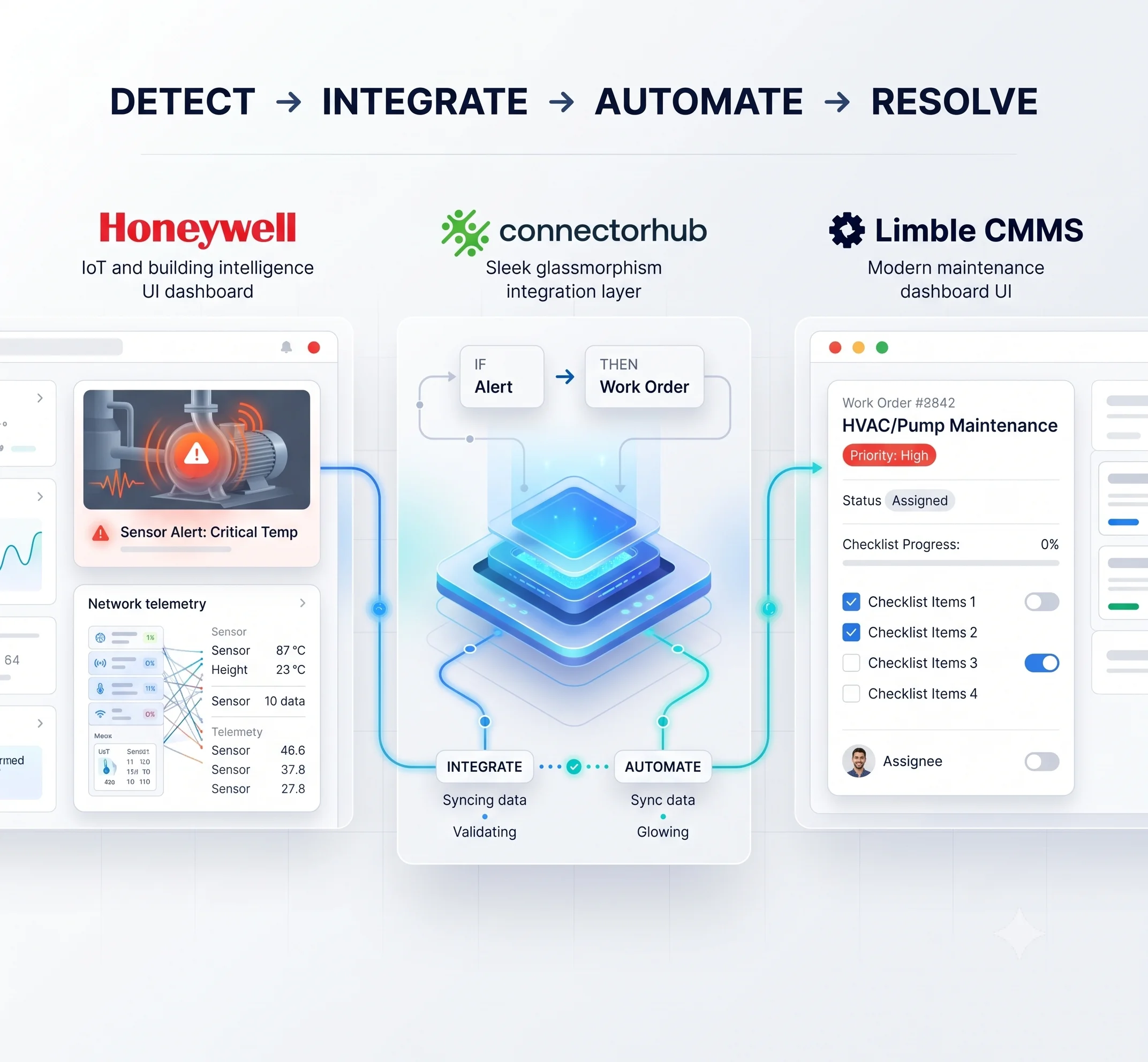
This is where workflow automation software takes over. Instead of people passing information manually, the system handles transitions. Triggers, rules, and event-based updates replace cut-and-paste efforts.
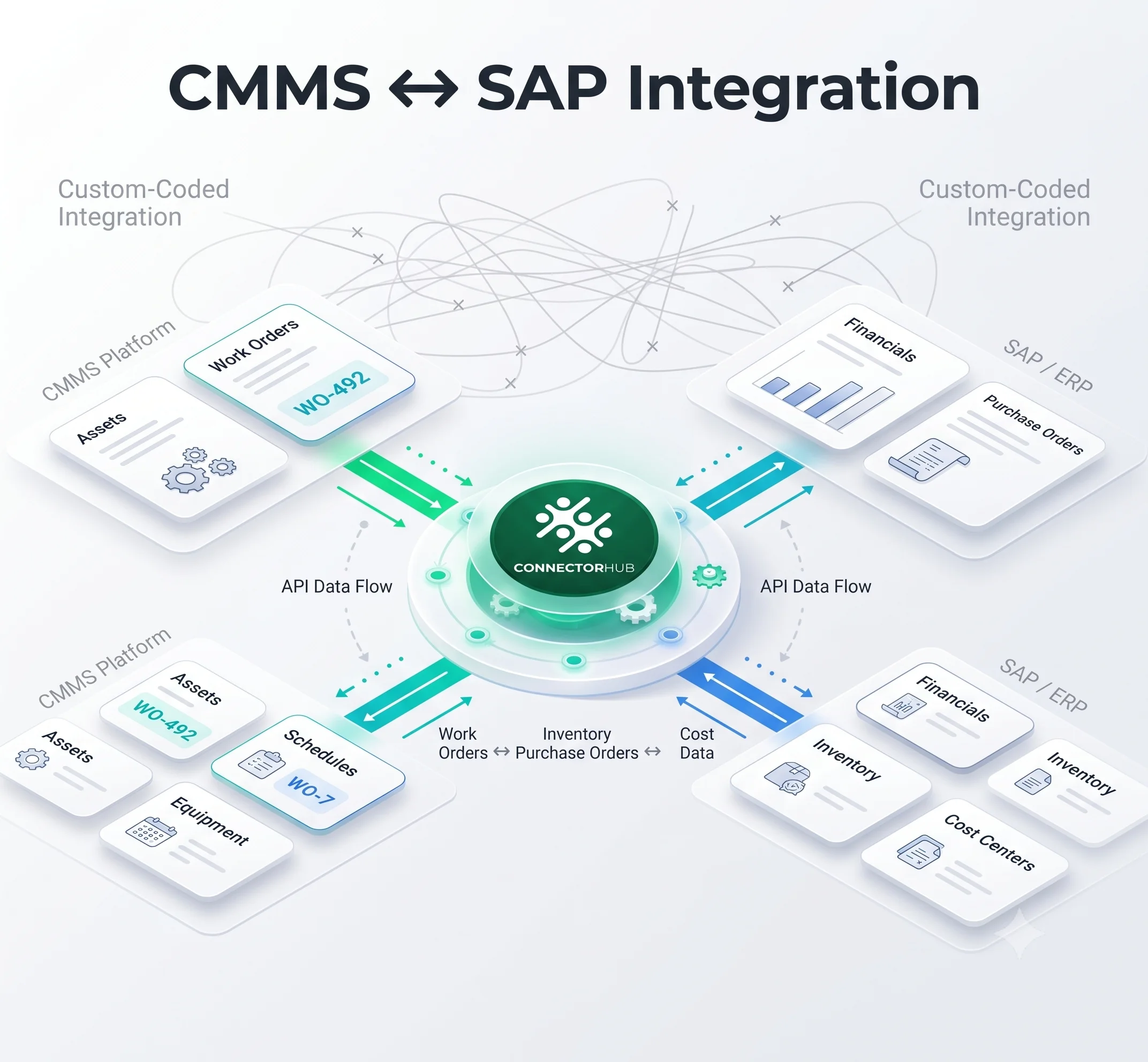
The true fix lies in solid infrastructure — the middleware integration platform that keeps systems aligned. Middleware keeps all your systems talking. It moves information between them without duplication and gives workflow automation software a foundation that doesn’t shake. When it’s missing, a single API tweak or database glitch can knock the flow offline. The flow stays clean even as new tools are added.
ConnectorHub and similar platforms work in this middle space. It connects existing systems through simple configurations instead of code-heavy projects. For teams stuck with manual work orders or dual entries, it brings all those scattered processes into one trackable flow.
By running automation through middleware, companies also gain visibility. They can trace which process triggered what action, down to the timestamp. That makes audits faster and compliance smoother — two areas where swivel chair problems quietly drain money.
Bringing It All Together to Identify & Solve Swivel Chair Problem
Spotting and solving the swivel chair problem doesn’t require a full overhaul. It begins with noticing what feels normal but shouldn’t.
From there, the roadmap is simple:
- Map where manual re-entry happens.
- Prioritize the highest-volume processes.
- Shift the back-and-forth to workflow automation software and free teams from doing it by hand.
- Anchor the automation on a middleware integration platform like Connectorhub to keep data steady.
- Replace manual work orders with event-driven logic.
When this structure holds, information moves without handoffs, teams gain time, and accuracy returns. That’s the turning point where the swivel chair problem stops being invisible.
ConnectorHub as Your Partner to Power Connected, Swivel-Free Operations
The manual work order is a symptom of the swivel chair problem that has been so easily recognizable because of the inability of upstream systems to initiate action automatically.
The answer lies in replacing these manual entries with intelligent triggers, which are rule-driven and made possible through modern workflow automation software.
ConnectorHub excels here as a specialized middleware integration platform, enabling these triggers to activate flawlessly across disparate systems. This is where the swivel chair problem begins to evaporate: processes run themselves cleanly, reliably, and in real time.
ConnectorHub achieves this through its intuitive, drag-and-drop visual builder, allowing you to start with ready-to-use workflow templates or build custom ones from scratch. Simply authenticate your systems, map key data fields, define conditions, scheduling, and exception handling, all within a single, low-code workspace.
This approach eliminates manual re-entry, reduces errors, and frees your teams to focus on high-value activities like service quality improvement, strategic analysis, or proactive planning rather than repetitive data shuffling.
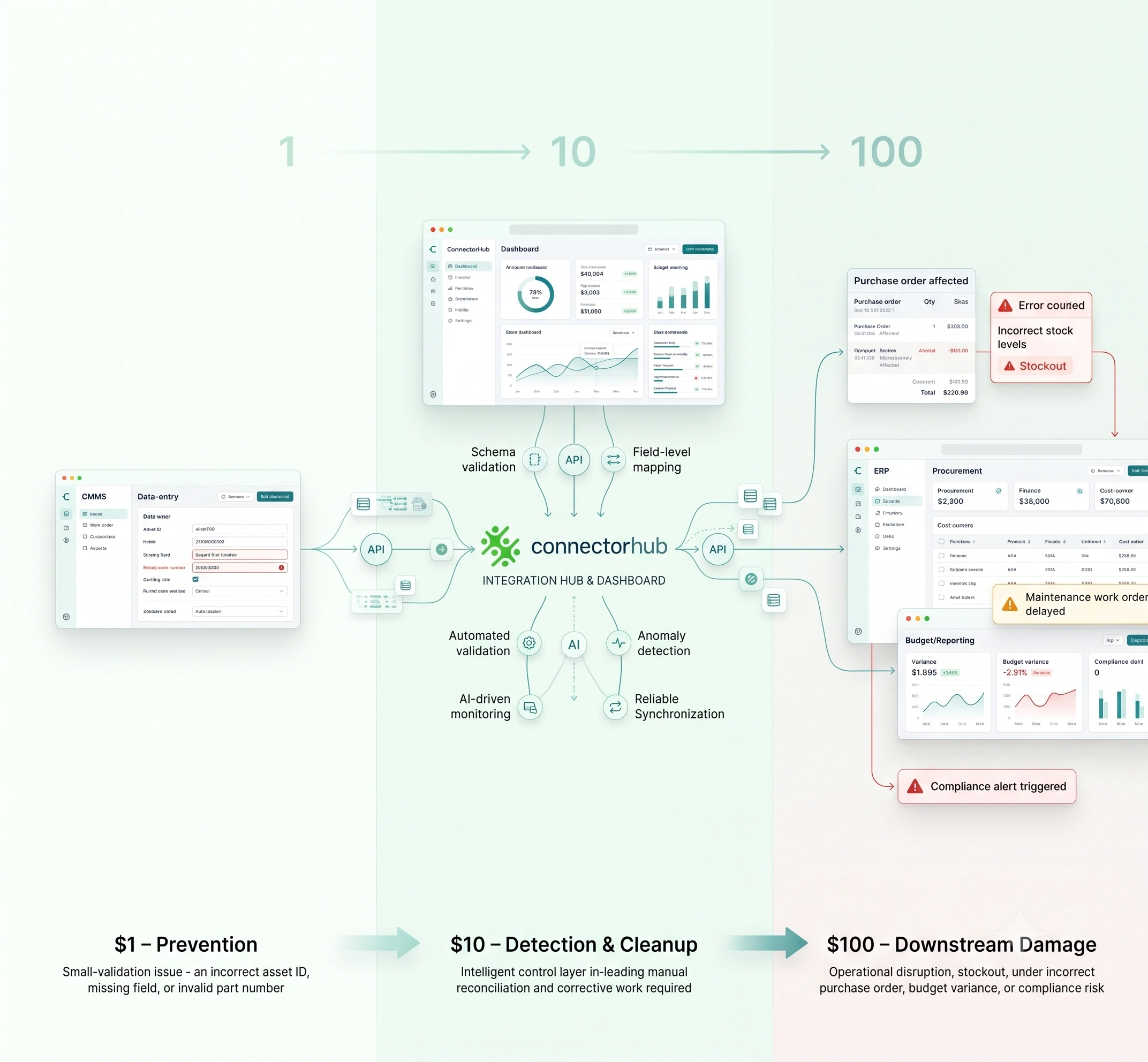
The true maturity of your operations emerges when automation evolves beyond simple execution to become self-monitoring and self-healing. This is the powerful intersection of workflow automation and robust middleware, where connected telemetry allows the system to detect issues proactively.
ConnectorHub integrates this advanced capability natively: teams can set up monitoring rules to track the health of every automated link in real time.
This provides a self-correction operation that prevents minor issues from escalating into huge problems. Visualization dashboards offer a full solution for traceability and performance, in addition to SLA. Other capabilities such as automated reporting and exception handling offer solutions for governance and reliability.
Once your firm reaches this stage with ConnectorHub, the swivel chair problem doesn't just fade but it ends for good.
We are tailored for industries like facility management, real estate, healthcare, and industrial operations. Partner with ConnectorHub today to transform swivel chair challenges into automated, intelligent workflows that drive lasting business value.
Also Read: Top 5 Integration Challenges Draining Your Operations Team (And How to Fix Them)
Conclusion
The swivel chair problem isn't a software problem; it's a visibility issue. When you highlight the problems of repetitive login sequences, copy-and-paste operations, and double data entry, the solution doesn't seem as difficult.
With the proper workflow automation in conjunction with a strong middleware offering such as ConnectorHub, all those tedious human-to-system handoffs become simple, seamless processes that just work. You quit throwing away your precious time on busywork, your error count shrinks, and your team is finally able to concentrate on what really matters.
The beauty of this? Once you’ve got everything up and running smoothly and you can finally see how data flows without humans as the middlemen, there's no turning back.
ConnectorHub isn’t just the band-aid solution but builds something better that will just keep on improving, fixing potential issues before it gets too late, and grow with you as you grow. The companies that address this issue not only save money but will come out first, fastest, and happiest to come to work.