.svg)

Like most industries, the property sector runs on data. Every transaction, lease, inspection, payment, and maintenance request depends on it moving cleanly from one system to another. Yet most property firms still manage that flow through patchwork tools built years apart. The result is inconsistency and confusion causing significant delays and output hindrances.
That drag is what happens when real estate operations software stacks grow faster than they connect. In 2026, this will define who scales and who stalls. The firms that build around unified PropTech automation platforms will move faster, close books sooner, and make better decisions without waiting on manual updates.
Why 2026 Forces a Change in Real Estate Data Integration
Upgrading systems have become the need of the hour in property technology. Tenants expect instant responses, owners demand accurate, real-time reporting, and regulatory and ESG requirements continue to add new layers of data. Each year, more tools enter the property technology stack, increasing both capability and complexity.
Legacy systems were built for a slower operating model. Updates ran overnight, integrations were batch-based, and data moved infrequently. That model no longer holds. By 2026, property platforms need to be connected ecosystems, rather than isolated systems stitched together after the fact.
Meanwhile, PropTech is itself being reshaped by technologies dependent on smooth connectivity. AI migrated from experimentation to core value driver, supporting predictive analytics for deal sourcing, tenant experience, and risk management. Agentic AI is emerging as a practical layer in operations, autonomously handling such tasks as lease compliance checks, maintenance scheduling, and workflow coordination.
New architectural concepts are also taking hold. The idea of a “property operating system” is gaining traction, where APIs, data layers, and AI agents converge to enable increasingly autonomous buildings. Edge computing processes data closer to assets, 5G-enabled IoT networks increase responsiveness, and smart city integrations extend property systems beyond individual portfolios. Sustainability-driven technologies and the tokenization of assets further raise demands for interoperability across platforms.
These advances make one requirement unavoidable: integration. If it doesn't take place, then PropTech risks to be a fragmented mix of very powerful but separate tools. Modern PropTech integration platforms address this challenge by going away from event-less pull-based periodic exchanges in data to event-driven architectures.
To avoid waiting for updates, the system publishes and subscribes to data streams, which allows for real-time responses to their flows. These types of platforms include ConnectorHub, which will allow the property operations to go from being reactive to being synchronized on a real-time level.
Identifying the Key Challenges in PropTech Integration
The property technology stack has grown to include capabilities for tenant engagement, rent collection, energy management, repair, and ESG reporting, among others. Each module can handle a specific task perfectly, but none of the systems store data in the same manner. This can cause friction when data must be transferred between the stack and modules.
Challenge 1: Data Silos and Fragmented Visibility
Legacy systems and separate tools are prevalent in the PropTech sector. Property management software, CRM, and accounting systems, and IoT sensors often function independently. HVAC performance data may reside in a separate system, while tenant-engagement data in another. This causes difficulties in being able to produce portfolio-level reports, ESG reports, or live performance metrics.
Manual export and import processes are still very much in use. The spreadsheets generated and used by leasing teams get re-uploaded by accounting teams. The leased fields get reconciliation from analysts for hours before management can have a accurate overview of business.
As these AI capabilities and other emerging technologies become integral to day-to-day business operations, the problem of data siloes becomes even more problematic. Unpredictable or unstructured data will negatively impact the accuracy of the AI and further diminish confidence in automation
Challenge 2: Compatibility and Scalability Constraints
The challenges of integration are expected to increase with the evolution of the platform. Emerging technologies like voice interact, mixed reality inspection, edge computing, and 5G IoT may not be compatible with legacy systems that are not meant for the current level of integration. Custom development of legacy APIs increases the cost and delays the process.
These limitations become dramatically more visible as the company grows. Mergers and acquisitions, along with portfolio expansion, force the organization to integrate several technology stacks, each coming with their own data models and workflows. Without flexible integration architectures, scaling isn't efficient but rather introduces tech debt into the mix-performance bottlenecks and stalled innovation.
Challenge 3: Security, Compliance, and Workflow Fragmentation
With an increase in data flows, risks related to security and compliance inevitably increase proportionally. IoT devices increase the attack surface, but data privacy continues to pose an evolving requirement for greater control and trackability. Disintegrated workflows further add to the issue. This often allows the team to navigate between leasing software, maintenance, accounting, and compliance.
In such environments where agentic AI is used, poor integration can accentuate the risk factors. With flawed foundational data, the results can be multiplied through automated decision-making, which could be lease compliance, maintenance, or financial reporting. Both humans and agentic AI face limitations with disconnected work environments and non-consistent foundational data.
Challenge 4: Resource Drain and Hidden Operational Costs
Each point of integration dependence results in a reliance on human analysis. Manpower is engaged with data reentry, verification, deduping, and reconcilement. Within the development and investment operations space, a siloed toolset causes delay in deal origination, underwriting, and portfolio analysis. The net effect is increased administrative costs and decreased returns on investment for PropTech.
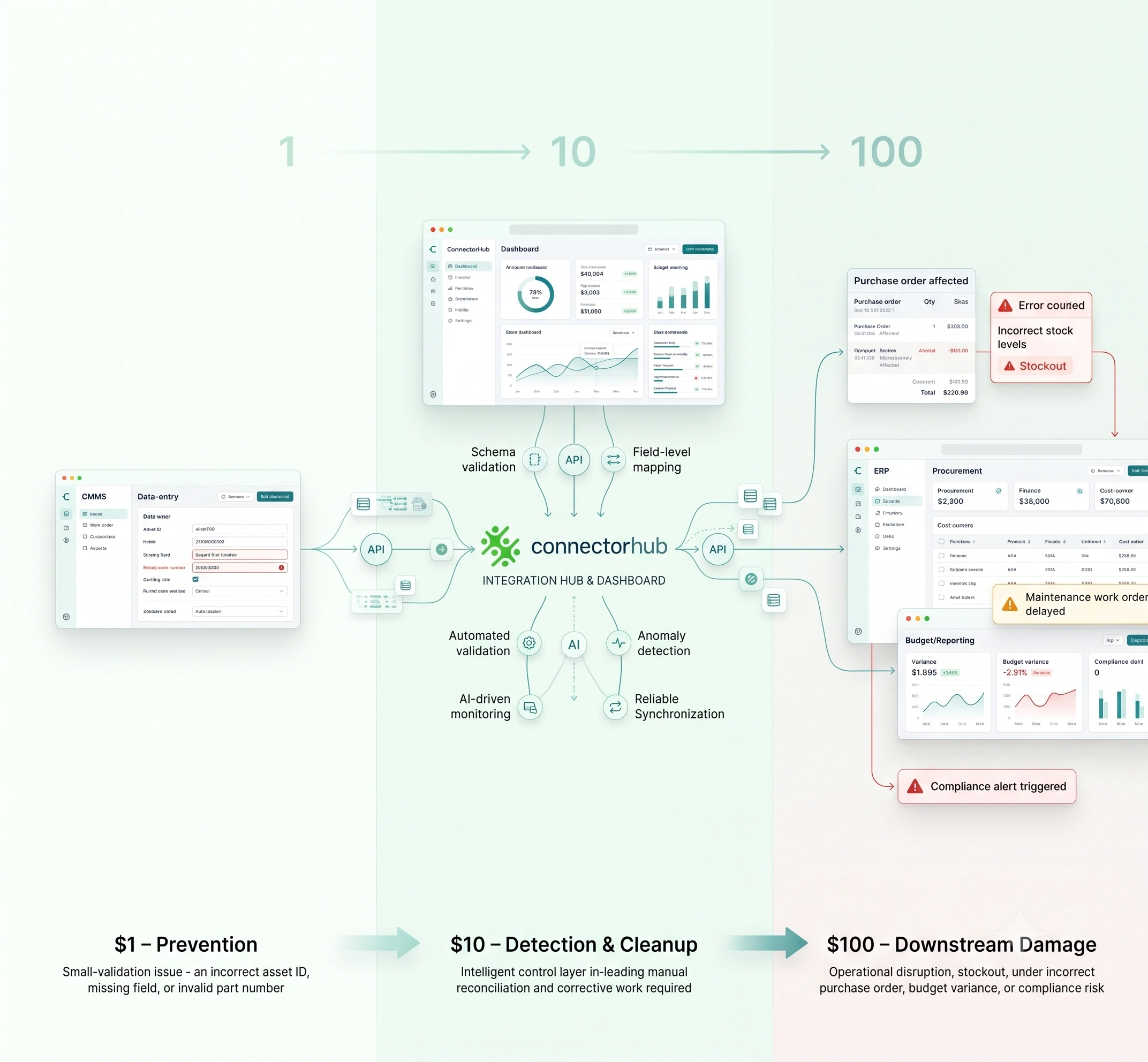
These bottlenecks do not exist in isolation. Data silos drive manual processes, manual processes introduce errors, errors undermine automation, and automation failures stall innovation. As portfolios scale, this cycle accelerates, turning disconnected systems into a structural barrier to growth.
How Integration-First Solutions Redefine PropTech Property Management
Breaking persistent integration bottlenecks in PropTech does not require replacing every system in the stack. What changes the equation is adopting integration-first solutions that sit above existing tools and make them work together as a single operating environment.
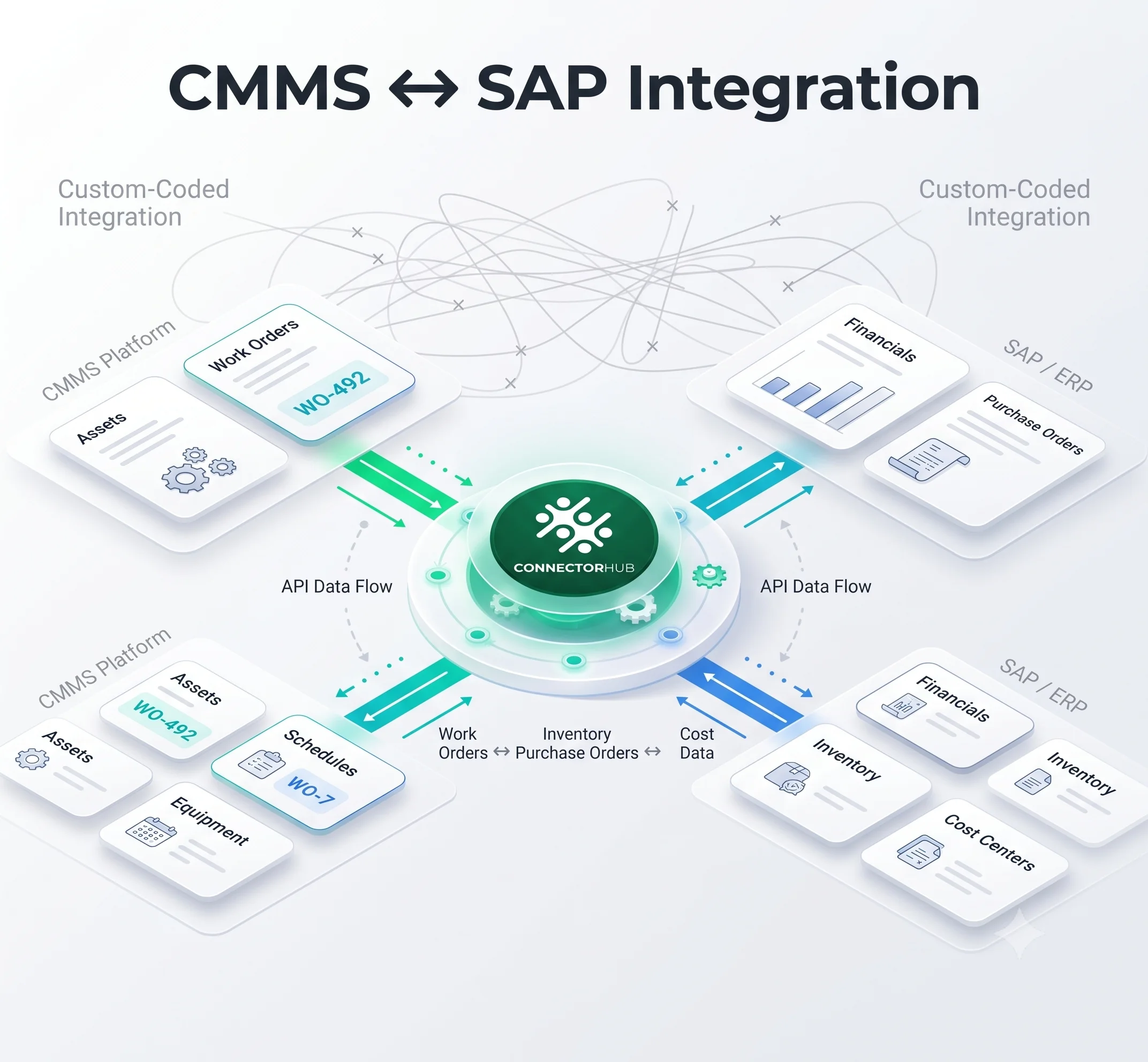
New PropTech integration platforms enable a new integration layer that bridges the gap between all the other software solutions for property management, leasing software, accounting software, maintenance software, IoT platforms, and analytics. This does not require that the software undergo major changes. Data flow between the systems relies neither on point-to-point integration nor manual copy-paste functionality
- From Data Silos to Connected Operations: The key strength of integration-first tools is the flow of data. This data is streamed directly into the system from older tools or newer tools, making it unnecessary to reconcile the data through CSV or by manually entering it into the system. Data such as the data of the HVAC system, the data of sub-metering systems, leasing data, and CRM data can stream into central systems near-immediately
“This clean data platform is especially critical in larger portfolios.” Rather than having to work around the limitations in place in the current system, “all business functions are performed on a clean and comprehensive platform,” with “operations flowing smoothly throughout the entire life cycle. - Built for Scale, Not One-Off Fixes: These integration-first platforms scale with the portfolio. These provide hybrid environments where traditional systems can work along with new technologies like digital twins, smart building infrastructure, and 5G IoT meshes. Integrations can also occur fast, timescales being days instead of months, helping the property organization respond to M&A or smart city integrations with minimal interruption to business operations.
Instead, by hooking each system to a common point of integration, such platforms reduce this ever-expanding messy mesh of custom scripts and point-and-click links that normally serve to slow growth. - Stronger Security and Compliance by Design: With the increased flow of data, governance becomes paramount. Integration-first solutions are designed with security and compliance checks baked into them. Encryption, access controls, and audit trails work to shield sensitive tenant information as well as financial information. Automation is used to check compliance processes when it comes to data sharing.
In this way, it minimizes operational risk by simplifying the workload of teams who would otherwise be manually tracking compliance in unconnected systems.
Integration-first strategies make property management a seamless process and not a series of isolated solutions, providing a basis for scalable and future-proofs PropTech processes.
Practical Gains Across Daily Property Workflows
Once integration stops being a bottleneck, improvements show up immediately across property management functions.
- Leasing: Inquiries move from advertising into the CRM and screening software, and approved lessees update the rent roll automatically.
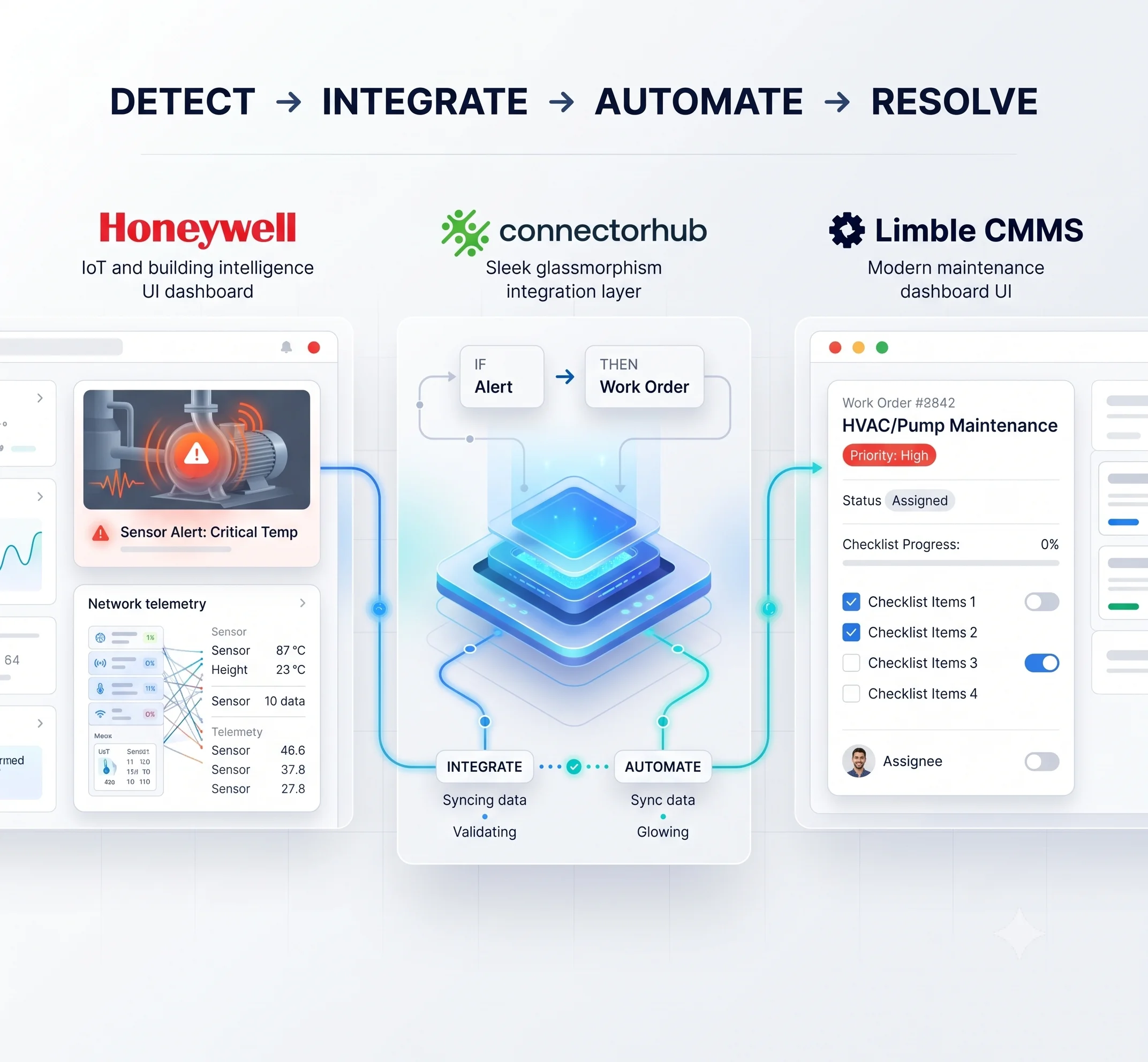
- Maintenance: Work orders are linked straight to vendor systems with immediate status updates as soon as completed.
- Accounting: Rents, deposits, and billing are reconciled automatically, eliminating the need to uploaded spreadsheets weekly.
- IoT and Analytics: The data from the sensors feeds right into the dashboard without the need for customized data piping and upkeep.
Annually, these enhancements appear to be small. For entities that handle thousands of units on a day-to-day basis, the minutes saved per transaction make up for lost operational days in a week
A Roadmap to Eliminate Integration Bottlenecks in PropTech Platforms
1. Conduct a Comprehensive Technology Audit
Start with visibility. Chart all of your tech stack, from leasing and CRM platforms to accounting, maintenance management, IoT sensors, and the latest tools like predictive analytics or smart building systems.
- Document every flow of data: Where does it come from, how does it get there, or if it doesn't get there, and what manual interventions are needed en route?
- Identify points of friction: Identify recurring issues like double data entry, delayed syncing, or incompatible formats that create silos.
Connectorhub and similar platforms are already leaning into that direction. They combine wThis should be the very foundation that shows the real extent of your challenges in integration and prioritizes high-impact areas. The best practices of the industry underline that such in-depth auditing prevents expensive surprises in later stages and builds stakeholder buy-in by grounding decisions in real, operational pain points. Workflow automation, integration, and analytics pipelines inside one framework. The outcome is a property stack that adapts instead of breaks each time a new tool appears.
2. Quantify the Cost of Inefficiency
Quantify the frustrations that qualify as soft thoughts. Identify the integration deficit impact in business terms:
- Hours annually lost because of data importing by hand, error correction, reconciliations, and special reporting.
- Opportunity costs due to belated insights such as slow updates on rent and missed/inaccurate escalation of maintenance.
- Overall impacts to Return on Investment such as tenant dissatisfaction, risks of non-compliance, scalability difficulties
Hard metrics that can range from thousands of hours to important percentages in operational expenses make concrete grievances compelling investment cases. These metrics significantly expedite approval by executives and provide concrete success parameters to the project.
3. Select and Deploy a Modern Integration Hub
Decide on a PropTech-ready integration platform that suits your requirements: strong support for API, secure authentication mechanisms, event-based designs that support real-time data flows, and scalability capable of handling increasing data due to IoT and AI-based apps.
Look for solutions that offer:
- Pre-built connectors to common real estate tools
- Flexible, no-code/low-code configuration
- Strong governance for data security and compliance
An event-driven architecture allows the impact of one system (such as a change to a lease) to cascade automatically throughout the other systems. This enables quick deployment and future-proofs your stack with new technologies
4. Prioritize High-Value Automations First
Resist the temptation to integrate everything at once. Start small with high-ROI workflows that deliver immediate wins and build momentum:
- Rent and payment synchronization
- Maintenance request routing and status updates
- Automated reporting for occupancy, financials, and compliance
Pilot these on a subset of properties or teams. Measure results against your earlier benchmarks, time saved, error reduction, faster response times and use the proof of value to expand gradually. This phased rollout minimizes risk, refines processes, and demonstrates clear returns.
5. Establish Governance for Long-Term Stability
To avoid creating new technical debt:
- Record all the links: data mappings, triggers, error-recovery routines.
- Implement monitoring and alarming capabilities for failures or performance problems.
- Keep track of changes through version control and manage changes.
- Schedule review processes to keep pace with changes in available tools, regulations, or business needs.
The goal is repeatable, transparent systems that empower teams and not rely on fragile workarounds.
Leaders who invest in thoughtful integration today will lead the transition to truly intelligent, interconnected real estate operations tomorrow. Start with the audit, your future platform depends on it.
Connectorhub as a No-Code Integration Provider to Scale Your PropTech Platform
Modern platforms simplify the stack by shifting the focus from individual applications to connected workflows. Actions begin in one system and complete in another without breaking context or requiring human intervention in between.
Solutions such as ConnectorHub are built on this principle. Property systems are connected via easy-to-use APIs, triggers, and authentications, which ensure data is kept in sync without the need for programming or connectors.
ConnectorHub helps PropTech teams achieve the goal of enabling no-code, drag-and-drop workflow building for developers, so property and operations teams can directly work with leasing, maintenance, and accounting workflows without involving developers or waiting for IT support.
Conclusion
The proptech industry has outgrown its scattered past. The next wave belongs to those who simplify. Looking ahead, the sector is moving toward fewer systems that do more together. Integration layers will become standard. The PropTech integration platform of 2026 will act as both translator and conductor.
ConnectorHub and other modern PropTech integration platforms are already leaning into that direction. They offer automation of workflows, integration, and analytics pipelines under one platform. Low-code workflows and reliable middleware enable event-driven design. This allows every department to collaborate effectively.
The end result is a strong, integrated ecosystem unlocking the true potential of innovation: making faster decisions, reducing waste, improving the experience, and securing a strong competitive edge into 2026 and beyond