.svg)

Right now, property tech is moving fast. Digital change sweeps through real estate, highlighting one thing more than anything else, how well real estate systems truly connect. The shift leans hard into smart workflows powered by data.
Here’s when things like sharing data become key in property tech. Not every tool talks the same way, yet they still need to pass details back and forth without errors. Fresh SaaS stacks pile up over old systems handling money, daily work, compliance, and investment tracking. Meanwhile, new cloud apps, number crunchers, smart tech bases, and tenant screens ride above them like weather on a mountain.
What actually changes the scene? Not merely using newer software. It’s whether that software clicks without friction. Smooth alignment between platforms becomes the quiet force behind progress. And how can that be achievable one may ask? This is where the concept of multi system integration builds traction.
Still, getting this kind of connection isn’t simple at all. Research from Gartner consistently identifies integration complexity as one of the top barriers to digital execution. IBM has also reported that fragmented system architectures significantly delay innovation programs.
Legacy systems are not the problem by themselves. The real issue is interoperability. Enterprises that approach integration tactically often create long-term technical debt. Enterprises that approach it architecturally incorporating Prop Tech automation software create long-term agility.
Familiar Challenges of Real Estate Legacy Software Systems
In real estate operations, technology rarely lives in one place. Property management systems, accounting tools, CRM platforms, leasing portals, tenant apps, and IoT solutions all need to work together.
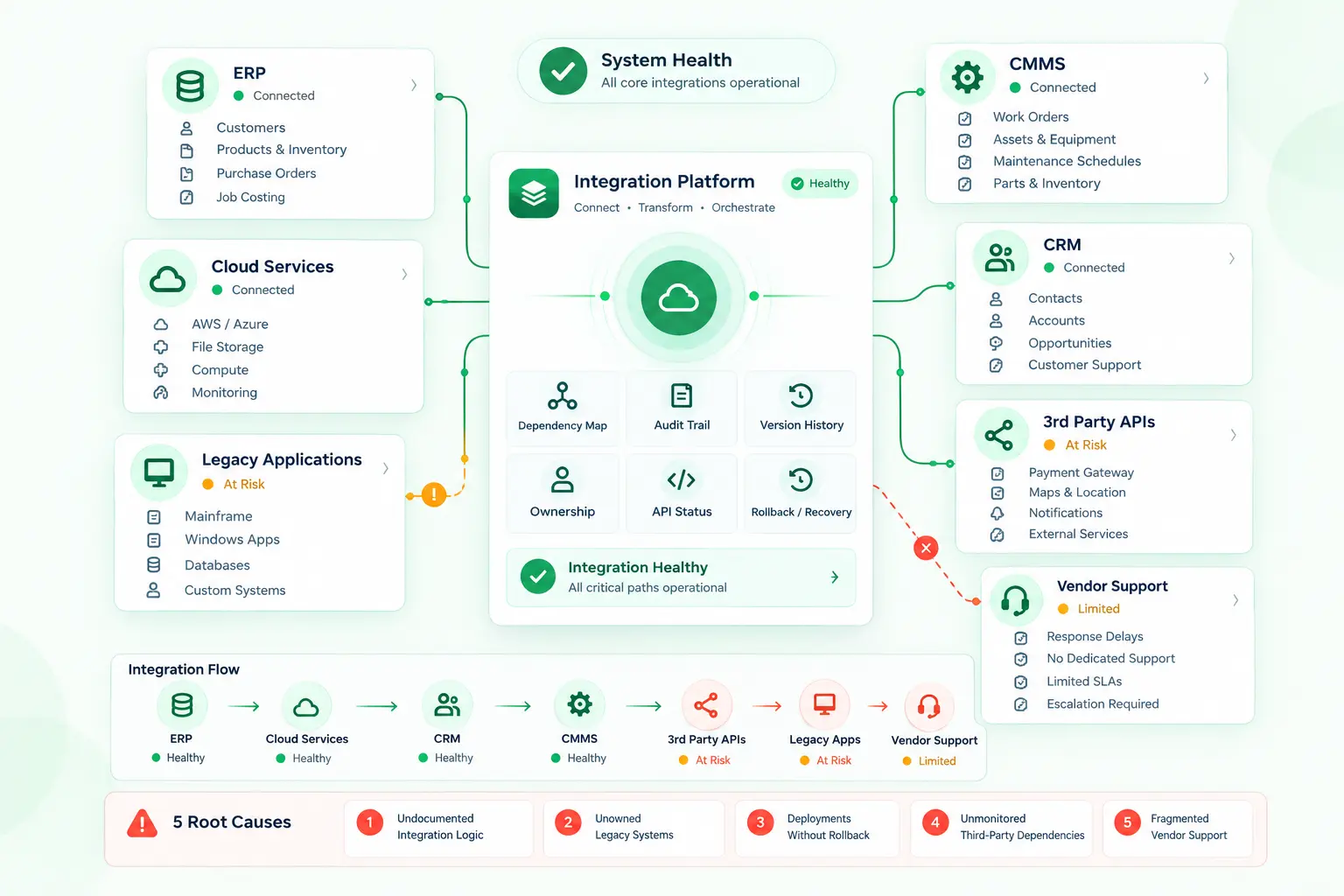
But many real estate companies still rely on legacy software built long before today’s integration needs. The result isn’t always dramatic system failure. It’s slower processes, data gaps, and constant workarounds.
Below are the most common challenges we see across prop tech and real estate portfolios.
Challenge 1: Limited Integration Between Property Systems
Legacy real estate software often wasn’t designed for open integration. Many systems lack modern APIs or support outdated data formats.
This creates friction between:
- Property management systems
- Accounting and ERP platforms
- CRM and leasing tools
- Smart building and IoT platforms
- Investor reporting systems
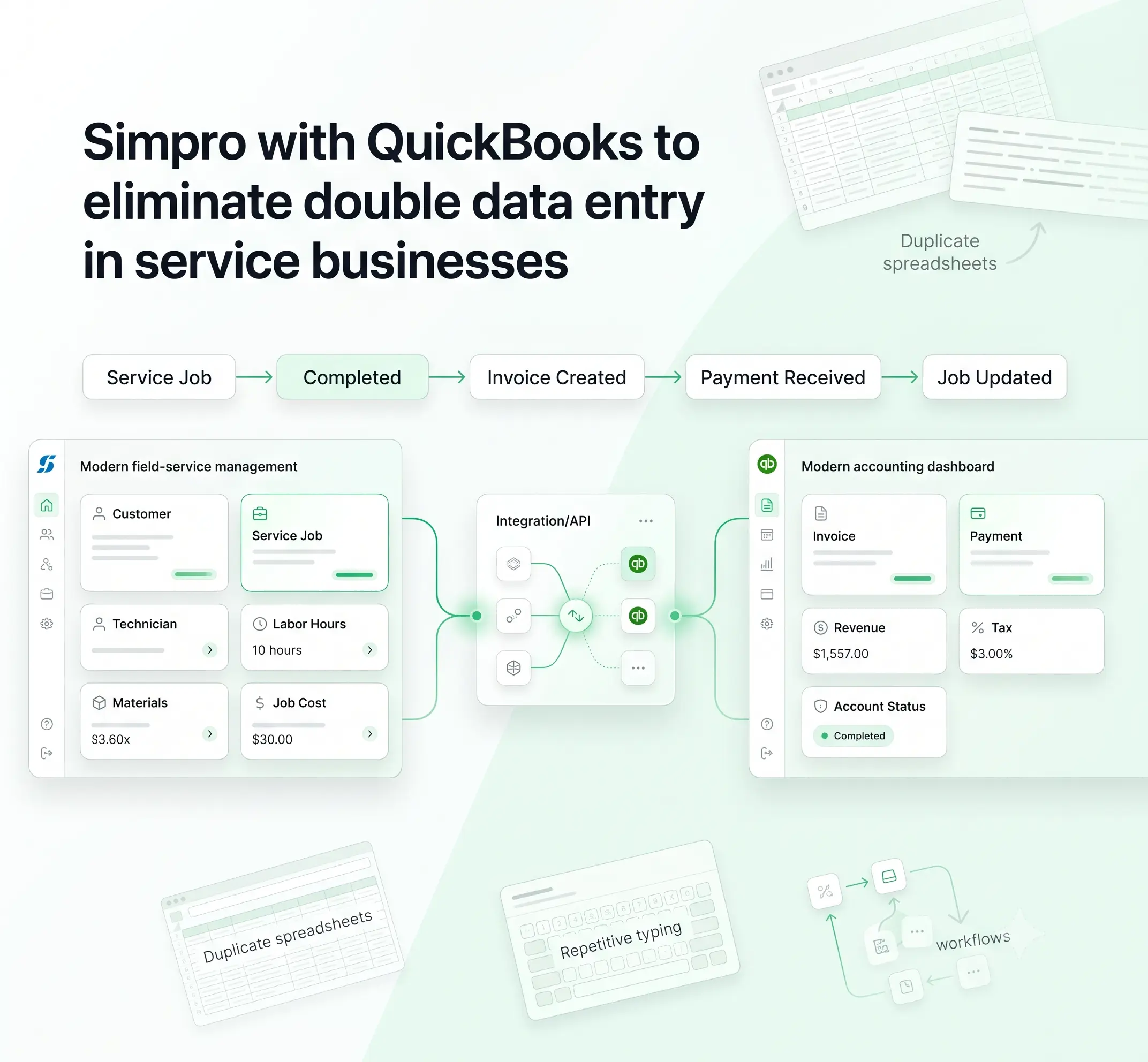
When systems can’t communicate easily, teams fall back on manual exports, spreadsheets, or custom scripts.
In practice, this means leasing data doesn’t sync in real time with accounting. Maintenance updates don’t reflect in tenant portals. Investor reports require manual reconciliation.
Challenge 2: Duplicate Data and Inconsistent Reporting
Common symptoms of interoperability failures in real estate operations include:
- Duplicate tenant records across systems
- Conflicting occupancy reports between PMS and finance tools
- Manual re-entry of lease data
- Different revenue numbers across asset management reports
When every department works from a slightly different version of the truth, decision-making becomes risky. Portfolio performance analysis becomes time-consuming. Compliance reporting becomes stressful.
Data inconsistency is one of the most expensive hidden costs of legacy integration.
Challenge 3: Point-to-Point Integration Sprawl
Many property operators rely on direct, point-to-point integrations.
Each time a new application is added, whether it’s a tenant engagement platform or a new investor portal, another connector is built. Over time, this creates a fragile web of dependencies.
If one system changes its API, several integrations will break. If one connector fails, multiple workflows will stop. The environment becomes difficult to maintain and even harder to scale across multiple properties or regions.
Integration sprawl increases operational risk while quietly driving up IT maintenance costs.
Challenge 4: Limited Scalability Across Expanding Portfolios
Real estate portfolios grow. New properties are acquired. New regions are added. New business units come online. Legacy systems struggle to scale with that growth.
Onboarding a new property often means:
- Manual system configuration
- Custom integration development
- Weeks of data mapping and validation
Instead of enabling expansion, technology becomes a bottleneck. Growth initiatives slow down because systems cannot adapt quickly.
For multi-tenant operators managing multiple owners or asset classes, this limitation becomes even more pronounced.
Challenge 5: Security and Compliance Exposure
To make API data integrations work, some organizations directly expose legacy databases or create insecure data pipelines. This increases the risk of breaches, unauthorized access, and compliance violations.
In real estate, this can impact:
- Tenant personal information
- Lease agreements
- Financial data
- Investor reporting
As data privacy regulations tighten, outdated integration approaches create legal and reputational risk, blocking secure data management.
Challenge 6: High Maintenance Overhead
Custom connectors require constant attention. Every vendor update, app integration, or infrastructure shift demands rework. Maintenance eats up team hours instead of progress getting done.
Instead of focusing on innovation, like predictive maintenance, automated leasing, or portfolio analytics, IT teams are stuck fixing broken connections.
This reactive model is costly and unsustainable for modern prop tech environments.
Challenge 7: Cumbersome and Manual Workflows
Legacy systems often embed outdated business processes.
In property operations, this leads to:
- Manual lease data entry
- Paper-based approval flows
- Delayed maintenance tracking
- Slow vendor onboarding
Automation becomes difficult because systems weren’t designed to support orchestration layers across platforms.
The result is operational friction at every stage of the property lifecycle, from acquisition to leasing to asset reporting.
Modern tenant experience platform integration addresses these challenges by standardizing communication across systems instead of adding more direct connections. Without that shift, interoperability issues continue to compound, and modernization efforts stall before they deliver real value.
Interoperability Issues Faced with Real Estate Operations Software Ecosystem
Understanding the structural limitations of legacy systems helps clarify why integration must be handled carefully.
1. Monolithic Property Management Platforms
A web of legacy connections holds most older property management systems together. Inside these platforms, business rules drive workflows, but each layer depends heavily on the others. Leasing logic connects directly to accounting tables.
These tightly coupled designs made sense when stability and on-premise control were priorities. Flexibility and API-first connectivity were not.
API connectivity becomes complex. Even a small configuration change can impact core financial or operational modules. Extracting data for external systems often requires database views, scheduled exports, or custom extensions instead of clean, versioned APIs.
In multi-property or multi-owner environments, those architectural limits begin shaping daily operations.
2. Batch-Based Data Processing
Fresh data often waits its turn in older property platforms. Without data synchronization engine, updates follow scheduled batch cycles such as nightly postings, hourly sync jobs, or end-of-day reconciliations.
A lease update in one system may not appear in accounting until the next processing window. Rent payments may reflect in one dashboard but not another. Occupancy metrics can differ depending on when each system last processed its batch. These timing gaps create operational lag and reporting inconsistencies.
Modern system integration software, however, expect near real-time data exchange.
3. Private Systems and Unique File Types
Out in the open, older systems often shuffle data through basic files, makeshift XML formats, or oddball messaging rules tied to one provider. Information gets hauled out, reshaped by hand-coded routines, then slipped back in.
Fresh systems now rely on tidy data blocks shaped like JSON, passed through fixed digital doors. Instead of old ways, they speak via REST-style links that follow clear rules.
When these approaches crash into each other, integration teams must piece together translation layers, mapping fields, reformatting payloads, and managing schema mismatches. Each connector becomes a specialized bridge.
Connections technically exist, but there is no shared integration standard. Over time, every new link adds complexity and reduces overall system stability.
4. Inconsistent API Features Among Providers
Most modern proptech tools rely on APIs to exchange leasing, financial, and operational data. In theory, APIs provide a clean contract between systems. In practice, API integration capabilities vary widely across vendors.
Some data integration platforms expose only read-only endpoints. Others limit write access to specific objects. Rate limits may restrict transaction volumes. Authentication models differ with some relying on basic credentials while others requiring token-based frameworks.
When API functionality is partial or inconsistent, automation stalls. Teams must supplement integrations with manual reconciliation or secondary processes to keep systems aligned.
5. Misaligned Data Models
Even when systems are connected, they often interpret core real estate concepts differently.
Occupancy may be calculated based on lease status in one platform and physical move-in date in another. Lease amendments may generate new records in one system but overwrite existing entries in another. Property hierarchies such as portfolio, building, unit, may follow different structural logic.
When definitions diverge, reconciliation becomes necessary. Data moves between systems, yet semantic alignment remains imperfect. Reporting requires adjustment layers to normalize outputs.
6. Old Security Methods Don’t Fit Mixed Work Setups
Older systems were not designed for hybrid cloud environments. Authentication mechanisms may rely on static credentials rather than token-based protocols. Encryption standards that were once sufficient may not align with current compliance expectations.
When on-premise systems connect to cloud-based leasing or investor platforms, additional security layers are often added externally. Balancing integration access with regulatory and data protection requirements becomes an ongoing technical concern.
When legacy systems attempt to interact with today’s real estate integration mechanisms, core data concepts vary across applications. Full system replacement is not quite practical in real estate operations. With a structured integration layer absent to standardize communication, normalize data models, and manage multi-tenant boundaries, interoperability remains fragile.
A Strategic Approach To Interoperability For Prop Tech Systems
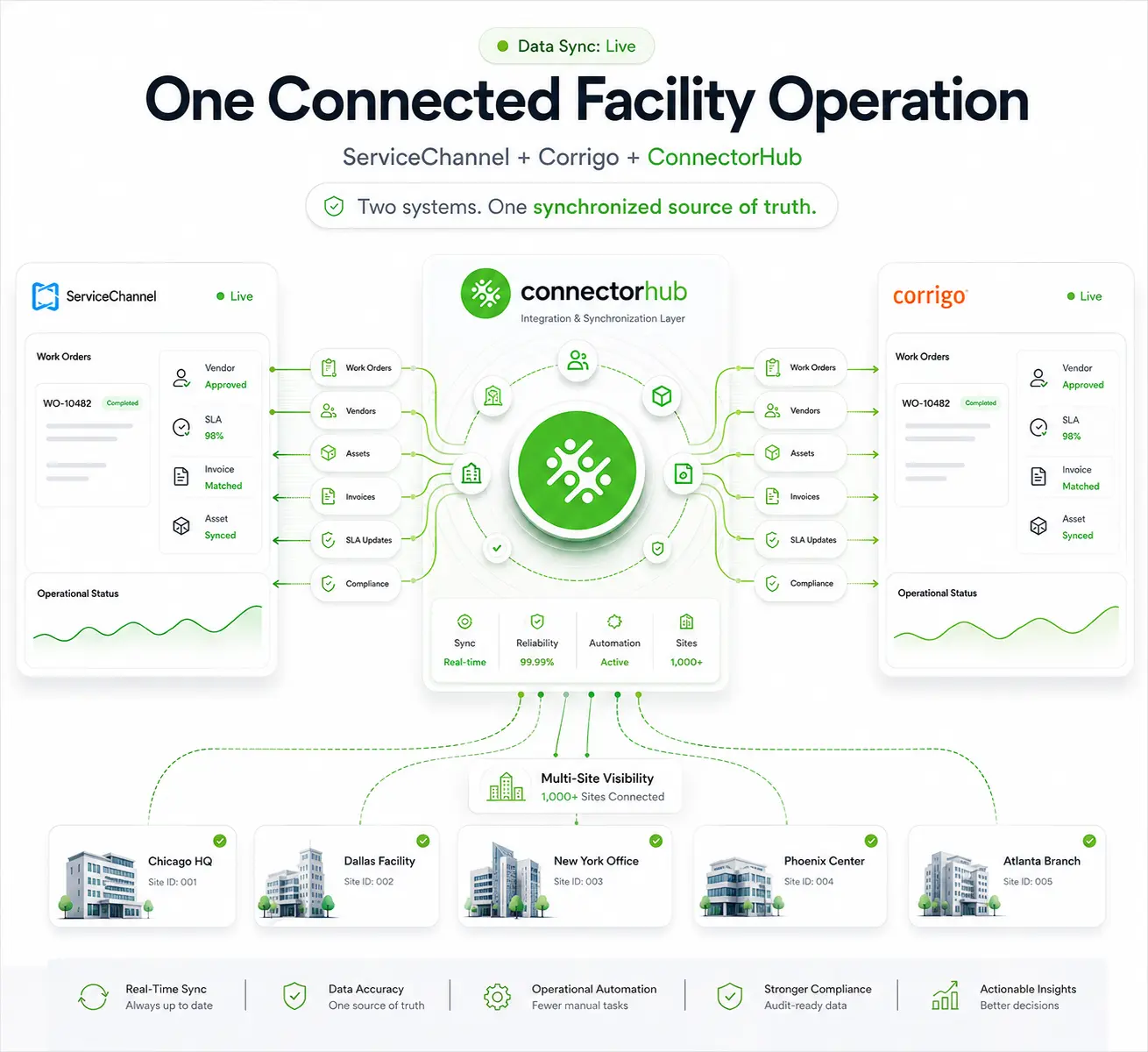
Ideal interoperability among real estate systems requires introducing a shared integration backbone that abstracts complexity away from core systems while becoming the control point for data transformation, protocol translation, access control enforcement, monitoring and logging, and error handling.
Interoperability needs a structured, architected strategy and in a multi-owner, multi-property space, it needs to address multi-tenant integration management right from the beginning.
STEP 1
The first step is a comprehensive technology assessment. Teams need a clear picture of every core platform, property management, accounting, CRM, data warehouses, APIs, and custom integrations.
Spot where things slow down, who controls what data, limits on how parts connect, weak points in protection measures, issues when serving several users together. Get full visibility before moving forward. Understanding details early prevents bigger trouble later. Know every layer without skipping steps.
STEP 2
In real estate, “multi-tenant” often means managing multiple owners, portfolios, or asset classes within shared infrastructure. Without mapping how data is segmented, shared, or restricted across those tenants, integration efforts can introduce risk instead of clarity.
Compatibility should be approached deliberately. Old systems hardly fit neatly with today’s cloud solutions. Instead of stretching connection after connection, organizations benefit from implementing a centralized integration layer or middleware architecture designed to support tenant-aware data flows.
Instead of building duplicate integrations for each owner or portfolio, a multi-tenant integration management layer reduces tight dependencies, enforces standardized communication protocols, and prevents integration sprawl as portfolios grow.
STEP 3
In multi-tenant environments, integration logic often needs to handle portfolio-specific rules or reporting structures. Data mapping, workflow redesign, infrastructure adjustments, testing, governance, and training must all reflect under the broader scope of interoperability.
Security and compliance become critical when multiple tenants operate within shared systems and hence, the integration architecture should include token-based authentication, encrypted data exchange, role-based access controls, and audit logging that respect tenant-level boundaries.
STEP 4
A phased rollout model can be used to mitigate this complexity. The rollout of the integrations across portfolios can enable teams to prove out tenant segmentation, stabilize workflows, and show improvement before rolling out to the broader organization.
Collaboration with vendors is also an important aspect. For the multi-tenant providers, it is important to determine if the vendor APIs support filtering, scoped access, and data segmentation.
STEP 5
Technology alone won’t resolve interoperability issues. Operational adoption is just as important. Teams must understand how centralized integration and tenant-aware data flows improve daily tasks. Clear communication around efficiency gains, data accuracy improvements, and reduced manual effort helps shift the focus from “system change” to operational improvement. Training and feedback loops support this transition.
STEP 6
Ongoing enablement ensures teams can work confidently within integrated systems while helping refine continuous optimization rather than one-time implementation. Feedback from users in multi-tenant setups may indicate where views in reporting or access control need to be adjusted.
Adoption can be encouraged through incentives. When teams notice faster reporting cycles, reduced reconciliation work, and better visibility into properties and portfolios, the benefits of structured integration become clear.
How ConnectorHub Steps In
ConnectorHub helps make transparent interoperability practical for real-estate teams. Built for Prop Tech workflows, it’s a no-code, multi-tenant SaaS integration platform that acts as a central layer between systems like Yardi, MRI, SAP, Salesforce, Oracle NetSuite, and custom tenant apps. It simplifies complex integrations while keeping systems secure and organized.
Not stuck on lengthy setups, ConnectorHub links older and newer PropTech systems in less time, all while maintaining tenant isolation through role-based access controls, audit logs, and compliance-ready security standards such as SOC 2 and GDPR alignment.
Results show real value in just three to six months, often faster. Even when growing from one building to hundreds, everything stays simple, no extra layers, no slowdowns.
Ultimately, ConnectorHub strives to convert the challenges of multi-tenant interoperability to your enterprise’s advantages, equipping stakeholders to deliver exceptional real estate operations and superior tenant experiences.
Conclusion
When Prop Tech moves faster, fitting traditional software systems together with new ones stops being a choice. Moving beyond quick temporary patches means building structured solutions designed for shared environments. This kind of setup breaks down isolated data pockets while also lowering outdated tech burdens.
Stronger protection and rule adherence come naturally from such design choices. Live processes grow reliably across properties and users without constant rework simply because connections work as they should.
One step ahead, platforms such as ConnectorHub show what's possible when tangled systems start working together smoothly, aware of each tenant, light on effort, built so teams can move toward fresh ideas instead of fixing links all day. When pieces fit without force, progress hums beneath the surface, letting real estate evolve through smart flow, fewer delays, steady gains nobody needs to push.